

























































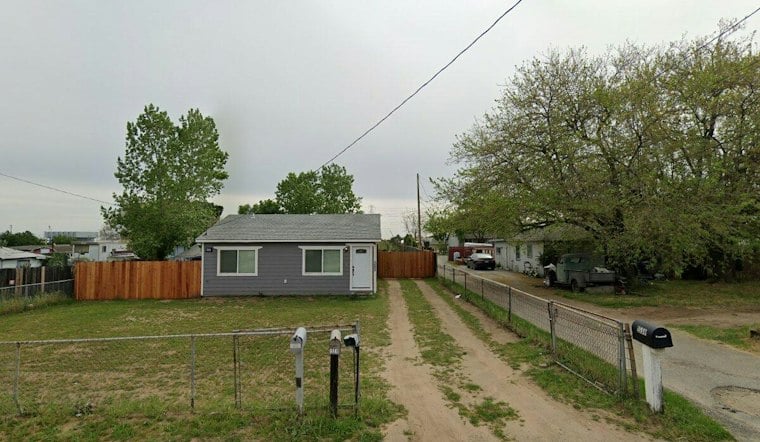
How Phillip Garrido remained undetected while Jaycee Lee Dugard was held captive at his Antioch home has been a central question in the case. Mike Rogers, who lived next door, later described gatherings he said he observed at 1554 Walnut Avenue — the property where Garrido and his wife Nancy held Dugard captive for 18 years, according to CNN.
Missed Oversight And A Neighbor’s Account
Rogers told the Daily Mail that different men regularly came to the house for gatherings involving sex, beer and drugs. He said he saw groups arrive on summer nights carrying beer.
Rogers said the men went into a backyard tent and later drank beer and smashed bottles on the ground. His account describes activity at the property, but does not establish what Garrido’s parole officers or other officials knew about it.
What The Neighbors Did — And Feared
Rogers told the Daily Mail that he discussed his observations with his brother Dean, and that neither contacted police. The brothers also voiced fears that Dugard and her two daughters might have been pimped out to visitors; Dean said he hoped that had not happened.
Dean told the outlet that people in the neighborhood avoided paying attention to others because they feared being shot. Separately, NPR reported that multiple neighbors had described Garrido as suspicious or creepy over the years, but their unease did not lead to decisive action.
A Kidnapping That Started Decades Earlier
Garrido was convicted of kidnapping and raping a woman in 1976 but served only 11 years of a 50-year sentence, as reported by NPR. Not long after his release, he and Nancy abducted Dugard in 1991 and took her to their Antioch home, where she lived in shacks and tents on the property for 18 years, the BBC reported.
Garrido later pleaded guilty to kidnapping and 13 sexual-assault charges, including six counts of rape, and was sentenced to 431 years to life, per the BBC. Nancy Garrido pleaded guilty to kidnap and rape and received 36 years to life.
How Supervision Failed
How Garrido avoided detection while under state supervision has remained a central question. A California Department of Corrections report found that he was misclassified for most of his probation rather than treated as a high-risk offender, according to CBS News.
Separate CBS News reporting on parole supervision in the case found that officials violated what would be considered good parole practice. NPR also reported that neighbors at one point saw children or a girl at the property, but a responding deputy did not know Garrido was a registered sex offender and never searched the premises, as noted by CNN.
How California Sets Supervision Levels
California’s adopted regulations say an initial containment team meeting is intended to determine the appropriate level of parole supervision. In the circumstances specified by the regulation, the meeting is scheduled 90 to 100 calendar days after release, according to the California Department of Corrections and Rehabilitation.
Conflicting Accounts Of Drug Use
Accounts of Garrido’s drug involvement vary by source. CBS News reported that numerous unnamed sources said Nancy Garrido was heavily into methamphetamine, supplied by her husband. That claim has not been independently verified beyond CBS’s sourcing, and the dossier underlying this report does not corroborate the extent of any drug activity at the property beyond what each outlet separately attributed.
Rogers’s recollection describes what he said he witnessed and did not report. It is distinct from the separate accounts of supervision and response failures documented in reporting on the case.





