

























































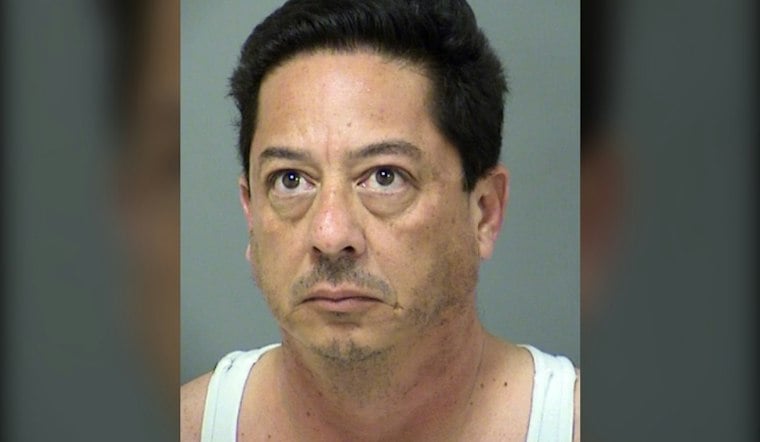
An Arizona appeals court has thrown out the prison sentence handed to Gabriel Paul Horcasitas for killing Army combat veteran Christopher Pelkey in a 2021 road-rage shooting, ruling that the judge improperly relied on an AI-generated video of Pelkey forgiving his own killer. The Arizona Court of Appeals Division One upheld Horcasitas's manslaughter conviction but sent the case back for a new sentencing hearing, finding the synthetic video made the original proceeding fundamentally unfair.
Pelkey, 37, was fatally shot in the chest in November 2021 during a confrontation at an intersection near Gilbert and Germann roads in Chandler after he stepped out of his truck and approached Horcasitas's vehicle, according to Daily Record. Horcasitas was convicted of reckless manslaughter and endangerment in a second trial, after an earlier conviction was overturned when courts found prosecutors had failed to disclose text messages from Pelkey's phone, per LAWS.com.
An AI Avatar Takes the Stand
At the May 2025 sentencing, Maricopa County Superior Court Judge Todd Lang sentenced Horcasitas to 10.5 years in prison — a full year more than the 9.5 years prosecutors had requested, the same Daily Record report states. Central to that hearing was an AI-generated video of Pelkey created by his sister, Stacey Wales, who also submitted 49 letters for the judge to read before sentencing, according to the seed reporting from FOX 10 Phoenix.
Wales built the avatar using photos, video clips, and voice recordings of her brother, scripting statements of forgiveness that reflected her belief in his spiritual character rather than words he ever actually spoke, per reporting from UNSW. The video applied a digital ageing filter to a photo of Pelkey while the simulated avatar reflected on the gift of growing old and told Horcasitas, in the AI representation's words, “In another life, we probably could've been friends. I believe in forgiveness and in God who forgives.”
Judge Says He “Loved” the Presentation
Judge Lang openly praised the video in the courtroom, saying “I love that AI,” and told those present that the avatar's apparent forgiveness reflected Pelkey's character, a characterization later cited by CBS News. The judge acknowledged relying on that expression of forgiveness when determining Horcasitas's punishment. Defense attorney Jason Lamm said he received no advance notice from the court or prosecution that the AI video would be shown before the hearing, according to reporting cited by Balls and Strikes.
Horcasitas appealed, arguing he was denied due process because the judge heard and expressly relied on AI-generated statements attributed to a man who never spoke them. Prosecutors countered that the video reflected what Pelkey's sister believed he would have said, and that her close familial relationship with her brother supported the accuracy of the sentiments conveyed.
Appeals Court Draws a Line
The Arizona Court of Appeals disagreed with prosecutors' framing. The panel ruled that the AI video erased the interpretive distance between a grieving family's beliefs and the actual victim's own voice and opinions, finding that the judge's consideration of the video made the sentencing procedure fundamentally unfair. The court affirmed Horcasitas's manslaughter conviction but vacated his sentence and remanded the case for resentencing.
In its ruling, filed under appellate docket 1 CA-CR 25-0191, the court noted that no prior Arizona legal precedent had addressed whether an AI-generated depiction of a victim is admissible as victim impact evidence, according to LAWS.com's review of the decision. Arizona law — specifically Arizona Revised Statutes § 13-4426 and § 13-4428 — already allows crime victims or their surviving family to be heard through oral statements, written submissions, or audio, video, and digital media, according to the Arizona Attorney General's Office. But the appellate panel's decision suggests that statute does not stretch so far as to let an AI avatar speak in a victim's voice about things he never said.
Judiciary Already Moving on AI Rules
The case has rattled Arizona's court system well beyond this single sentencing. Arizona Supreme Court Chief Justice Ann A. Scott Timmer has warned that AI could “upend justice if inappropriately used,” and state court leaders have since established a dedicated judicial committee to review AI applications in courtroom proceedings, according to UNSW's reporting.
What happens next in Horcasitas's case remains to be determined at the Maricopa County Superior Court, which must now hold a new sentencing hearing without the AI video influencing the outcome. It is not yet known whether prosecutors or victims' rights advocates will seek further review from the Arizona Supreme Court, nor what formal guidelines the state judiciary's AI committee will ultimately adopt for future cases involving synthetic depictions of crime victims.





