

























































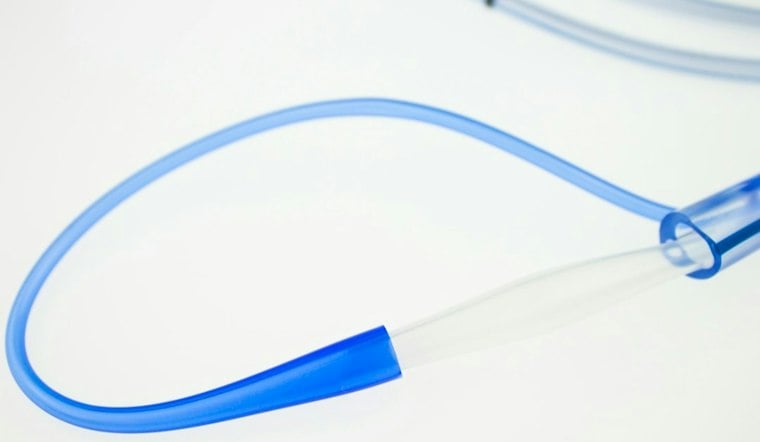
A federal jury in Arizona has ordered medical device giant Bard to pay $40 million to a woman whose implanted port catheter fractured, sending a fragment into her heart that doctors had to surgically remove. Kimberly A. Divelbliss filed suit after her Bard PowerPort, a device implanted to deliver medication or draw blood, fractured two years after it was put in, triggering cardiac arrhythmias, heart attacks, additional cardiac procedures and ongoing medication.
The nine-person jury in the U.S. District Court for the District of Arizona reached its verdict on September 4, 2026, according to Missouri Lawyers Media, finding unanimously for Divelbliss on both strict-liability and negligent design-defect claims, as well as strict-liability and negligent failure-to-warn claims. Jurors allocated 100 percent of the fault to the defendants, though they declined to find fraudulent concealment and did not award any punitive damages, according to PRWeb. The court entered formal judgment on September 10, 2026, for the full $40 million plus post-judgment interest and costs, per MDL Update.
Divelbliss's case, filed under case number CV-23-1627-PHX-DCG, is part of a sprawling multidistrict litigation, MDL No. 3081, known as In re: Bard Implanted Port Catheter Products Liability Litigation. It was the second bellwether trial to reach a jury in that litigation and the first to end in a plaintiff win, according to Missouri Lawyers Media's reporting. Her pretrial settlement demand had been $10 million, according to the same reporting — a fraction of what jurors ultimately awarded.
A Fracture Two Years in the Making
The Bard PowerPort at the center of the case was manufactured with a Groshong silicone catheter, according to Missouri Lawyers Media. Two years after Divelbliss had the device implanted, the catheter fractured, and a fragment became lodged in her heart, a detail corroborated by PRWeb. Removing the fragment required surgery, and Missouri Lawyers Media reports the ordeal left her with cardiovascular, pulmonary and respiratory injuries.
Divelbliss's legal team included attorneys Brandon D. Henry, Michael A. Sacchet, Thomas W. Pirtle, Sarah Ruane, Kevin Kauffman and Hannah Pfeifler, according to Missouri Lawyers Media's account. Henry said Bard had years to make the device safer or to warn patients about its dangers, and argued that the verdict recognizes what Divelbliss went through while sending a signal that patients will be protected, per the same reporting. Bard and the other defendants were represented by Richard B. North Jr., Elizabeth C. “Kate” Helm and Edward J. Fanning Jr., and defense counsel could not be reached for comment, Missouri Lawyers Media reported.
Dueling Experts on Design and Causation
Both sides leaned heavily on expert witnesses to make their case. Divelbliss's side called engineer Amir Sheikhi of University Park, Pennsylvania; biomaterials expert Ahmed El-Ghannam of Charlotte, North Carolina; electrophysiologist Dr. Frank Cuoco of Charleston, South Carolina; regulatory affairs expert Michael Beatrice of Carefree, Arizona; surgical specialist Dr. Eric Kraut of Baltimore; and interventional radiologist Dr. Darren Hurst of Cincinnati, according to Missouri Lawyers Media.
The defense countered with its own lineup: engineering expert K. Andre Mkhoya of Minneapolis, biomaterials expert Steven MacLean of Natick, Massachusetts, electrophysiologist Dr. Michael Shehata of Los Angeles, regulatory affairs expert Donna-Bea Tillman of Clarksville, Maryland, interventional radiologist Dr. Ralph Reichle of Boston, and biostatistics and epidemiology expert Ronald Thisted of Chicago, per the same reporting.
One Win, One Loss So Far in the Broader Litigation
The Divelbliss verdict marks a turning point in a litigation that has, until now, gone the other way for plaintiffs. The first bellwether trial, known as Cook, involved an infection claim and ended in April and May 2026 with a defense verdict on the claims decided and a hung jury on the central design-defect question, according to MDL Update. That jury cleared Bard and Becton Dickinson on failure to warn, failure to instruct, and consumer fraud, the same source reported. As MassArbitration put it, the split between the first two trials “runs along the injury line,” with the infection case favoring the defense and the fracture case favoring the plaintiff.
Divelbliss was also notable as the first catheter-fracture case in the MDL to reach a jury, according to MDL Update's bellwether tracker. Fracture claims make up only about 12 percent of the overall MDL inventory, with infection and thrombosis claims accounting for the majority, the tracker notes. The litigation's inventory size has been reported differently across sources: MDL Update cited roughly 3,734 pending actions as of a September 1, 2026 Judicial Panel on Multidistrict Litigation report, while Drugwatch put the figure at 4,140 lawsuits consolidated in the MDL as of October 2026, and LlamaLab had earlier reported 3,376 pending cases as of June 1, 2026.
More Trials Already Underway
The litigation is far from over. A third bellwether trial, involving an infection claim, was scheduled to begin October 13, 2026, in the District of Arizona, according to MassArbitration. MDL Update's tracker lists Lattanzio, the third bellwether, for October 13 to 30, 2026, followed by Hicks, scheduled for December 1 to 21, 2026, and Sorensen, set for February 2 to 19, 2027 — rounding out a planned slate of five total bellwether cases that began with Cook and Divelbliss.
Regulatory records add another layer of scrutiny to the devices at issue. The FDA's MAUDE database logged 438 reports of PowerPort complications between December 1, 2025, and February 28, 2026 alone, according to Drugwatch. For now, the Divelbliss verdict stands as the plaintiffs' first win in the MDL, though MDL Update notes the judgment is not final while post-trial motions and any appeal run their course.





