

























































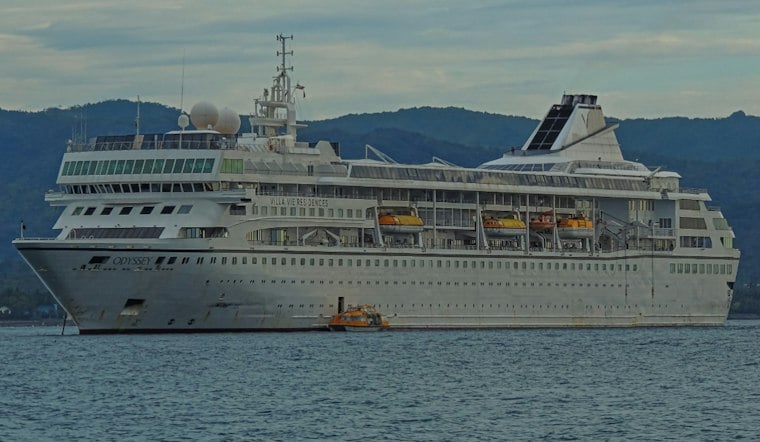
An Arizona woman who signed up for a years-long life at sea instead found herself scrambling through the streets of Sihanoukville after her residential cruise ship abruptly suspended operations. Sherrie Cornett says she and hundreds of other passengers were given just seven hours to pack up and leave the vessel, with little explanation from the company about what would happen next.
Cornett, an Arizona resident, had signed up for a long-term living-at-sea experience that would let her see the world while still keeping a home, according to FOX 10 Phoenix. Instead, she told the station that passengers were dropped off in a public square after shuttle transport from the port and had to, in her words, find their way from there. Villa Vie Residences, the company behind the cruise, announced it had suspended operations in Cambodia and was working with residents to coordinate disembarkation and identify temporary living arrangements, the company said in a statement carried by PR Newswire.
Confusion, Then a Scramble for Wi-Fi
According to Cornett, it took 36 hours after the disembarkation announcement before the company provided hotel information, discussed possible financial assistance, or proposed flight options home. In the meantime, she said passengers sought out internet access at Starbucks locations or hotel lobbies just to book reservations and plane tickets on their own. She also reported that some ports were left earlier than expected while stays at other ports were extended, adding to the disarray.
Cornett did not mince words about the company's handling of the situation, calling its communication dreadful and almost nonexistent, and saying getting everyone situated amid the chaos was challenging. Reports on exactly how much notice passengers received have varied: Cornett told the station passengers had seven hours to leave the ship, while the BBC reported that passengers said they were informed at 6 a.m. Tuesday that they had to leave by 2 p.m. that same day, and the Independent reported guests were told at 6 a.m. Monday that they had to disembark by 2 p.m. Accounts also differ on how many passengers were aboard, with The New York Times putting the number at 200 and the Independent reporting 203.
Company Points to Soaring Fuel Costs
In its statement, Villa Vie Residences attributed the suspension to soaring fuel costs, saying monthly fuel expenses per cabin in parts of Asia had increased from roughly $1,800 to as much as $6,000 to $8,000. The company said it plans to work toward restructuring and recapitalization over the next 60 days, but stressed that no financing or transaction has been finalized and no outcome is assured.
Despite the ordeal, Cornett said she plans to continue traveling. Phoenix-based travel consultant Rosanne Coloccia, a master travel consultant with Preferred Travel Services, told FOX 10 that some passengers on this type of voyage had planned to live aboard the ship for extended periods, unlike a traditional weeklong cruise. That distinction, she said, makes the financial and logistical stakes of a sudden shutdown much higher than they would be for a typical vacationer.
A Cautionary Tale for Long-Term Travelers
Coloccia advised that travelers should consider insurance regardless of the length of their trip, noting that trip cancellation insurance can cover medical needs outside the United States and may also cover a company's default. For those booking independently, she recommended researching insurance providers, understanding exactly what a policy covers, and investigating the travel companies themselves before committing.
The Villa Vie suspension echoes other troubled attempts at the long-term cruise model. The New York Times noted that a three-year cruise offered by Miray Cruises collapsed in 2023 after delays and operational problems, leaving prospective passengers out hundreds of thousands of dollars. The same report described The World, a separate residential ship, as the only financially successful residential cruise ship currently in operation — a reminder of just how difficult the business of permanent life at sea has proven to be.





