

























































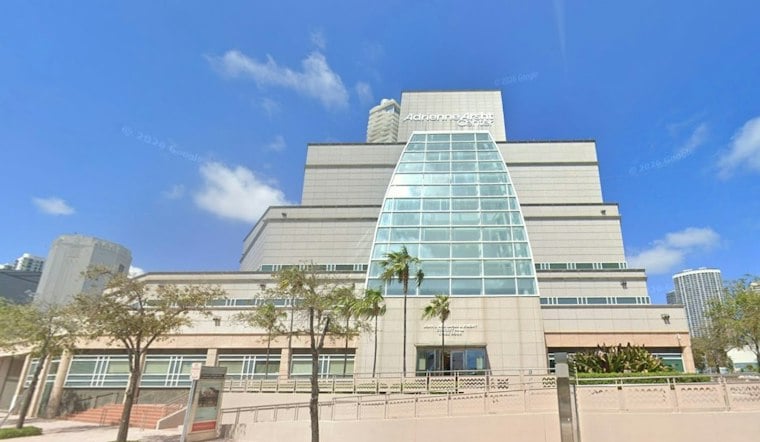
The Adrienne Arsht Center wants to erect two 1,800-square-foot digital billboards standing 120 feet above Biscayne Boulevard, and the fight over whether that can happen has split Miami-Dade County's two top elected officials. Miami-Dade Mayor Daniella Levine Cava supports the plan. Miami Mayor Eileen Higgins does not.
Two Allies, One Billboard Standoff
The disagreement is notable because Higgins led the fight against jumbo digital billboards downtown while she served on the county commission, and she says she has not changed her mind about the signs now that she's mayor. As the Miami Herald reports, Levine Cava, meanwhile, intervened in the permitting process.
The two previously stood on the same side of this fight. In 2024, Levine Cava and Higgins both joined efforts to block the Arsht's initial billboard plan, according to the same Herald report. Levine Cava's administration has also opposed a separate request from Miami for a redevelopment district in Allapattah, even as Higgins supports that project, underscoring how the two have continued to clash on overlapping city-county turf despite their alliance.
Jurisdiction Fight Moves to the County
The Arsht Center, a performance hall owned by Miami-Dade County, still wants to build the pair of digital billboards across the street from Pérez Art Museum Miami, as the Herald has separately reported. Miami-Dade asserted that it has jurisdiction over permitting for the project and said in May that the county, as owner of the Arsht Center property, had not given its consent to permit applications filed with the city, according to a report from Yahoo News.
The Arsht Center initially sought approval for its digital signs through Miami's zoning process, but at Levine Cava's direction, administrators pivoted to seek Miami-Dade County permission instead of relying on the city. Per the Herald's reporting, the county's zoning process would allow the county commission to approve the signs as an improvement to a county facility within a county transit zoning district — a path under which the city of Miami would have no say on the signs at all. The Arsht Center functions as an arm of Miami-Dade County, which owns the Arsht building itself.
That jurisdictional tug-of-war already played out once before. The Arsht asked Miami for its own city permit to be revoked under orders from Miami-Dade County, according to the Biscayne Times. Separately, Miami commissioners voted at a May 23 meeting to completely repeal the city ordinance that had allowed 1,800-square-foot LED billboards downtown in the first place.
A Billboard Hearing Vanishes, Then Reappears in Dispute
A hearing on the Arsht billboard proposal had been scheduled for October 6 but was canceled at the last minute for reasons that remain unknown, per the Herald's reporting. The proposal still requires Miami-Dade County Commission approval before anything can move forward.
City Commissioner Damian Pardo has opposed PAMM's billboard. The Arsht proposal comes amid broader criticism of oversized digital signs.
What the Signs Would Look Like and What They'd Earn
The proposed signs, designed by Pelli Clarke & Partners, would stand across from a 1,800-square-foot digital sign PAMM built in 2024 that is located about 800 feet from the proposed Arsht site and that itself sparked an uproar among local leaders and nearby residents when it went up. PAMM administrators have promoted their own sign as a way to generate advertising revenue and promote museum installations, and PAMM and the Arsht Center have both framed their billboards as essential sources of additional funds, according to The Art Newspaper.
Under the Arsht's plan, advertisements would remain on screen no longer than eight seconds and the displays would revert to a static logo after midnight each night. An unnamed advertising company would build the signs, which would also promote performances to drivers traveling along I-395. Arsht Center CEO Johann Zietsman has said the signs would help generate revenue and support the center's growth, and the Herald reports the signs would generate at least $1 million a year in advertising revenue for the center.
How PAMM's Billboard Deal Compares
The financial stakes mirror a fight that just wrapped up next door. Miami city commissioners approved a settlement in a 4-1 vote in September allowing PAMM's own 1,800-square-foot digital billboard to remain standing, in exchange for a minimum $500,000 yearly payment to the city and a requirement that the sign go dark after 11 p.m. Under a separate 20-year deal described by the Biscayne Times, PAMM would receive a guaranteed $1 million in annual billboard revenue, a figure that could climb as high as $3 million.
The City of Miami code sets brightness restrictions for digital signs and limits their operating hours to 6 a.m. to 11 p.m. Whether the Arsht's billboards ultimately rise under those same constraints, or avoid city oversight altogether through the county's zoning process, remains an open question as the proposal sits before Miami-Dade County commissioners.





