

























































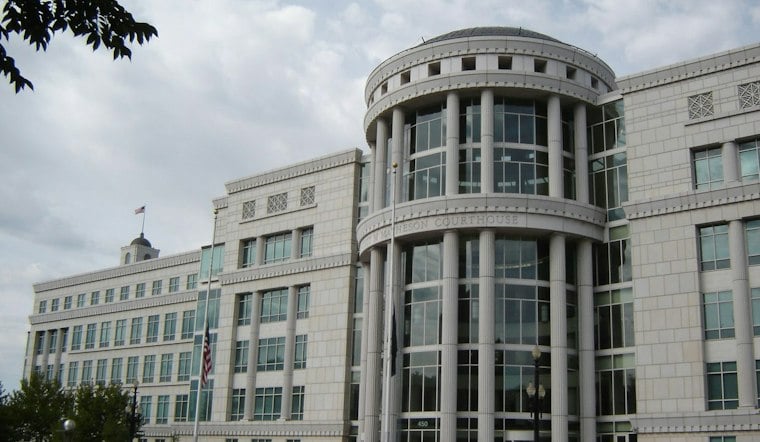
A new Utah legislative audit has concluded that the state's Judicial Conduct Commission generally followed its own guidelines when it reviewed a complaint against former Utah Supreme Court Justice Diana Hagen, but the audit also found the commission's processes need improvement, including how it documents its decisions and manages conflicts of interest among its own members.
The Office of the Legislative Auditor General analyzed the commission's handling of the case involving Hagen, who resigned from the state's highest court in May 2026. According to KSL.com, the audit found that while the commission generally followed its guidelines in this case, the processes reviewed still warrant improvement, and organizational weaknesses could undermine the consistency, transparency and defensibility of the commission's decisions going forward.
The complaint at the center of the review, filed in December 2025, alleged Hagen had an improper relationship with attorney David Reymann, according to ksl.com. The commission conducted a preliminary review but opted not to pursue a full investigation, and both Hagen and Reymann denied any inappropriate relationship. A commission investigator determined there was insufficient evidence to support the allegations, and the commission itself described the complaint as having very little credibility. A full investigation could have included interviewing Reymann and his wife and pursuing alleged text messages, according to the same account.
Auditors Flag Missing Paperwork Behind Investigative Decisions
The audit found that reports rarely documented whether staff considered additional interviews, record reviews or other investigative activities before narrowing the scope of a case. Investigators are not consistently documenting their rationale for limiting investigative activity, the audit found, which means the commission cannot readily determine whether its own scope decisions were reasonable after the fact.
Auditors recommended stricter guidelines for documenting investigations that were considered but not ultimately pursued. They also recommended that the Legislature more clearly define the commission's role, and identified ongoing issues with transparency, documenting decisions, accountability and governance. The commission has not established sufficient governance structures to ensure consistent expectations and decision-making frameworks, according to the audit, and auditors said stronger governance practices would improve both continuity during membership and leadership changes and public confidence in the fairness and consistency of the disciplinary process.
A Commissioner's Disclosure Drew Extra Scrutiny
The audit also zeroed in on how one commissioner handled a personal conflict during the Hagen review. Commission Chairwoman Cheylynn Hayman has said she is a close friend of Hagen and also friends with Reymann, and that she disclosed those relationships, recused herself and left the room so the rest of the commission could discuss the complaint without her present, according to the same ksl.com report. Hayman also acknowledged telling commission members she had previously been a victim of accusations from Tobin Hagen, Diana Hagen's former husband.
The audit found that a commissioner commented on the complainant's character before recusing from further participation, and that the commissioner used the disclosure to raise questions about the complaint's credibility. The audit stated that disclosing personal relationships with people involved in a matter is common and expected, but it identified risks to impartiality when recusal disclosure policies do not clearly define their scope and purpose. Sen. Todd Weiler has said Hayman cast doubt on Tobin Hagen as a source before recusing herself, which Hayman has denied was an accurate description of events. Auditors recommended clearer guidance for recusing and disclosing conflicts of interest going forward, noting that commission members may currently provide varied levels of information about their conflicts.
Commission's Director Says Room for Improvement Remains
Alex Peterson, executive director of the Judicial Conduct Commission, acknowledged the audit's findings and said there is always room for improving the commission's processes. Peterson said the audit's recommendations may result in performance improvements, and noted the commission has already undertaken enhanced confidentiality protocols along with a review of commissioner types, responsibilities, performance procedures and commissioner authority.
The commission is tasked with looking into allegations of misconduct by judges, a role that put it at the center of political controversy after top Republicans expressed frustration with how Hagen voted on several high-profile decisions, including a redistricting case that drew outrage from many Republican lawmakers, who vowed to continue appealing it. Utah Gov. Spencer Cox, Senate President Stuart Adams and House Speaker Mike Schultz said the commission and court's initial review left important questions unresolved and announced plans to pursue an independent investigation into allegations that Hagen had an improper relationship with an attorney who argued high-profile cases before the court. That inquiry never got off the ground because Hagen instead chose to resign, submitting her letter of resignation on May 8, 2026, according to ksl.com. Hagen has denied wrongdoing and maintained she acted professionally and did not have a conflict of interest while on the bench.
Lawmakers Weigh Rewriting the Rules
The fallout from the case has already prompted action at the Capitol. Weiler, who chairs the Utah Senate Judiciary Committee, has opened a bill file aimed at reforming the Judicial Conduct Commission and is considering requiring commission members to file annual statements disclosing personal relationships with judges, along with a published policy governing recusals and additional safeguards to keep complaints against judges confidential. Those proposed changes are expected to be introduced and debated when Utah's next legislative session begins in January 2027, and lawmakers more broadly are considering additional changes ahead of that session as they weigh the audit's findings on how the commission is governed.





