

























































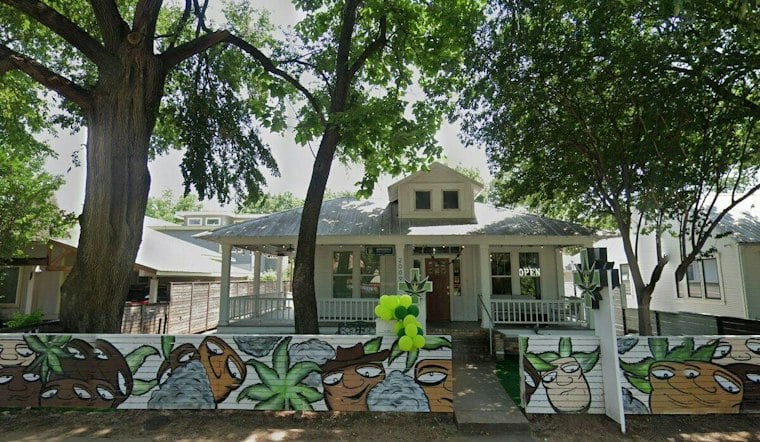
Estella Castro spent seven years building Austinite Cannabis Company into three stores across Austin. Now her business is permanently closed, two locations shuttered in just the last few months, employees laid off, after new state THC restrictions hit her most popular products and cut her revenue in half.
Castro's story, first reported by CBS Austin, captures what's happened to hemp retailers across Texas since the Texas Department of State Health Services adopted new hemp rules that took effect March 31. The rules effectively banned smokable hemp products by changing how THC is measured and sharply raised the retail licensing fee, according to the station's reporting. Industry groups are challenging the rules in court, the outlet notes, pointing to a hemp retailer lawsuit filed in Travis County District Court in August that argues DSHS exceeded its statutory authority under the state's 2019 hemp law, as Hoodline previously reported.
How Texas Got Here
The regulatory squeeze didn't come from a single new law. Republican Lt. Gov. Dan Patrick made Senate Bill 3, which would have banned THC products outright, a priority during the last legislative session, per the station's account. Gov. Greg Abbott vetoed that bill at the deadline to sign it, then ordered the state health department to write new hemp rules instead, the report states. At a press conference in May 2025, Patrick said the bill was passed to ban THC products because the contents of those products were unknown, and he has continued to support a ban while ordering further study of potential health harms, according to the same account.
That executive pivot set off a cascade of rulemaking. FOX 7 Austin reported that the March 2026 rules established a total-THC testing standard counting THCA toward total THC content, effectively banning THCA flower, while raising annual retail registration fees from $155 to $5,000 per store and hiking manufacturing license fees thirtyfold to $10,000 per facility. The Texas Supreme Court then ruled on May 1 in a case involving Sky Marketing Corp. that state health officials had the legal authority to classify manufactured delta-8 THC as a Schedule I controlled substance, dissolving lower-court injunctions that had shielded retailers since 2021, according to Justia Law. DSHS reinstated its controlled-substance definitions on July 31, and The Texas Tribune reported industry experts estimated between 60% and 90% of hemp THC products were pulled from store shelves statewide, with DSHS warning that non-compliant products found during inspections would face detention and referral to law enforcement.
Goodwin Visits, Promises to Undo the Rules
Democratic lieutenant governor candidate and Austin state Rep. Vikki Goodwin visited Castro's store in East Austin this week to learn about the rules' effects on the Texas hemp industry, CBS Austin reported. Goodwin said many hemp businesses have closed, laid off employees, or changed their product lines in a short period of time. She plans to push to undo the new rules and change the Texas Compassionate Use Program if elected, telling the station she would have the state agency roll back rules she believes it lacked the authority to enact. Goodwin also said people have described that medical program as costly and difficult to use.
The Compassionate Use Program allows people with certain medical conditions to obtain low-THC cannabis with a registered doctor's prescription, per the station's report. House Bill 46, signed in June 2025 and implemented that September, expanded qualifying conditions to include chronic pain, traumatic brain injury, and Crohn's disease, and replaced the old 1% THC cap with a 10 milligram per dose limit, according to Texas Cannabis Clinic. The law made Texas the 40th medical cannabis state in the nation. Registry data examined by CannaWize shows active enrollment in the Compassionate Use Registry surpassed 60,000 patients in September, more than double the roughly 28,000 patients registered before the condition expansions took effect.
A Bottleneck for Hopeful Operators
HB 46 also raised the statutory limit on licensed dispensing organizations from three to 15, but Texas remains far short of that goal. CBS Austin reported that only three dispensing organizations hold active licenses to sell program products, while 12 others are conditionally selected to receive one, per Texas Department of Public Safety figures. An initial license costs nearly $489,000 for two years, with renewal running more than $318,000 every two years, the station reported. Castro has applied for a program license, saying her company wants it as its next step, but conditional licensees cannot cultivate or dispense until DPS grants final operational clearance.
The political fight over that regulatory landscape now runs straight through next month's election. A University of Texas and Texas Politics Project poll released in October showed Goodwin leading four-term incumbent Patrick by 3 percentage points, 48% to 45%, within the margin of error ahead of early voting starting Monday, as Hoodline reported this week. Patrick controls the Senate's legislative agenda and has repeatedly pushed to ban all consumable THC products, while Goodwin has pledged to reverse the DSHS rules if elected, a promise she repeated during a recent San Antonio rally at a cannabis shop. According to CBS Austin, Patrick's campaign did not respond to multiple contact attempts made since the previous day, and groups supporting a THC product ban also did not respond to contact attempts.




