

























































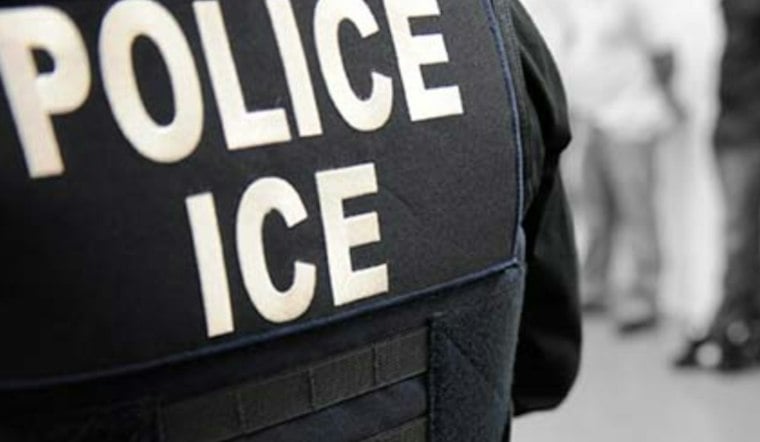
Indian Creek Village, the ultra-exclusive Miami-Dade island where Jeff Bezos, Ivanka Trump and Jared Kushner keep homes, has trained every single one of its six police officers to make immigration arrests under a federal program — yet none of them has actually made one. The village reported zero arrests under the agreement, and federal immigration authorities have not even activated the officers who completed the training.
A Tiny Force, Fully Trained But Unused
According to the Miami Herald, the village trained all six members of its police department under U.S. Immigration and Customs Enforcement's 287(g) agreement, part of a program with three models that have different functions; only the Task Force Model authorizes local officers to question, detain and arrest people in the community. Despite that full buy-in, ICE has not activated the officers, and village officials say the force has conducted no immigration-enforcement actions under that authority. Indian Creek Village municipal clerk Roseann Prado confirmed to the paper that officers had not yet carried out any such actions.
The village runs its own force, the Indian Creek Department of Public Safety, which patrols both the island's land and the surrounding waters, the Herald reports. Indian Creek Village sits in Miami-Dade County and connects to the mainland only by a single bridge in Surfside — a quiet, water-ringed enclave with one way in and out, home to roughly 41 estates and luxury compounds and residents that include Bezos, Mark Zuckerberg, Tom Brady, Julio Iglesias, Trump and Kushner. FBI data cited by the Herald shows the island recorded zero homicides, robberies, aggravated assaults or rapes over the past decade.
How Indian Creek Compares to Other Departments
Even without a single arrest to show for it, Indian Creek Village has among the highest numbers of ICE-trained officers of any department that shared data with the Herald, outpacing several far larger agencies. Pembroke Pines reported six trained officers, Miami Springs had four, Davie had three, the city of Miami had two despite serving nearly half a million residents, and Pembroke Park had just one.
That contrast is part of a wider pattern across South Florida, where signing a 287(g) agreement has not guaranteed active enforcement. Sunny Isles Beach led all Miami-Dade municipalities with 32 immigration-related arrests between August 2025 and May 2026, while Miami Springs made 16 over the same stretch, according to Axios. Both towns outpaced the much larger Miami-Dade Sheriff's Office, which recorded six arrests, and the Miami Police Department, which recorded just one.
Big Cities, Few Arrests
Miami Springs' numbers look even more striking in a separate dataset: the department logged 75 immigration-related encounters that produced 50 arrests, 16 of them classified as immigration detentions and 34 tied to local or state criminal charges, according to the Miami Herald. That put the small department second among Miami-Dade municipal police agencies for immigration-related arrests, third in South Florida and tied for fifth statewide. The department also received $115,000 from ICE after signing its agreement.
Miami, by contrast, logged 451 immigration-related encounters but only one immigration arrest in the same window, the same report notes. Hialeah, a city of more than 235,000 people, recorded eight encounters and no arrests at all. Doral reported no immigration-related encounters in that period either, despite entering its own 287(g) agreement with ICE in January; as of September, no Doral officers had even been trained under the program, per the paper's later reporting on activists pressing the city to end the agreement.
A Statewide Surge With Uneven Results
Florida had 329 287(g) agreements and one pending, the Herald reported. Nationally, participation in the program more than doubled in the opening months of President Trump's second term, and Florida was a particular hotspot — by mid-April 2025, every resident of the state lived in a county where local police were being trained under the program, according to The Markup. Axios likewise found that immigration arrests statewide have climbed sharply under the Trump administration.
More than 100 Florida agencies had not signed 287(g) agreements, the Herald noted. Miami-Dade County itself applied to join the program back in September 2022, but as of a January 2025 report from WLRN, the county's agreement still had not been approved more than two years later — even as more than 2,000 Miami-Dade jail inmates had been held for immigration authorities since 2018, with at least 40 more held so far in 2025. WLRN also reported that nearly half of the 27 pending 287(g) applications nationwide at that time came from Florida law-enforcement agencies, reflecting a state where, under Gov. Ron DeSantis, sanctuary-city policies restricting cooperation with federal immigration authorities are barred by law.




