

























































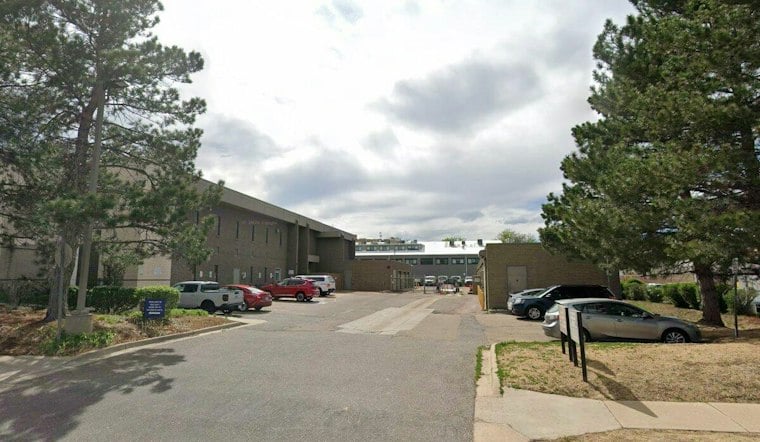
Call Boulder police about a barking dog or a car abandoned on your street later this month, and you might end up chatting with a computer instead of a person. The city plans a limited-window soft launch of an artificial intelligence assistant for non-emergency calls at the end of October.
The program is called ANET, short for Automated Non-Emergency Triage, according to dailycamera.com. It is designed to replace the clunky phone-tree system that currently forces callers to listen through a list of options and punch in a number to reach the right department. Instead, the AI agent will converse naturally in English and Spanish, handling reports like noise complaints, parking violations and abandoned vehicles.
The assistant will not take 911 calls under any circumstance. Per the City of Boulder, if the system detects a situation that needs urgent attention, it immediately transfers the caller to a dispatcher. Anyone who simply prefers a human can ask for one too, and the system will connect them to what the Daily Camera's reporting described as a “flesh-and-bone dispatcher.”
Why Dispatchers Need the Help
The numbers explain the push. About 70% of calls to the Boulder Police and Fire Communication Center are non-emergencies, the Daily Camera reports, leaving dispatchers juggling routine complaints alongside genuine crises. Brad Riggin, Boulder's public safety communications manager, said the goal is to free up staff for calls that matter most, telling krystal93.com the system would “help reduce the load on our dispatchers and allow them to concentrate on the emergency calls.”
Riggin was clear that the technology is not a staffing cut in disguise. “It will not affect our employee size,” he said, according to the same report from krystal93.com. Boulder's approach mirrors a broader trend: Dane County, Wisconsin recently joined La Crosse and Waukesha counties in deploying AI to manage non-emergency call volume, as reported by Spectrum News 1, with Dane County's AVA assistant fielding more than 24,000 non-emergency calls in its first month alone.
Other cities piloting similar systems have reported mixed but notable results. Colorado Springs police found that across four beta tests of its own AI chatbot, nicknamed S.A.R.A.H., roughly half of non-emergency calls could be completed without any human dispatcher involved, according to the Gazette. That department pays $170,000 annually for the underlying Axon Prepared AI platform. In Norfolk, officials expect their AI system to divert 35% to 40% of non-emergency calls immediately upon launch, per WAVY.
A New Hub Watching Over the City
Separate from the AI rollout, Boulder has opened a Public Safety Information Center that brings together camera feeds, patrol locations and body-worn camera data. The center can monitor as many as 225 camera feeds across the city in real time and track patrol vehicle locations, according to the report from krystal93.com.
The same facility houses Boulder's Drones as First Responder program. Boulder police now have seven drones that can reach almost anywhere in the city within minutes, Daily Camera's separate reporting on the department's surveillance tools found. On September 29, the program proved its speed in practice when a drone located a man police were searching for within two and a half minutes of launch, per a Daily Camera account of the deployment.
The program is part of a national surge: more than 1,000 public safety agencies nationwide had received FAA waivers needed to automate drone operations as of February 2026, according to the Electronic Frontier Foundation, which found the agency issued more such waivers between April 2025 and February 2026 than in the previous seven years combined.
For Boulder residents, the combination of an AI call-taker and an expanded drone-and-camera network marks a significant shift in how the city's public safety operations run day to day. Whether callers dial in about a noise complaint or officers need eyes in the sky fast, the city is betting that automation can stretch its dispatch and patrol resources further without adding staff.



