

























































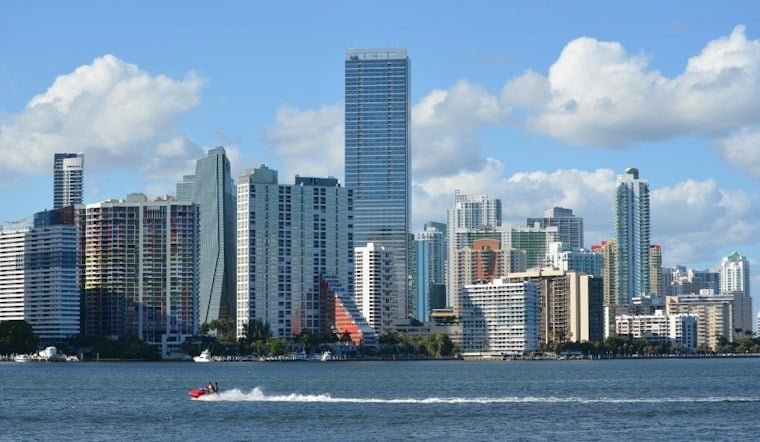
Frustrated owners at The Club at Brickell Bay packed a standing-room-only homeowners association meeting this week, demanding that Miami officials finally crack down on illegal short-term rentals they say continue unabated inside the 43-story, 643-unit tower despite a formal city order to stop. The building has been renting out roughly 85% of its units nightly, operating more like a hotel than a residential condominium, even though it lacks the state and local permits, licenses and business tax receipts required to do so.
The pressure comes months after Miami Assistant City Manager Barbie Hernandez sent a letter to the HOA board on August 11, 2026, stating that the Club was being operated like a hotel and demanding that all illegal vacation rentals cease immediately, according to the Miami Herald. That order followed inspectors' discovery of more than 300 short-term rental units operating in a building authorized for only 30, as CBS News Miami reported in August. The Club's board requested city records and a 90-day grace period to examine them, the Herald's reporting indicates.
A Board Elected in June, Still Renting on Airbnb
The Club's current five-member HOA board was elected in June 2026, following a tumultuous election that unseated former board president Karl de Borbon amid voter fraud allegations, a dispute Hoodline covered in its piece on the chaotic board election. De Borbon had instituted an internal reservation system that converted roughly 85% of the tower's 643 units into short-term rentals starting during the pandemic, according to reporting examined by the Tampa Bay Times. Notably, none of the current board members live in the building themselves, and per the Herald's reporting, they own and manage units listed on Airbnb and other vacation-booking sites.
At the board's second meeting since receiving the city's letter, held Thursday at 3 p.m., members appointed new grievance and design committee members without taking nominations — a move permitted under the Club's bylaws, the Herald notes. The board did not discuss the city's demand letter during that meeting, even as residents said the nightly rentals continue unabated. The board has outlined plans for repairs to pools, the jacuzzi, parking garage and elevators, along with tighter security and guest monitoring and a dress code, according to the Herald's account.
Residents Say the City Ignored the Problem for Years
Resident Ernesto Cuesta said government had neglected an out-of-control illegal-rental problem for years, per the Herald, though he added that the city now recognizes unauthorized lodging buildings are breaking the law. Cuesta said residents face major life-safety risks in their own homes, and he noted that owners can provide inspectors access to investigate code complaints — a workaround for one of the enforcement hurdles Miami code-compliance inspectors face, since they are sometimes denied access to private condo units altogether.
Fellow resident Yvonne Bayona has encouraged the city to revive a short-term-rental task force first created under former Commissioner Joe Carollo, and District 2 Commissioner Damian Pardo has approved bringing it back. Pardo, who represents Brickell, has also requested short-term rental records from the city manager and city attorney's offices and said the city is seeking proactive measures to stem illegal rentals, the Herald reports. Miami-Dade County Commissioner Vicki Lopez, a longtime Brickell resident, said illegal short-term rentals create serious safety and security concerns, and she has urged the Florida Department of Business and Professional Regulation — which oversees compliance with the Florida Condominium Act — to conduct more investigations. Pardo and Lopez said they are working jointly on solutions.
City Hall Moves, But State Law Limits Its Reach
Miami officially bans short-term rentals of less than 30 days in multifamily residential condos, and the city plans to rely on more rigorous code enforcement to address violations, since the state is also weighing new regulation of vacation rentals. On September 10, the Miami City Commission unanimously passed a directive sponsored by Pardo requiring the city manager to produce a comprehensive report on zoning violations and issue quarterly reports on condo buildings with repeat offenses, according to the Coconut Grove Spotlight.
But the city's hands are partly tied by state law. Under Florida Statute 509.032(7)(b), local governments are preempted from banning short-term rentals outright or restricting stay duration and frequency unless the local ordinance predates June 1, 2011, according to the Lodgify property-law summary. In June 2024, Governor Ron DeSantis vetoed Senate Bill 280, which would have centralized short-term rental licensing under the state Department of Business and Professional Regulation, preserving local inspection and registration authority, per Florida Realtors. A condo hotel certification requires far more stringent security, safety, fire protection and disability-access standards — a designation the Club has not obtained.
Falling Values and a Deadly Precedent Next Door
The commercialization of the Club has coincided with a steep drop in resale values. Miami-Dade County property sales records show the median sales price per square foot at the building fell from $697 in 2023 to $552 in 2026, a 20.8% drop over three years, according to data compiled by Josh Stein Realtor. Legal operators, by contrast, must hold a DBPR license and pay a 6% state sales tax plus county tourist development taxes that bring total effective lodging taxes to 10% to 13%, per Lodgify.
The stakes extend beyond money. In June 2025, a 17-year-old guest was fatally stabbed while sleeping inside an Airbnb unit at the nearby Icon Brickell tower, an attack Hoodline detailed in its report on the fatal Icon Brickell stabbing, which prompted press conferences and pending civil lawsuits over lax security in dual residential-hotel high-rises. Developers elsewhere in Brickell are taking a different path, building purpose-zoned projects like the 12-story, 171-unit Domus Brickell Park, completed in 2026, where 90% of owners participate in an integrated, hotel-managed rental program under proper commercial hospitality zoning, according to The Real Deal. Comparative reporting from WLRN points to New York City's Local Law 18, enforced in 2023, which created a dedicated enforcement department and strict host registration that virtually eliminated whole-apartment transient rentals — a contrast to Miami's ongoing struggle to police illegal rentals inside existing residential towers.





