

























































Laura Kelly and her sister Alicia found out they were pregnant just two days apart in early 2025, shared the same due date, and planned to deliver at the same hospital with the same medical practice. That coincidence became reality on September 12, when Laura gave birth by C-section and Alicia also gave birth at Bryn Mawr Hospital, giving their daughters, Alice and Lillian, the same birthday.
A Due Date Coincidence That Actually Held
According to NBC10 Philadelphia, Laura Kelly learned she was pregnant in early 2025, and her sister Alicia got a positive pregnancy test just two days later. “I wasn't expecting two days later Alicia to get a positive test,” Kelly said, recalling the moment the sisters realized they were on parallel tracks. Alicia's baby would be her third child, while this pregnancy marked Kelly's first experience with motherhood.
The sisters shared the same due date and were patients at the same medical practice, with plans to deliver at the same hospital, the station's report notes. Statistical probability models on childbirth timing suggest two independent mothers sharing an identical due date have roughly a 4% individual chance — and less than a 0.2% joint chance — of actually delivering on that exact estimated day, according to an analysis posted on Reddit's r/theydidthemath forum. Due dates mark 40 weeks of gestation, but only a small fraction of deliveries, spontaneous or scheduled, land precisely on that target.
Induction, Delay, and a Shared Birthday
Alicia was induced on September 11 and was in labor at Bryn Mawr Hospital, per the same account, while Kelly was scheduled for her own C-section. Kelly's delivery ended up delayed by emergency C-sections ahead of hers in the queue, pushing her procedure later than planned. By the time both babies arrived, the calendar read September 12 for each of them — making Alice and Lillian cousins who share a birthday.
Despite sharing a due date, a medical practice, and now a delivery date, the sisters did not share a hospital room, the report states. Kelly said she joked that sharing a room might have made the hospital bill cheaper, though that is not how it worked out. The families went on to celebrate the girls' first birthdays with separate parties.
Where the Sisters Delivered
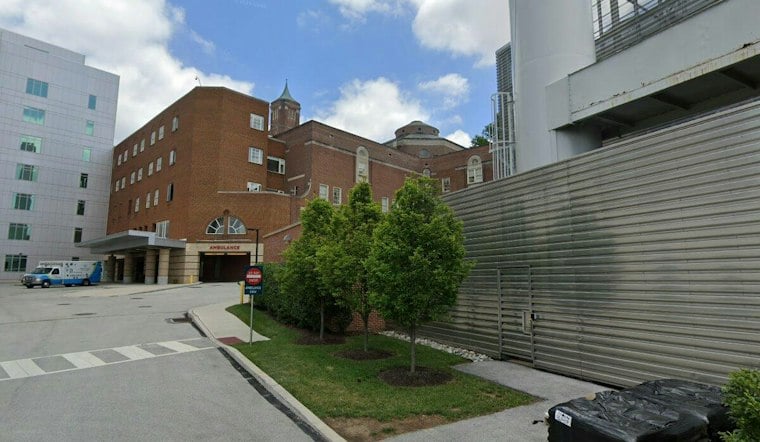
Bryn Mawr Hospital, part of Main Line Health, is a 264-bed acute care hospital founded in 1893; Wikipedia lists 1,730 births and 26 bassinets for fiscal year 2022. The hospital's maternity care runs through its 250,000-square-foot Patient Pavilion, opened in 2019, which houses a 25-bed maternity unit, two dedicated C-section operating rooms, a Level III neonatal intensive care unit, and 25 private postpartum rooms.
That private-room setup reflects Main Line Health's standard Labor, Delivery, and Recovery model, which moves mothers to private postpartum rooms after birth rather than grouping patients together, per Main Line Health's own guidance on hospital stays. Bryn Mawr Hospital was also named among Newsweek's Best Maternity Hospitals in 2023, earning five ribbons, the publication's top tier, for the fourth consecutive year, with only 159 hospitals nationwide reaching that designation that year.
A Wider Pattern of C-Sections
Laura's C-section fits into a broader pattern playing out across Pennsylvania and the country. In Pennsylvania, 31.2% of live births were delivered via C-section in 2024, according to March of Dimes PeriStats analysis of National Center for Health Statistics data. Nationally, provisional CDC data published in April 2026 showed the U.S. C-section rate reached a decade high of 32.5% in 2025, even as the general fertility rate hit a record low of 53.1 births per 1,000 women, as reported by Becker's Hospital Review.
Main Line Health's maternity centers also participate in the Pennsylvania Perinatal Quality Collaborative, a statewide network representing more than 90% of live births in Pennsylvania and tracking perinatal standards across 70 birthing hospitals statewide, according to the collaborative. Locally, maternity delivery options in Bryn Mawr narrowed earlier this year after the permanent closure of Lifecycle Wellness and Birth Center, an independent birth center that had partnered with Bryn Mawr Hospital on high-risk patient transfers, as reported by WHYY, leaving area mothers more reliant on hospital labor suites.
Same-day sibling births tend to draw attention well beyond one family. Hoodline covered twin sisters in Houston who gave birth to sons on the same day in August 2025, a reminder that these calendar coincidences, however statistically unlikely, keep showing up in families across the country.





