

























































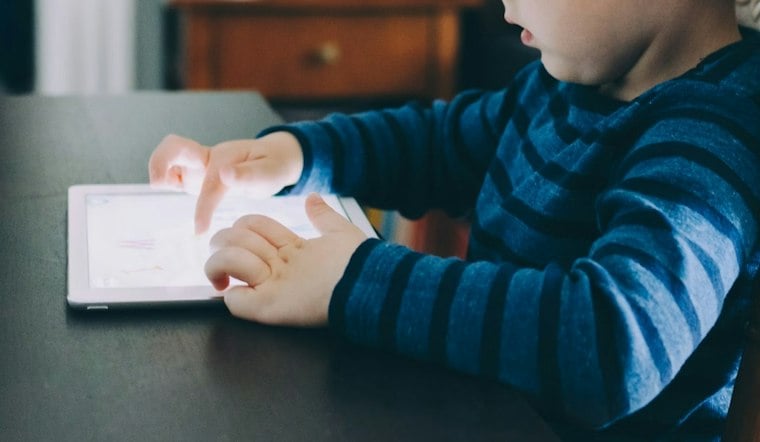
Burlingame parents are telling their school board to slow down on handing tablets to the district's youngest learners. As trustees weigh a proposed four-year technology plan for 2026 through 2030, families have asked the Burlingame Elementary School District to take a harder look at screen time limits and reconsider giving individual devices to children as young as transitional kindergarten.
The plan under consideration covers technology integration, infrastructure, cybersecurity and educational learning, according to the San Mateo Daily Journal. Parents have raised concerns about their children's screen time and asked the district to review its technology policies overall, with many specifically asking trustees to reconsider issuing individual devices to younger students, particularly those in transitional kindergarten through first grade.
What Students Are Already Using
The district already handed out individual tablets to students in transitional kindergarten through first grade during the current school year, the outlet reports. Students in fifth through eighth grade received individual MacBook Neo laptops over the same period, and the district plans to roll out laptops to second through fourth graders next school year. Burlingame has run a one-device-to-one-student program for students who needed a device since 2019, but the newer school-issued device policy has drawn parents' attention to each student's individual responsibility for the equipment.
That shift has sharpened the debate over how much supervision young kids need once a device is in their hands. Don Scatena, the district's deputy superintendent of Student Support Services, said devices themselves do not establish how frequently something is actually used, and that safeguards are needed. Another parent, Max Wesman, said the central concern is whether increased screen time comes at the expense of foundational learning experiences. Parent Shirlene Loi said she hopes the district will take more time to consider the policies proposed in the technology plan.
The Proposed Daily Limits
The plan on the table includes daily teacher-use guidelines for every grade level. Transitional kindergartners would see less than 30 minutes of screen time a day, while kindergarten through second grade would range from 30 minutes to one hour. Third through fifth graders would be guided toward 30 to 90 minutes daily, and sixth through eighth graders could see anywhere from 70 minutes to two hours. The plan also includes guardrails for kindergarten through second grade that would prohibit passive video watching as a primary mode of instruction, per the same Daily Journal report.
Burlingame board president Doug Brown said he wants the program to add value rather than create problems for families at home. Trustees have also pressed district staff with their own questions, asking how the district would still meet computer science standards in the youngest grades if screen use is pared back. Trustee Katie Jay said the district has a responsibility to address state-provided standards even as it weighs limiting device use. Trustees asked staff for more detail on which standards the four-year plan meets, why technology use is required or beneficial to learning, and what input teachers have given on use in younger classrooms. The plan is expected to come back before trustees later this year for further refinement and approval.
Part of a Wider Reckoning Over Screens
Burlingame's debate lands amid a broader national reassessment of classroom technology. At least 17 states are considering or have already passed bills aimed at reining in digital technology use during school hours, according to Education Week. The outlet also reports that districts in at least 37 states and the District of Columbia are now required to restrict student cellphone use. An Education Week Research Center survey found 61% of educators believe most parents and caregivers think there is too much technology in schools, compared with 37% who said the amount feels about right. The same survey found educators gave mixed reviews of education technology overall, citing negative effects on students' social-emotional development and well-being alongside a boost to engagement.
Los Angeles Unified, the nation's second-largest school district, has moved further down this road. Its Board of Education unanimously approved a resolution in April requiring the district to develop a classroom screen-time policy for the 2026-27 school year, Education Week reported. That resolution calls for eliminating student use of digital devices from early education through first grade and barring student-led use of YouTube or other video-streaming platforms. The resolution's lead sponsor said at the time that the effort was not about going backwards, but about rethinking screen time in schools.
Under the resulting LAUSD policy, the district generally prohibits district-issued devices for students from early education through first grade, and second and third graders are limited to zero to 20 minutes of screen time daily, with fourth and fifth graders capped at zero to 30 minutes, according to EdSource. LAUSD's own guidance states that educational technology is a tool meant to support, not replace, teachers and classroom learning, and calls for managing cumulative screen exposure across the school day and homework while applying age-appropriate guardrails. EdSource also reports that some LAUSD teachers have struggled to adjust after years of technology woven into their curriculum, even as the district has made professional-learning opportunities available to administrators and teachers to help with implementation.
For now, Burlingame's plan remains a work in progress rather than a settled policy. Trustees have asked for more information before moving forward, and the proposal is due to return to the board later this year for further refinement and a vote on approval.




