

























































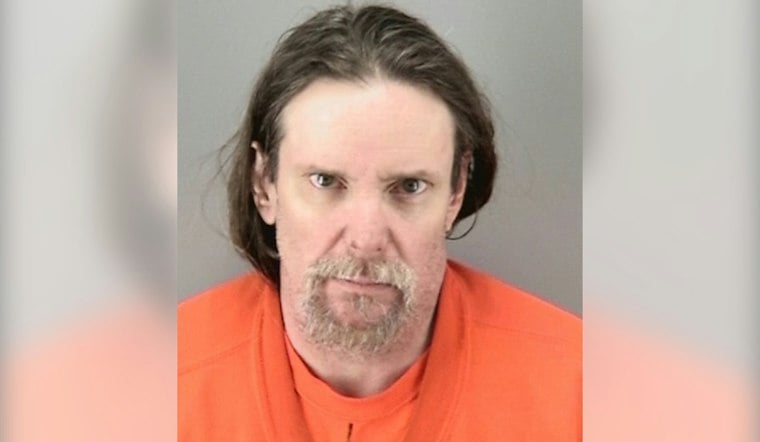
California Supreme Court justices have unanimously denied Gerald Rowe's appeal, leaving intact his first-degree murder conviction for the 2019 torture killing of George Randall-Saldivar inside a downtown San Francisco apartment. The 23-year-old victim was tortured for hours, injected with drugs and stuffed into a suitcase that was rolled to the waterfront and dumped into the bay, according to trial evidence. His body surfaced near Pier 39 two weeks later.
The high court's denial, reported Wednesday by the San Francisco Chronicle, closes out Rowe's challenge to a First District Court of Appeal ruling that had already upheld his conviction and the jury's finding that the killing was premeditated. Rowe is serving life in prison without the possibility of parole. His attorney did not immediately respond to a request for comment, per the Chronicle's reporting.
How the Killing Unfolded on Market Street
George Randall-Saldivar knew Rowe and Angel Anderson and was visiting their apartment on the 1200 block of Market Street on Feb. 3, 2019, when the attack began, according to CBS News. Rowe and Anderson tied his hands behind his back, wrapped a noose around his neck and beat him with their fists and pliers for more than four hours, the station reported, and also sexually assaulted him. Public authorities have disclosed no motive for the attack.
Rowe then returned with a supply of fentanyl, and the pair injected Randall-Saldivar with a mixture of fentanyl, methamphetamine and cocaine, police said. About 90 seconds later he began to convulse and struggle to breathe, per the same account, before losing consciousness. His body was left in the apartment until the next day, when Rowe and Anderson donned disguises and rolled a suitcase containing his remains nearly two miles to the bay near Rincon Park.
Guilty Verdict and Sentencing
A jury convicted Rowe of first-degree murder and conspiracy to commit murder, finding the killing was willful, deliberate and premeditated, as detailed by Courthouse News. He was also convicted of murder with the use of poison. Anderson separately pleaded guilty to the murder and is serving 25 years to life, while Rowe received life without parole on the murder count and 25 years to life on the conspiracy count, though the appeals court later ruled that conspiracy sentence could not stand alongside the murder sentence.
The Poison Instruction and the Appeal's Core Argument
Rowe's appeal centered partly on a jury instruction describing fentanyl, methamphetamine and cocaine as poison — a legal classification California defines as a substance capable of destroying life. As MetNews reported, the state appeals court in its July ruling acknowledged the doses injected into Randall-Saldivar would not actually qualify as poison under that standard, but the court still concluded the instructional error was harmless and left the murder conviction intact.
The appellate court also sided with Rowe on one narrower point, ruling that a defendant cannot be punished for both murder and conspiracy to commit murder arising from the same killing, according to Courthouse News. That meant Rowe's conspiracy sentence was ordered stayed even as his underlying murder conviction and life-without-parole sentence remained in force. First-degree murder under California law requires a willful, deliberate and premeditated killing, and the jury's finding on that point was among the issues Rowe had asked the state's highest court to revisit.
With the Supreme Court's unanimous denial of review in the case, known as People v. Rowe, S298263, Rowe's state appeals have reached their end. The case remains one of the more disturbing crimes to come out of downtown San Francisco in recent years, with a young victim who, according to police, had simply gone to visit people he knew.





