

























































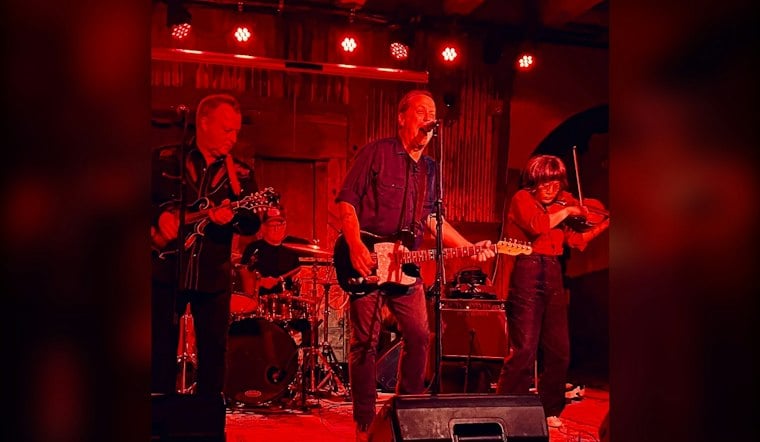
Dean Schlabowske, the 61-year-old co-founder of the Waco Brothers, was diagnosed with acute myeloid leukemia after returning from a United Kingdom tour with the band, and he has already started chemotherapy while facing a separate heart condition that will require open-heart surgery. The diagnosis came after weeks of fatigue and nausea, and now Chicago's tight-knit music community is rallying to help cover costs that are approaching six figures.
Schlabowske received his diagnosis at an urgent care clinic after a few weeks of feeling fatigued and nauseous, according to the Chicago Sun-Times. After a week of procedures, he started his first round of chemotherapy. Acute myeloid leukemia is an aggressive cancer of the blood and bone marrow, and on top of that treatment, doctors discovered a weak heart valve that will require open-heart surgery of its own.
A Grueling Weekly Commute for Treatment
Schlabowske is now commuting weekly from the Old Irving Park apartment he shares with his wife to Lutheran General Hospital in Park Ridge, the Sun-Times reports. Per the Chicago Reader, he recently returned home after a monthlong hospital stay, and he's expected to need the heart-valve surgery before he can even begin stem-cell treatment for the leukemia. In the meantime, he cannot see people for fear of infection, and he's focusing on his regimen of appointments and medication, plus a daily walk.
The dossier identifies Schlabowske's wife and musical collaborator with two different surnames across sources — the Sun-Times refers to her as Jo Watson, while a separate interview on tandes.substack.com refers to her as Jo Walston. He is insured through her job as a bookkeeper for a local business, but as the same Sun-Times report notes, he's carrying a $10,000 deductible for this year and next, plus skyrocketing medical costs. He said he would put everything on credit cards and go bankrupt if that's what it took.
GoFundMe Surges Past Its Goal
A friend in Austin, Texas launched a GoFundMe campaign to help cover expenses, and within a week donors had met its $65,000 limit; the total was hovering around $80,000 as of the Sun-Times report. The Chicago Reader's account of the same campaign put the goal at $80,000 and said it was within $5,000 of that figure at the time of publication — a discrepancy the record should note rather than resolve. Schlabowske said he doesn't recognize many of the donors but believes they are music fans, adding that the goodwill built over years can provide support when it's needed most.
As a touring musician whose income also comes from side jobs, Schlabowske can no longer tour or work those jobs while he undergoes treatment. His two dogs are expected to return home soon, which he says he needs for the emotional relief. He has said he's grateful and touched by the assistance pouring in from fans.
Nearly Four Decades Building Chicago's Sound
Schlabowske grew up in Milwaukee before moving to Chicago in 1987, eventually working at the legendary Wax Trax! record label. His noise-rock trio Wreck recorded its debut EP with Steve Albini in 1990, and the band later hired Mekons co-founder Jon Langford, who had moved to Chicago from Wales, to produce its follow-up. That collaboration led Schlabowske to form the country-punk outfit the Waco Brothers with Langford and Tracey Dear.
The Waco Brothers played their first show standing atop the bar at the Rainbo Club in Wicker Park, and by 1995 they'd released their first recording, “To the Last Dead Cowboy.” Decades of political and socially conscious songwriting later, the Sun-Times describes the band as one of Chicago's most enduring. Schlabowske has also released records with his side project Dollar Store and collaborated with his wife on bluegrass and honkytonk country — she formerly fronted the Austin band the Meat Purveyors.
The outpouring for Schlabowske follows a similar wave of support for Chicago DJ Greg Haus, who was diagnosed with Guillain-Barré syndrome in late September after becoming nearly completely paralyzed; a separate fundraiser for Haus sought $45,000 to cover deductibles, out-of-pocket costs and months of rent and utilities, according to the Chicago Reader. Two local music-community emergencies, two GoFundMe pages — a reminder of how often Chicago's artists are left leaning on each other when insurance alone isn't enough.





