

























































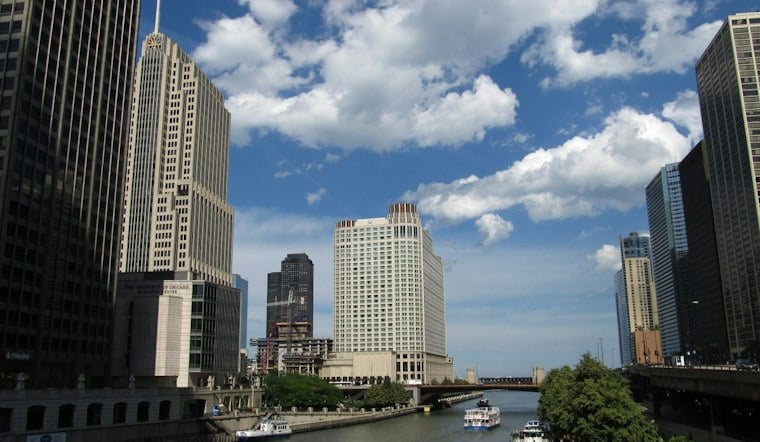
Chicago's regional planning agency is trying to answer an unusually big question: what does this metropolitan area need to survive and thrive for the next hundred years? The Chicago Metropolitan Agency for Planning has built a roadmap called The Century Plan to prepare the region's 284 communities for challenges ranging from drought-prone suburbs to a power grid that could face additional pressure from data centers and electric delivery trucks.
The plan, still in its preview phase according to WTTW News, is built around what CMAP calls the “polycrisis” — its term for the combined pressure of increasing severe weather, an aging population and fast-evolving technological needs across northeastern Illinois. CMAP has identified five grand challenges it says the region must confront together: transportation, water, the electric grid, housing and open space.
Groundwater Towns Could Face Drought Within a Decade
Water supply is already splitting the region into two camps. Roughly two-thirds of communities in the CMAP region rely on Lake Michigan for their water, while roughly one-third depend on groundwater, and it's that second group facing the sharpest warning. Erin Aleman, CMAP's executive director, said groundwater-dependent communities could face drought conditions as early as the beginning of the 2030s, according to the station's report.
CMAP says it is focused on protecting regional water resources and keeping drinking water affordable and accessible as those pressures build. That local warning tracks with a broader regional forecast: a water-demand projection for northeastern Illinois covering 2020 through 2050, updated by CMAP, Illinois-Indiana Sea Grant and University of Illinois Extension, found that overall water use is actually expected to keep declining, thanks to steady advances in conservation and efficiency that are outpacing population and employment growth. Even so, the same forecast cautions that in some areas, demand will exceed available groundwater supplies. Those strains aren't hypothetical: drought and hot temperatures have burdened Illinois since last summer, with long-term lack of precipitation and high heat squeezing water supplies statewide, per WTTW News.
Data Centers and Delivery Trucks Strain the Grid
Illinois currently exports energy, but CMAP's projections indicate the state could need to begin importing energy by the early 2030s just to sustain existing business activity. The electric grid is being squeezed from multiple directions at once, the station's report notes — growing data-center electricity demand, extreme heat and the electrification of freight and delivery vehicles are all adding load simultaneously.
Aleman offered a striking comparison to illustrate the scale of the problem: a single medium-sized delivery truck facility could consume as much electricity as a community of 20,000 to 25,000 people. She emphasized that the region needs to consider battery and solar storage investments to supplement existing electric infrastructure rather than relying solely on traditional generation.
Outside analyses point in the same direction. The Union of Concerned Scientists modeled data centers as representing 64 to 72 percent of Illinois's electricity-demand growth between 2025 and 2030, according to the Union of Concerned Scientists. Illinois was still a net electricity exporter in 2023, sending about one-fifth of its generated power to other states, but that same modeling suggests data-center load growth could flip Illinois into a net importer somewhere around 2030 to 2035. Separately, ComEd has said that if every project in its development pipeline reaches maximum requested demand, system peak demand could more than double by roughly 2040, Capitol News Illinois reported.
An Older, Smaller, More Transit-Dependent Region
Demographics are shifting underneath all of this too. CMAP projects the region will have approximately 700,000 more residents over age 65 by 2050, even as the population under age 20 declines by roughly 10 percent over the same period. Those shifts require communities to rethink housing needs and residents' access to public transportation and outdoor spaces, the agency says, while open space itself helps manage stormwater, reduce flooding and mitigate urban heat.
Aleman pointed to the creation of the Northern Illinois Transit Authority, which oversees the CTA, Metra and Pace, as an example of the kind of regional cooperation the Century Plan is built on. She said future transit priorities should include integrating fares, improving safety and security, and creating seamless travel across the region's transit systems.
A Separate, More Immediate Transportation Blueprint
While the Century Plan looks out a hundred years, CMAP has already moved on a narrower, nearer-term document. The agency's regional transportation blueprint, which sets priorities through 2050, was approved by the CMAP board and the region's Metropolitan Planning Organization Policy Committee, according to Block Club Chicago. That plan identifies 15 priority investments, including improvements to North DuSable Lake Shore Drive and the Red Line Extension. Block Club Chicago notes that approval marks planning milestones, not a green light to start construction — individual projects still need their own funding, design and approval processes.
Echoes of a Plan From More Than a Century Ago
CMAP has drawn an explicit parallel between the Century Plan and the 1909 Plan of Chicago, which sought to preserve public assets including the lakefront and forest preserves. That earlier plan, commissioned in 1906 by the Commercial Club of Chicago from Daniel Burnham and Edward H. Bennett, declared that “the lake front by right belongs to the people,” according to WTTW. It also envisioned a metropolitan area where large parks would be located, improved and maintained at joint expense.
The 1909 plan sought to beautify Chicago and improve the efficiency of commerce, and Chicago's City Council received it in July of that year, creating a planning commission by that November, per the Chicago Architecture Center. One of its most visible legacies is still here today: 25 of Chicago's 29 miles of lakeshore now serve as public parkland.
Aleman has said communities cannot solve these problems alone, and that regional collective action is needed to establish systems for success over the next century. CMAP's next immediate goal is building support among state and local leaders to implement the Century Plan once it's adopted, which the agency is targeting for next fall, with the final version slated for completion by October 2027.





