

























































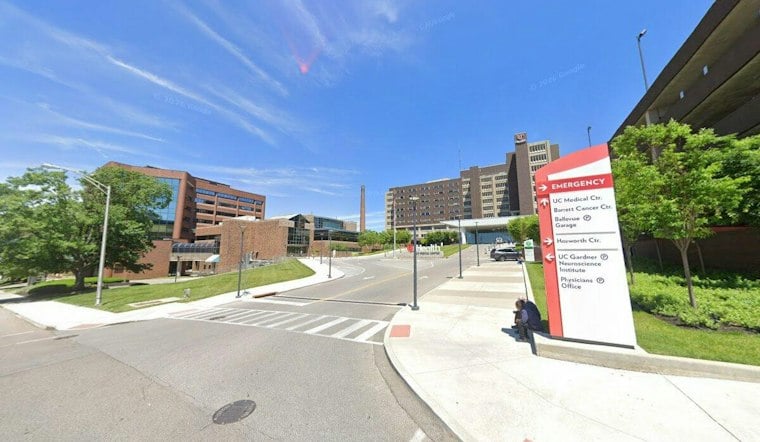
Ron Miller sat in a waiting-room chair at UC Medical Center's emergency department as the feeling kept draining from his legs, and after hours without treatment, he walked out untreated. He came back later the same day, was finally admitted, and underwent back surgery for a herniated disk pressing against his spinal nerves. In between, hospital staff apologized to him for missing his surgeon's notes requesting direct admission.
Miller, 43, developed a loss of feeling in his legs in August, according to the Cincinnati Enquirer. The spinal surgeon who had operated on him in 2025 told him to go immediately to UC Medical Center's emergency room. He arrived around 10:30 p.m., got his vital signs checked, and underwent a CT scan around 2 a.m. Then he waited roughly four more hours with no further treatment before leaving. Ebony J. Wynn, who was with him, said they felt ignored and that nobody was listening despite what felt like an emergency, per the same account.
Miller's ordeal illustrates a wider slowdown playing out across Cincinnati-area emergency rooms, where visits now average almost three hours according to CMS data cited by the Enquirer, with individual hospitals ranging from two to four-and-a-half hours. St. Elizabeth Healthcare in Edgewood, Mercy Health West Hospital, and The Jewish Hospital each averaged under two-and-a-half hours, while St. Elizabeth Healthcare in Florence, Bethesda North, Good Samaritan, and Mercy Health Anderson all topped that mark. The Christ Hospital's emergency room averaged about three hours — and UC Medical Center's emergency room, the region's busiest, averaged well over four.
A Trauma Center Built Bigger, Still Overwhelmed
UC Health's $221 million Clifton Campus Revitalization project included a 41,000-square-foot expansion and renovation of the UC Medical Center emergency department in July 2023, adding capacity, dedicated behavioral health spaces, and streamlined patient flow, according to UC Health. But the expansion did not stop beds from filling faster than patients could be seen, and UC Health providers are struggling to keep up amid a hiring slowdown, the Enquirer reports.
UC Medical Center remains the only adult Level I trauma center in the region, operating 724 licensed beds and fielding more than 70,000 emergency department visits a year while treating trauma patients, according to information UC Health provided. About 7,000 of those annual patients arrive as transfers from regional hospitals, usually Level 1 trauma cases needing immediate treatment, per the Enquirer's reporting.
Dr. Gregory Fermann, chair of emergency medicine at UC Health, described the situation plainly as a crisis. He explained that the hospital's Emergency Severity Index requires patients with life-threatening conditions be treated first, which can mean sending someone back to a waiting-room chair even under difficult circumstances. That triage framework mirrors a system used by roughly 94 percent of U.S. emergency departments nationwide, according to the EMSC Innovation and Improvement Center, which ranks patients from Level 1, requiring immediate lifesaving intervention, down to Level 5, non-urgent.
Understaffed Floors, Overloaded Nurses
Kylee Ham, president of the registered nurses association at UC Medical Center, said understaffing is preventing nurses from giving patients the level of care they deserve. ER staffing ratios usually cap a registered nurse's patients at four, but some nurses are handling eight at once, per the Enquirer's reporting. Some nurses have reported suicidal thoughts, and some are leaving bedside care or the profession entirely.
Insufficient staffing on hospital floors causes beds to sit unavailable, which in turn leaves admitted patients stuck in emergency rooms, sometimes for days, forcing emergency nurses to simultaneously stabilize new arrivals and care for patients who are technically already admitted. The American College of Emergency Physicians has declared this kind of “boarding” — admitted patients waiting hours or days in ER hallways or chairs for lack of inpatient beds — a national public health emergency, according to ACEP, warning that it raises mortality risk and accelerates clinician burnout.
Ohio lawmakers introduced House Bill 521, the Ohio Nurse Workforce and Safe Patient Act, in October 2025, proposing mandatory registered nurse-to-patient staffing ratios across hospital units — including a 1:5 ratio for post-acute and skilled nursing beds — to curb burnout and understaffing, per the Ohio Legislative Service Commission. The bill is backed by the Ohio Nurses Association amid growing concern over bed unavailability statewide.
Why Ohio's ERs Absorb So Much Strain
Under the federal Emergency Medical Treatment and Active Labor Act, Medicare-participating hospitals must provide a medical screening examination to anyone requesting evaluation or treatment, and stabilizing treatment when the person has an emergency medical condition, regardless of insurance status or ability to pay, according to the HHS Office of Inspector General. That mandate turns ERs into a default safety net, especially where primary care is scarce or unaffordable.
That dynamic is acute in Ohio. The state ranks 44th nationally in health value, meaning residents experience worse health outcomes and spend more on health care than residents of 42 other states, according to the Health Policy Institute of Ohio's 2024 Health Value Dashboard. The Enquirer reports that only about 70 percent of young adults in Ohio said they had a primary-care physician as of June, and fewer than half of those had actually seen that doctor in the past year.
Candice Elmore, dean of Galen College of Nursing's Cincinnati campus, said emergency rooms function as a safety net for people who struggle to follow care plans, attend appointments, or afford medications. She said many patients are choosing between medication and basic necessities, and changes to Medicaid eligibility requirements and funding are expected to push more people to delay care until they need emergency treatment, the Enquirer notes. Emergency-care workers are concerned that rising health-care costs, more uninsured patients, and shifting health-system funding will only lengthen ER visits further.
Nationally, the strain is visible in the numbers. U.S. emergency departments logged 155.4 million visits in 2022, with 11.5 percent resulting in hospital admission and only 40.6 percent of patients seen by a clinician within 15 minutes, according to the CDC.
Other Cincinnati Hospitals Racing to Expand
UC Health isn't alone in betting on bricks and mortar to ease the pressure. TriHealth completed Phase One of a $240 million modernization at Good Samaritan Hospital in a five-story expansion in September, adding a 168,000-square-foot ambulatory building with an expanded emergency department and consolidated diagnostic imaging, part of a campus plan running through late 2028.
Staffing pressures have also collided with safety concerns inside Cincinnati-area emergency departments. Industry research published in 2026 found more than 80 percent of healthcare nurses report experiencing workplace violence during their careers, with ER nurses facing physical assaults at especially high rates due to unvetted access and high-stress delays — a strain that compounds the turnover already driven by chronic understaffing.





