

























































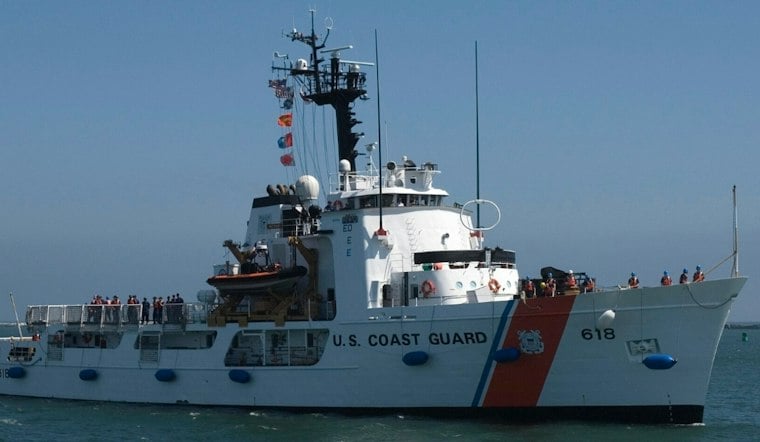
The U.S. Coast Guard says it stopped a cargo ship called Grace in the Caribbean Sea on Sept. 5, intercepting what officials believe was a fuel shipment headed for Cuba. A boarding team escorted the Comoros-flagged vessel to the Mexican port of Progreso, where naval inspectors say they found large quantities of fuel hidden in its ballast tanks.
According to theguardian.com, the vessel was stopped between Cuba and Mexico and was believed to be employing tactics common among the so-called dark fleet — ships that try to disguise their ownership, movements or cargo. The Coast Guard did not say how much fuel Grace was carrying or how investigators determined its cargo was bound for Cuba, the outlet reported.
Once in Progreso, a Mexican Navy inspection team confirmed the presence of large quantities of fuel in the ship's ballast tanks, along with containers believed to hold illicit fuel, according to abcnews.com. Ballast tanks are normally built to hold water or air for buoyancy control, not fuel, and using them that way raises the risk of a spill. Grace is registered in Comoros, per maritime-executive.com, which also reported that the ship remained at Progreso following the inspection.
A Multi-Agency Operation at Sea
The interdiction was not a one-boat affair. Per gcaptain.com, the operation involved the cutters Alert and Charles Sexton, an HC-144 surveillance aircraft, Tactical Law Enforcement Team South and Coast Guard Southeast District personnel. The same report notes the Grace case and an earlier detention are part of a broader effort with U.S. agencies and international partners targeting dark-fleet, stateless and noncompliant vessels.
That earlier case involved a ship called Jaira Provider, which the Coast Guard says it seized on June 28 while it was carrying more than 200,000 gallons of fuel bound for Cuba, according to the same ABC News account. That vessel's fuel was likewise stored in ballast tanks, and the Coast Guard described the 1978 offshore tug and supply ship, flagged in St. Kitts and Nevis, as a substandard vessel, per maritime-executive.com's reporting.
Cuba's Fuel Crisis Deepens
The seizures land amid what Cuba is calling its worst energy crisis in decades. The island's energy minister said earlier this year that Cuba had run out of fuel oil and diesel entirely, telling theguardian.com, “We have absolutely no fuel [oil] and absolutely no diesel.” The same report described rolling blackouts on the island that can last 22 hours or more, and noted that neither Mexico nor Venezuela has sent fuel to Cuba since a January 2026 U.S. executive order threatening tariffs on countries shipping fuel there.
Washington has simultaneously carved out an exception for Cuba's private sector. The U.S. Bureau of Industry and Security released guidance in February authorizing exports and re-exports of U.S. gas and petroleum products to eligible Cuban private-sector entities, and U.S. suppliers had shipped roughly 30,000 barrels of fuel to that sector by late March, according to reuters.com. Mexico's state oil company, Pemex, had meanwhile supplied Cuba with $496 million worth of crude oil and petroleum products in 2025, shipping 17,200 barrels per day of oil and 2,000 barrels per day of refined products through the end of September that year, per a separate Reuters report.
Open Questions Remain
Much about the Grace case remains unresolved. The Coast Guard's own statement did not specify how much fuel was aboard, how authorities determined it was Cuba-bound, or details about the ship's owner, leaving significant gaps in the public record even as the vessel sits impounded in Progreso.


