

























































A University of Iowa marching band member died after collapsing from heat stroke during a home game, and less than two weeks later a South Carolina matchup was played in conditions so brutal that officials shortened the fourth quarter just to get players off the field. Across the country this season, college football has run headlong into a problem that water bottles, cooling tents and shortened quarters cannot fully solve.
A Band Member's Death In Iowa
Derek Phillips, a University of Iowa Hawkeye Marching Band member, collapsed and went into cardiac arrest before halftime of Iowa's season-opener against Northern Illinois, according to the original seed reporting from AL.com. He was placed on life support for three days before he died. Temperatures in Iowa City reached 95 degrees that day, with heat indexes above 100, according to The Gazette. The university said his death was heartbreaking for everyone who cared for him.
Iowa had already taken precautions that day, distributing 4,000 refillable water bottles and expanding first-aid resources with cooling areas and additional on-call ambulances, the Gazette reported. The Hawkeye Marching Band canceled its halftime performance because of the heat. The measures weren't enough to prevent the tragedy, and the Phillips case has become a grim marker in a season defined by dangerous heat at college stadiums nationwide.
South Carolina's Hottest Game On Record
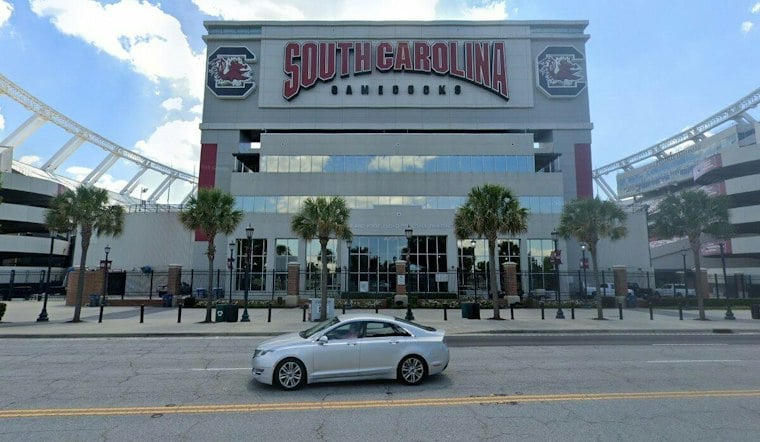
Just days later, South Carolina hosted Kent State in what became the hottest game in Williams-Brice Stadium history, with a 95-degree kickoff temperature and a real-feel reading that rose above 110 degrees during the game, according to thestate.com. The Gamecocks won 57-0 in a game decided by halftime, and officials shortened the fourth quarter from the usual 15 minutes to 10 because of the record heat, per the same report. Per AL.com's reporting, the game reached a 106-degree heat index.
The heat wasn't confined to one stadium. Emergency services and fire crews responded to more than 700 heat-related incidents at South Carolina's season opener, according to North Carolina State University's College of Natural Resources. Kentucky had more than 100 heat-related emergencies during its own first week, per AL.com. Elsewhere, a game between Washburn and Colorado School of Mines reached a 107-degree heat index and ended in a 16-16 tie, while an FCS matchup between North Alabama and Alcorn State hit 100 degrees at Bank Independent Stadium in Florence, Alabama — though North Alabama reported no serious medical issues, having set up a weight room, ice-filled tumblers and an air-conditioned tent for cooling, according to AL.com.
Numbers Show A Hotter, Earlier Season
This isn't a one-off. Early-season college football games are reaching dangerous temperatures more often than before, AL.com reports. SEC week 1 high temperatures averaged 88.4 degrees from 1999 through 2010 but climbed to an average of 90.8 degrees from 2011 through 2026. SEC towns saw temperatures above 100 degrees just once on an opening Saturday between 1999 and 2010, but recorded 10 such Saturdays above 100 degrees between 2011 and 2026, with four of those years seeing multiple towns hit triple digits simultaneously.
Shel Winkley, the Texas A&M in-stadium weatherman and Climate Central chief meteorologist, said extreme heat is not only an SEC problem, and noted that the last 90-degree day of the year now often falls in October or even late October, according to AL.com. The EPA has tracked a similar national trend: the average rate of extreme heat events rose from two per year in the 1960s to 10 per year between 2010 and 2020, per the NC State research center. That broader climate shift is the backdrop against which schools are now scrambling to protect players, band members and fans alike — exposure that, researchers note, often begins well before kickoff, during tailgating and the walk into the stadium, and can bring dehydration, headaches, dizziness and heat exhaustion to fans sitting through several hours in the stands, particularly older fans and those with existing health conditions.
Schools Try Stopgap Fixes, With Mixed Leverage
Alabama has installed hydration stations throughout Bryant-Denny Stadium, allows fans to refill water bottles for free, and encourages neck fans and cold towels, while stationing cooling tents, electric fans and emergency medical workers throughout the concourses, according to AL.com. Alabama athletic director Greg Byrne, who took the job in 2017, said the Gamecocks would play all night games during the hottest stretch of the season if they could, but acknowledged the SEC currently lacks the flexibility to schedule only night games because the conference needs daytime television windows for ABC and ESPN. Mike Aresco, who served as American Conference commissioner from 2013 through 2024, said schools have limited leverage on the issue since refusing to play threatens their television contracts; he tried to avoid early games for Tulane, South Florida and Houston during the hottest months, per AL.com.
Starting in 2027, college football's Week 1 will move back by one week, giving schools an extra week of heat precautions, AL.com reports. FCS programs have more room to maneuver in the meantime. North Alabama, an FCS school in Florence that largely streams its games rather than airing on major networks, chooses its own kickoff times, and Josh Looney said FCS schools have more flexibility to pick later start times, according to AL.com.
Auburn's Atlanta Move And The Dome Question
One of the more notable scheduling changes this season sent Auburn's home opener against Baylor from campus to Mercedes-Benz Stadium in Atlanta. The move was framed by both schools as a chance to provide NIL opportunities for Auburn players — ESPN reported the arrangement was tied to the Aflac Kickoff Game, with kickoff set for Sept. 5, 2026, per Baylor's athletic department. AL.com reports the relocation also provided relief from 90-degree heat as a side benefit. Alabama, by contrast, has prioritized marquee home-and-home series on campus, including matchups with Ohio State and Notre Dame, and has no current plans to move a game to Atlanta.
Moving games indoors isn't a simple fix, either. Scott Ramsey, president of the Nashville Sports Council and Music City Bowl, said stadiums generally lack the four locker rooms needed to host back-to-back games, and the NFL schedule complicates any effort to shift college games into domes, according to AL.com. Nashville's new Nissan Stadium will have air conditioning and a roof and could host early-season games when it opens in 2027, while football programs more broadly face limited venue capacity for hosting multiple early-season games even as stadium projects at Northwestern and Kansas are upcoming or under construction.
Jacksonville's Middle-Ground Approach
Jacksonville offers a different model. The EverBank Stadium renovation, led by design firm HOK, is expected to cost about $1.4 billion according to HOK, though AL.com cites a cost estimate of about $1.5 billion. The project will include a transparent shade canopy over the seats and field that is open at the ends to allow airflow, rather than full air conditioning. HOK says the canopy and landscaped green space will reduce heat retention by more than 70%, and jacksonville.com reports the design will reduce radiant heat within the seating bowl and concourses by 10 to 15 degrees over direct sunlight, with breezeways created by opening the building's four corners to circulate air. The finished stadium will seat 63,000 fans and can expand to 70,000 for college football games, with completion expected in 2028.
Peter Broeder said heat was a major factor in the EverBank renovation, according to AL.com, and the canopy approach is expected to save costs compared with a full roof requiring air conditioning. Stadium shade additions more broadly can cost between $50 million and $100 million, per AL.com's reporting — a fraction of a full renovation, but still a steep price tag for athletic departments weighing their options.
Planning For Heat
Jonathan Casper of North Carolina State University said heat will need to play a bigger role in scheduling, stadium design and game-day operations going forward, recommending water filling stations, shade, cooling areas, clear information and trained staff as baseline measures every program should have in place.
Once the season is underway, schools are testing a patchwork of responses: shortened quarters, relocated games, canopy-covered stadiums and water stations. But as the death of Derek Phillips and the record heat in Columbia both make painfully clear, college football still hasn't found an answer that works every time, for everyone in the stadium.





