

























































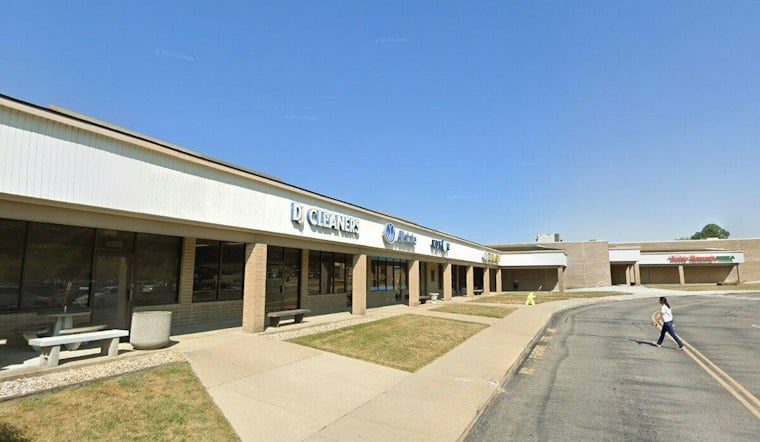
A rezoning request that once drew an unfavorable recommendation from Columbus planning staff finally cleared the Plan Commission, but only after members rewrote the developer's own sidewalk compromise on the spot. The 11.9-acre proposal from Beacon Hill LLC at 4840 W. Carlos Folger Road would convert agricultural land into multi-family housing, and it now heads to city council for a final decision.
The vote came after months of back-and-forth over pedestrian infrastructure, according to The Republic News. Petitioner Evan Kleinhenz, who presented the request alongside surveyor Tim Allen, had proposed a sliding scale: if the development exceeded 17 units per acre, up to a maximum of 25, Beacon Hill would be required to build a sidewalk connecting the property to Westhill Shopping Center at its own expense. Kleinhenz argued the walking route would offer the closest path to a grocery store and that a continuous sidewalk would make that route the safest option.
City planning staff initially pushed back even harder. Staff had given the project an unfavorable recommendation in August, prompting Kleinhenz to withdraw the request before it reached city council and refile it with changes. Even the refiled version drew a preliminary unfavorable recommendation, with staff citing insufficient infrastructure to support dense residential development for the foreseeable future — sidewalks chief among their concerns. Staff ultimately asked for four commitments before they would support a favorable recommendation.
A Density Threshold Becomes the Sticking Point
Assistant Planning Director Melissa Begley floated her own version of a compromise, proposing that no sidewalk be required at all if the development exceeded 10 units per acre. That didn't satisfy commission member Michael Kinder, who said he opposed any sidewalk commitment tied to density thresholds because Kleinhenz's own presentation had emphasized walking access to a grocery store as a selling point for the project in the first place. Other commission members pushed back on the density carve-out altogether, arguing a sidewalk should be built regardless of how many units ultimately get constructed.
Kleinhenz countered that the sidewalk requirement was unprecedented and could make the project financially unworkable. The tension reflects a broader pattern at the commission: city planners have consistently prioritized pedestrian safety and physical infrastructure, including sidewalks and sight distances, before endorsing high-density Residential Multi-Family designations, as seen in city planning staff's unfavorable recommendation for a separate 8.48-acre Rocky Ford Road rezoning in August 2025, which cited the need to preserve commercial opportunities and meet buffer yard standards.
Westhill Shopping Center sits roughly 1.6 miles west of downtown Columbus along West Jonathan Moore Pike. Under city planning department guidelines, neighborhood commercial access is generally considered walkable only when goods and services sit within a half-mile radius of residential properties — a benchmark that shaped the debate over how essential the sidewalk connection really was.
Commission Overrules Both Compromise Proposals
A first vote on a favorable recommendation failed 5-2, with Kinder and commission member Sandy Sherman voting against it. Kleinhenz was barred from voting throughout the process due to his conflict of interest as both a sitting Plan Commission member and the petitioner representing Beacon Hill LLC. Under Plan Commission Rules of Procedure, members must abstain from participating or voting on petitions where they hold a direct personal or financial stake, a mandate outlined in Indiana's citizen planner guidance for local zoning boards.
Commission members ultimately rejected both the density-tiered sidewalk and Begley's 10-unit-per-acre exemption, instead approving an amended proposal requiring a sidewalk regardless of how many units get built. That amended motion passed 7-0 among voting members present. Kleinhenz abstained from the final vote because of his conflict of interest. The approved plan still caps the project at 17 units per acre, below the 25 units per acre that RM zoning allows under the Columbus Zoning Ordinance, which also permits up to 65% lot coverage in Residential Multi-Family districts.
The proposal also adds a commitment to build a cul-de-sac or similar feature limiting access at the intersection of County Road 325 West and Carlos Folger Road, where sight distance is considered insufficient for heavier traffic. An accompanying annexation, which had been withheld following the project's earlier withdrawal, will now move to city council alongside the rezoning request for a decision at a later date.
Part of a Wider West-Side Housing Push
Beacon Hill's path mirrors a crowded fall agenda for west-side development. A public legal notice published on October 3 confirmed the Plan Commission scheduled hearings the same month for both the Beacon Hill rezoning and a separate TDAK Development multi-family request at 4450 West Goeller Boulevard, alongside a site plan review for a new Wawa gas station along State Road 46. In May 2025, commissioners similarly approved rezoning 9.27 acres to Residential Multi-Family as part of the 106-acre Chase Point development near State Road 46 and County Road 500 West, which used a cluster housing model to work around steep topography and floodplains.
The flurry of proposals traces back to the city's 2024 Columbus Housing Study, formally adopted in March 2025, which recommended building roughly 300 new housing units annually through 2035 to keep pace with projected growth. Mayor Mary Ferdon has emphasized that hitting that target requires expanding housing options across all price tiers, and the city directed $1.5 million in remaining federal American Rescue Plan funding toward developer incentives and owner-occupied home rehabilitation tied to the study's goals.
Rising housing costs are adding pressure of their own. Bartholomew County's median home listing price reached $295,000 in July, while median sale prices stood at $275,000 in June, even as county inventory rose 8.2% in mid-2026 alongside a 14% month-over-month drop in median monthly rents to $1,375. The west-side rezoning push follows a similar pattern seen on the city's perimeter, where Columbus City Council advanced an 80-acre annexation on Sawin Drive in August for twin-patio and single-family homes priced between $300,000 and $450,000, a plan that also faced neighbor pushback over traffic and stormwater drainage.




