

























































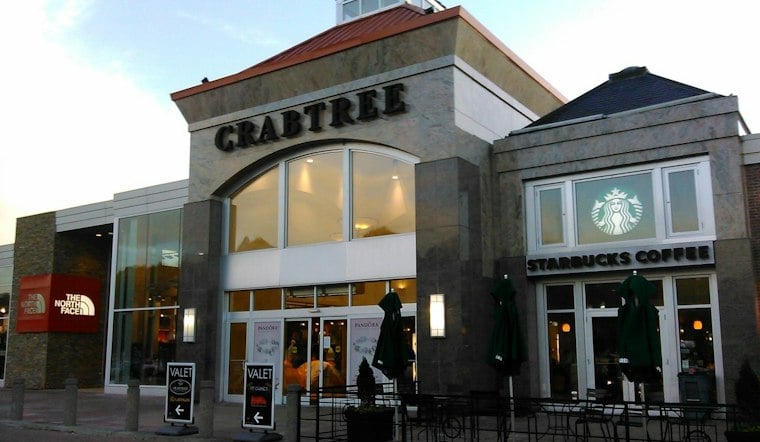
Crabtree Valley Mall has reopened its retail merchandising units, bringing back the movable, mall-owned carts that disappeared from its hallways last fall during the early stages of a $60 million renovation. The relaunch comes with a design refresh, and it lands at a moment when the Raleigh mall has also welcomed new anchors and buzzy retailers into its corridors.
The carts, known in mall-speak as RMUs, are mall-owned and maintained, movable fixtures that tenants rent along with their assigned space — a setup distinct from the mall's permanent kiosks, which are custom-built and maintained by their own tenants under separate leases with ownership. That kiosk program, according to the News & Observer, has continued without interruption even as the RMUs went dark. Macerich, which bought Crabtree Mall in June 2025, has now posted leasing signs on the new units throughout the mall's hallways.
The shutdown of the cart program last fall came without much warning. RMU operators were told they had to leave the mall by the end of September 2025, according to the News & Observer, though WRAL reported vendors were notified they would need to be out by October 1. WRAL also reported that 12 RMUs were affected by the move, which displaced small businesses just ahead of the holiday shopping season.
A New Look for the Carts
Macerich says it is introducing a new generation of RMUs with a sleek, contemporary design, describing the broader push at Crabtree as aiming for a light, bright and more modern look. The company has said the updated carts are meant to support improved traffic flow and better space utilization, while helping smaller, unique retail concepts connect with shoppers moving through the mall's common areas. Macerich has framed the relaunch as part of Crabtree's ongoing transformation rather than a one-off fix.
That transformation traces back to Macerich's $290 million purchase of the 1.3-million-square-foot mall, which the company described at the time as a market-dominant, Class A retail center anchored by Belk and Macy's, according to a Macerich news release. Alongside the purchase, the company laid out plans for roughly $60 million in new redevelopment and leasing capital earmarked for the property through 2028.
Renovation Brought Turnover Across the Mall
The mall's redevelopment has coincided with broader tenant turnover involving anchor stores and other retailers, the News & Observer has reported. Among the highest-profile changes: Dick's Sporting Goods opened a House of Sport location at Crabtree, occupying the former Sears space of more than 100,000 square feet that had sat empty since 2018. Crabtree general manager Rachel Ricksecker previously told the News & Observer that the Dick's opening reflected strong leasing momentum during the redevelopment and a commitment to improving the overall shopping experience.
Belk, meanwhile, has unveiled Arthur's, a wine and cocktail bar and coffee shop near the main-floor shoe section, adding a food-and-drink dimension to the department store's footprint at the mall. Those additions sit alongside a wave of newer, trend-driven retailers: Pop Mart opened a store at Crabtree Valley Mall in August, selling viral collectible products including Labubu and Skullpanda figures, and BoxLunch opened a store at the mall earlier this month.
What the Renovation Still Aims to Fix
Macerich's broader investment plan for Crabtree has included plans to reimagine more than 200,000 square feet of common area with new paint, lighting and furniture, along with a revitalized food court and family play area, according to the company's acquisition presentation and reporting from Axios. The company has also said storm-drain improvements are underway at the property to mitigate floodplain risks as extreme weather events become more frequent, per the News & Observer's real estate coverage.
Macerich has projected that the investment push will lift permanent occupancy at Crabtree from about 78% in March 2025 to roughly 90% by 2028. Company-wide, Macerich reported portfolio occupancy of 92% during the most recent quarter cited in its filings, down slightly from 93.3% a year earlier, according to CoStar. The company has described its leasing approach as pairing a more elevated tenant mix with design and amenity upgrades meant to boost foot traffic and how long shoppers linger on-site.





