

























































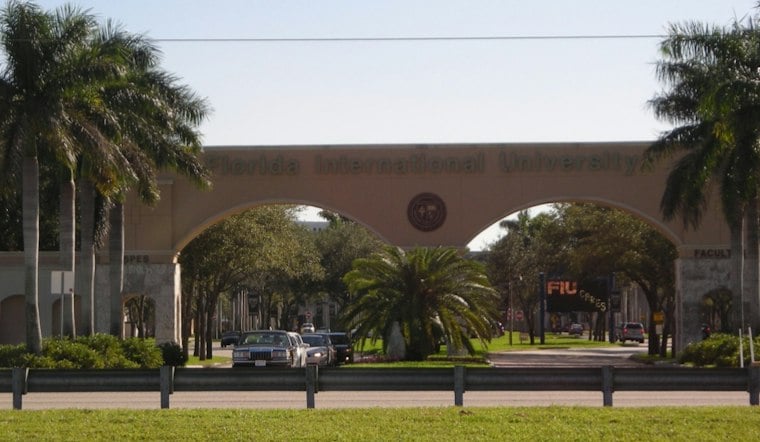
Three out of four Cuban Americans in South Florida disapprove of the Trump administration's stepped-up deportations of Cubans with no criminal record, yet more than two-thirds still plan to vote Republican next week. That's the striking split found in a new poll out of Florida International University, which surveyed over a thousand Cuban American adults across Miami-Dade County as early voting winds down ahead of the November 3 election.
The 2026 FIU Cuba Poll found that 76% of Cuban Americans in South Florida disapprove of the increased deportations carried out during the first two years of President Trump's second term, according to the FIU Cuba Poll. Despite that disapproval, 68% of those surveyed said they still intend to vote for Republicans in November, a figure that matches the all-time high the poll recorded back in 2024. As WSVN reported, Florida International University conducted the survey as part of its long-running effort to track political attitudes within the Cuban American community.
The poll surveyed 1,004 Cuban American adults in Miami-Dade County between September 4 and September 29, carrying a maximum margin of error of plus or minus 3.1 percentage points, per the same FIU release. Among registered Cuban American voters, Republicans made up the largest share at 53%, compared with 27% who identified as Independents and 18% who identified as Democrats.
GOP Candidates Hold Early Leads, But Many Remain Undecided
In Florida's U.S. Senate race, Republican Ashley Moody led Democrat Angela Nixon 51% to 26% among poll respondents who named a preference, the FIU survey found. That lead comes with a significant caveat: 44% of the full sample said they remained undecided in the Senate contest, suggesting the race is far from settled among Cuban American voters even as early voting continues in Miami-Dade and Broward.
The gubernatorial matchup showed a wider gap, with Republican Byron Donalds holding a 60% to 24% lead over Democrat David Jolly, according to the poll. The 68% overall Republican support level recorded in this year's survey ties the all-time high the FIU Cuba Poll first logged in 2024, when 68% of likely Cuban American voters in Miami-Dade said they planned to vote for Donald Trump, while 23% backed Kamala Harris and 5% were undecided, as NBC6 South Florida reported at the time. That 2024 figure itself marked a jump from Trump's 35% support in 2016 and 59% in 2020, per the same NBC6 report.
A Decades-Long Pattern of Loyalty Despite Policy Friction
The tension between policy disapproval and party loyalty isn't new to this community. A Miami Herald poll conducted in April found that 67% of Cuban Americans backed Trump's handling of U.S. policy toward Cuba even as many objected to how his administration treated Cuban immigrants, with Miami Herald noting that 68% of South Florida Cubans and Cuban Americans strongly or somewhat disapproved of increased deportations of undocumented Cubans without criminal records. That same Herald poll found 81% of respondents supported allowing Cubans to legally immigrate to the United States.
Republican dominance among Cuban American voters has fluctuated over the years rather than climbed in a straight line. Florida International University's own historical polling found that support for the GOP among Cuban American voters in Miami-Dade actually declined from 70% in the early 1990s to just 54% in 2018, according to FIU News. That same 2018 survey found 70% of respondents said they had voted for Ron DeSantis and 69% said they voted for Rick Scott in that year's midterms. In the 2024 Senate race, roughly 50% of Cuban American voters backed Republican incumbent Rick Scott, compared with 19% for Democrat Debbie Mucarsel-Powell and 22% undecided, per NBC6's report at the time. FIU News separately reported that Republicans held a 55% majority among registered Cuban American voters in that 2024 cycle.
Looking Ahead to 2028
The 2026 poll also asked respondents to weigh in on potential 2028 Republican presidential contenders. Senator Marco Rubio led that field with 58% support, followed by Vice President J.D. Vance at 8% and Florida Governor Ron DeSantis at 7%, according to the FIU release.
With early voting underway in Miami-Dade and Broward counties until 7 p.m. on November 1 and Election Day set for November 3, the poll offers a snapshot of a community whose frustrations with federal immigration enforcement haven't yet translated into a shift at the ballot box. Whether that holds through Election Day remains to be seen, but FIU's decades of polling suggest Cuban American political loyalty rarely moves in lockstep with policy agreement.





