

























































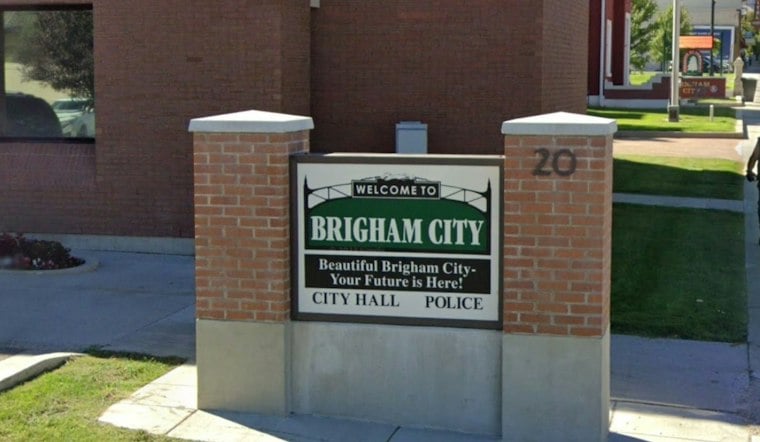
A bus bearing the name Data Center Revolt rolled into Brigham City this week, part of a cross-country campaign pressing for more public say in how massive data centers get built — and it landed squarely in the middle of one of Utah's most contentious fights over the technology. The stop came as the proposed Stratos data center project in Box Elder County remains in the pre-development stage, with studies underway and three lawsuits still pending.
The tour is run by Humans First, which describes itself as a conservative organization focused on improving artificial intelligence outcomes for everyday Americans. According to KSL.com, the group has now made 29 stops since launching the tour in Texas on Sept. 12, with Brigham City added to the itinerary specifically because of the national publicity surrounding the Stratos project. Kylie Kremer, a senior advisor for Humans First, said small towns often lack the opportunity or financial backing to push back against data center proposals, and she wants locals to have more input on how projects like Stratos move forward. As reported by Fox 13, Kremer put it simply: “We're not anti-tech. We're not anti-AI. And we're not even anti-data center.”
A Tour With a Pointed Message on Tax Breaks and Transparency
Cathy Latham, director of Humans First in Texas, told the crowd that people should have a say in data center planning, citing her own concerns about artificial intelligence enabled and supported by data centers. Kremer, for her part, has also taken aim at tax breaks for data center corporations when locals see no benefit in return. The tour's stated goals, per the seed reporting, center on advocating for more guardrails on AI expansion and greater transparency from elected officials — not on halting data center development or freezing AI growth altogether.
The Box Elder stop wasn't a one-off. The tour planned to continue to Cedar City in Iron County later the same day, and from there to Flagstaff, Arizona. Iron County has already been through its own version of this fight: planners imposed a 180-day moratorium on other data center applicants in May, then approved a conditional-use permit for a data center proposal west of Cedar City in June. The tour has made similar stops elsewhere, including near a proposed data center project in the Wakarusa area of Shawnee County, Kansas, where organizers and residents raised questions about a 607-acre development, according to KSNT.
Stratos Developer Says Project Moving Forward, Not On Hold
Box Elder County's proposal has sparked strong public backlash, according to a Humans First press release, and that backlash has generated animosity that organizers say stems partly from misinformation. Paul Palandjian, chief executive officer of O'Leary Digital — described as a main force behind the project alongside Kevin O'Leary — reported that local ranchers, landowners, county commissioners and others associated with the project have received threats of violence, which he attributed to misinformation circulating about it. Palandjian agreed that public sentiment matters and called for dialogue based on facts, saying O'Leary Digital is committed to a project the county can be proud of.
O'Leary Digital has said the project is still moving forward. O'Leary has said it isn’t paused. Engineering, environmental and economic-impact studies are underway, and O'Leary hoped to file for a water permit by the end of August. The first phase of the project's power generation would be capped at 1.5 gigawatts, though long-term capacity could reach 9 gigawatts, and at full buildout the facility is expected to consume less than 900,000 gallons of water per day on average after recycling.
Legal Fights and a County Moratorium That Doesn't Cover Stratos
Three lawsuits tied to the Box Elder County project remain unresolved. One stems from the Box Elder Accountability Referendum group, which sought a public vote on the Stratos project only to have the county attorney reject its application; the group is now suing to overturn that decision. Box Elder County commissioners separately approved a 180-day moratorium on new data centers back in June.
Dossier sources differ on just how big the Stratos footprint actually is: one account describes it as a 40,000-acre development billed as the largest data center in the world, while another puts the figure at more than 20,000 acres, reportedly scaled back from the original plan. Either way, the project is slated for Hansel Valley in Box Elder County as an AI-focused hyperscale facility.
Part of a Much Bigger Utah Reckoning
Box Elder County's fight is landing amid explosive statewide growth. Utah currently hosts 48 operational data centers drawing 920 megawatts of power, with another 2,600 megawatts under construction, and the state is expected to more than triple its overall data-center output in the coming years, according to the Deseret News. AI-focused centers typically draw eight to 10 times more power than traditional data centers, and a single 100-megawatt facility can consume roughly 2 million liters of water a day — about what 6,500 households use. The North American Electric Reliability Corporation has projected elevated grid risk for Utah by 2031, when supply shortfalls could occur under extreme conditions.
The backlash isn't unique to Utah, either. A March Gallup survey found that seven in 10 Americans oppose building an AI data center in their own area, and the Christian Science Monitor reports that at least 75 data centers worth roughly $130 billion were blocked or delayed nationwide in just the first quarter of 2026. Lawmakers in 15 states have introduced bills to ban or pause data center construction, and more than 100 localities have passed their own pauses. Utah Gov. Spencer Cox signed an executive order in late May setting a higher bar for data center development statewide, per the Monitor.





