

























































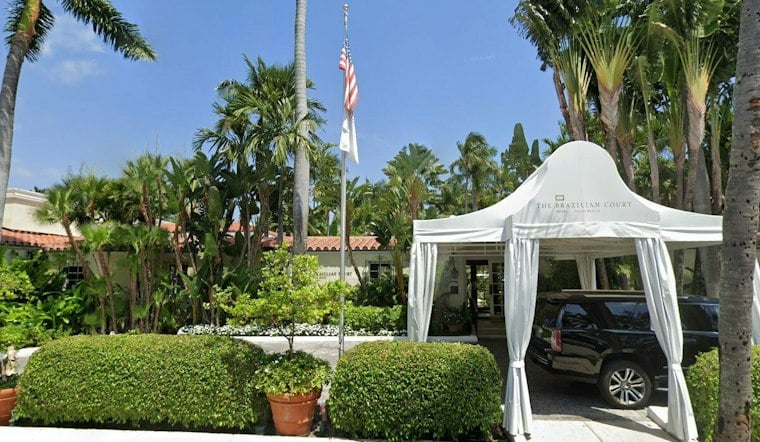
David Kennedy, son of Robert F. Kennedy, was found dead face down on the floor between two beds in a room at the Brazilian Court Hotel in Palm Beach, Florida, on April 25, 1984. Contemporaneous wire reports listed him as 28 years old, though a recent report from goSkagit identified him as 27. Medical examiners could not immediately say whether he had died of natural causes or a drug overdose, and police said at the time that no drug paraphernalia was found in the room.
The uncertainty surrounding Kennedy's death was reported in real time by upi.com, which noted that a Palm Beach County medical examiner said no anatomic cause of death had been found to explain his demise, and that laboratory testing was ordered to determine whether drugs played a role. That initial ambiguity would not last. As later reported by the latimes.com, toxicology testing eventually attributed his death to a mixture of three drugs — cocaine, Demerol and Mellaril.
Investigators also found physical evidence in the room itself. According to sun-sentinel.com, police discovered a packet of cocaine in Kennedy's wallet, along with a vial of Mellaril found on the dresser. The image accompanying the recent report from goSkagit shows a West Palm Beach police car parked in front of the Brazilian Court Hotel on the day the body was discovered.
Suspicion That Drugs Were Removed From the Room
Nearly a year after Kennedy's death, investigators revealed evidence suggesting that drugs may have been taken from the hotel room before his body was found. Per the same upi.com archive, traces of cocaine and the painkiller Demerol were present in two vials of water taken from the toilet in the room — a detail that fed police suspicion that drugs were removed from the scene before anyone discovered Kennedy's body.
That suspicion shaped the direction of the investigation, which shifted from an initially undetermined cause of death toward a focus on how Kennedy obtained the drugs in his system. The trail eventually led investigators to hotel staff. As the article notes, prosecutors moved to build a case not around what killed Kennedy, but around who had supplied it.
Bellhops Charged, Then Offered Reduced Pleas
Police arrested two former hotel bellhops, David Dorr and Peter Marchant, in connection with the cocaine believed to have been supplied to Kennedy. According to the nytimes.com, one of the men pleaded no contest in a West Palm Beach courtroom to a charge that he conspired to sell cocaine and was placed on probation for 18 months.
Both men ultimately received the same 18-month probation sentence for the conspiracy charge. The more serious charge, sale of cocaine — which carried a potential sentence of up to 15 years in prison — was dropped against both Marchant and Dorr, as reported by the same latimes.com archive covering the case's resolution.
Unanswered Questions in the Drug-Supply Case
Even after the plea deals closed the criminal case against Dorr and Marchant, investigators acknowledged the broader supply chain remained unresolved. The Sun-Sentinel reported that investigators developed a couple of strong suspects in the wider inquiry but did not have enough evidence to press additional charges, and that the prosecutor's office later opened the case files to the public.
More than four decades after Kennedy's death in Palm Beach, the core facts established by contemporaneous reporting have not changed: he died from a combination of cocaine, Demerol and Mellaril, two bellhops faced reduced conspiracy charges rather than the more serious cocaine-sale count, and questions about who ultimately supplied the drugs were never fully answered in court.





