

























































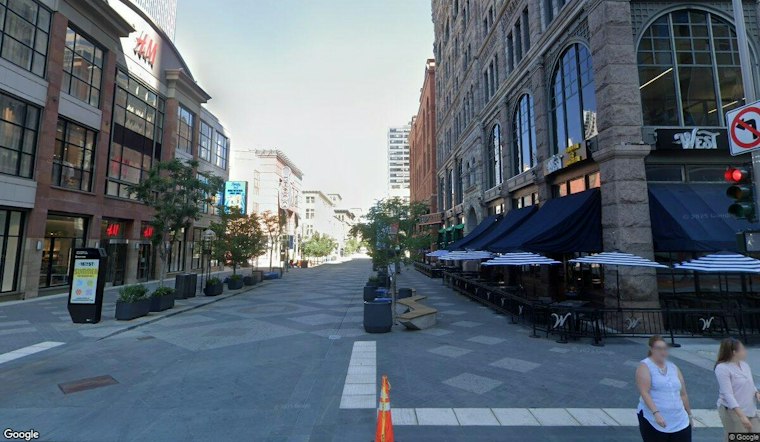
A buried relic of 1880s Denver turned into an $18 million headache for taxpayers and a 301-day delay for the long-running 16th Street makeover, according to a city audit that found officials knew the risk existed years before construction crews ever broke ground. Denver Auditor Timothy M. O'Brien's office determined that a historic brick sewer discovery led to the settlement with PCL Construction Services, and that the sewer was not adequately considered during project planning.
The findings, published in a formal performance audit, land as a gut punch for a project that already carried a hefty price tag. PCL crews encountered a brick sewer beneath 16th Street in 2022, and the discovery halted construction outright, the Glendale Cherry Creek Chronicle reported. By the time the dust settled, the overall project cost had climbed to $175.6 million — roughly $27 million above the $149 million baseline Denver City Council approved in 2021 — according to Colorado Politics.
What makes the discovery sting is that it wasn't entirely unforeseeable. The historic brick sewer system became eligible for historic listing in 2013, per the City and County of Denver Audit Report. The city did not perform thorough utility investigations before active construction began, and the Department of Transportation & Infrastructure limited its underground utility investigation after consultants warned that a broader examination would require removing surface pavers or rerouting shuttle service.
Even Denver's Biggest Contractor Walked Away
The risk wasn't lost on the construction industry. Kiewit Corporation, described by CBS News as Colorado's largest construction firm, formally withdrew from bidding on the 16th Street project after specifically flagging the unaddressed risks posed by Denver's historic brick sewer system. Three contractors initially participated in the bidding, and only two remained after that withdrawal over potential utility issues, according to the seed facts drawn from the audit.
Denver maintains no comprehensive map of its brick sewer network, which dates to the 1880s, and the city has historically handled unmapped conduits reactively whenever crews stumble onto them mid-excavation, Denverite reports. That reactive approach collided head-on with a project already years in the making: the 16th Street Mall first opened in October 1982 with custom granite pavers designed for a 30-year lifespan, and rising paver maintenance costs prompted the city to begin replacement planning in 2007, per CBS News.
An $18 Million Change Order That Skipped the Council
Once the sewer problem surfaced, PCL Construction Services sought contract changes to cover the additional work and delays, and Denver initially resisted, arguing the contractor had assumed the risk. The dispute was ultimately settled through an $18 million change order covering the extra costs and schedule impacts, which stretched the project timeline by 301 calendar days, according to the Denver Auditor's Office.
The governance wrinkle is where the audit gets pointed. Denver City Council members were notified of the increased costs and delays only after the city and PCL had already put the changes into effect. The City Attorney's Office maintained that Council approval was unnecessary because the agreement was processed as a change order rather than a contract amendment — a distinction made possible by Denver's Standard Specifications for Construction General Contract Conditions, which had not been updated since 2011, fifteen years before the audit's release, per the City and County of Denver Audit Report.
Transportation & Infrastructure said city attorney guidance recommends change orders for scope, time, or budget changes unless they constitute a cardinal change, and the agency characterized the PCL settlement as resulting from delays and a contractor dispute rather than a fundamental scope change. O'Brien warned that the distinction could let expensive changes to major city contracts avoid council scrutiny altogether. “Our audit found that— while the city’s project management is generally effective — it can be strengthened,” O'Brien said, adding that his office will follow up in a later audit to assess how recommendations are implemented.
Bidding Questions and a Waived Penalty
The audit also found the city lacked documentation demonstrating a transparent competitive bidding process, and records did not make clear why PCL was selected over another company. Denver has limited ability to obtain subcontractor information under its lump-sum, fixed-scope, fixed-price agreement with PCL, leaving the city with little documentation about companies performing subcontracted work on the project.
Transportation & Infrastructure leaders also waived $1.03 million in damages for missed completion deadlines, according to the audit, saying the move was meant to support the city's relationship with PCL. Auditors recommended stronger documentation of quality-control procedures and contract compliance, a recommendation the agency disagreed with, just as it disagreed with the auditor's broader recommendation to convert significant change orders into formal amendments. The agency did agree to several other fixes: formalizing information provided to City Council on major projects beyond what's legally required, documenting each step of competitive bidding for capital projects, and developing a strategy for handling unexpected underground discoveries on future federally funded construction work.
A Corridor Back in Business, Even as Questions Linger
The overall 16th Street Improvement Project spanned nearly 20 years from initial scoping in 2007 to its full public reopening in October 2025, with actual construction confined to the final three and a half years, according to the audit. O'Brien said businesses faced construction outside their doors nearly a year longer than expected because the city had not accounted for the sewer.
There are signs of recovery now that the corridor is fully open. RTD's zero-fare 16th Street FreeRide shuttle logged roughly 252,000 monthly boardings in October 2025, nearly double the 135,000 monthly boardings recorded during construction detours in January 2023, according to the Regional Transportation District. Round-trip shuttle travel times also dropped, from 44 minutes during construction detours to 32 minutes after reopening. Nearly 11 months after the October 2025 ridership rebound, Hoodline covered a massive mural debut at Denver Pavilions, part of the broader push to reverse the corridor's retail vacancies.
Still, the auditor's report leaves the core governance question unresolved: how Denver handles major change orders on its biggest public works contracts, and whether elected officials get a real say before millions of dollars change hands. With Transportation & Infrastructure rejecting the recommendation to convert significant change orders into amendments, that tension between speed and oversight appears far from settled.




