

























































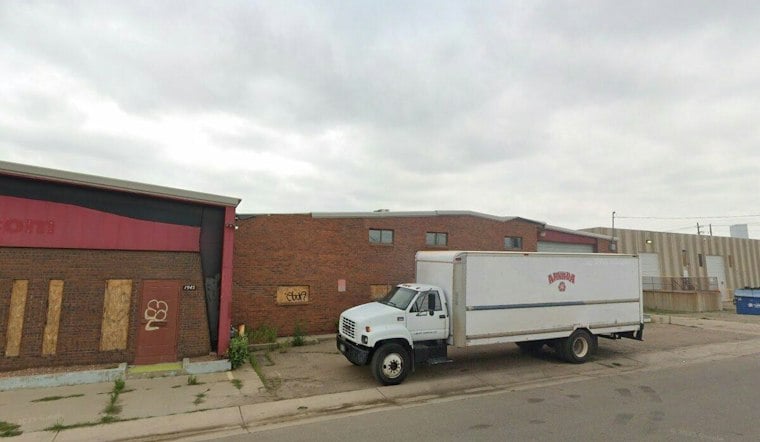
The Latino Cultural Arts Center cut the ribbon Saturday on Las Bodegas, a renovated warehouse tucked between Denver's Sun Valley and La Alma-Lincoln Park neighborhoods that the organization has spent seven years turning into a permanent cultural home. The building at 1935 W. 12th Ave. now houses classrooms, artist workspaces, digital media facilities and community gathering spaces, capping a project that began when the nonprofit's founder bought the property back in 2019.
According to Westword, which covered the ribbon-cutting, LCAC founder and board chair Adrianna Abarca donated the warehouse property to the nonprofit after purchasing it, envisioning a permanent place for Latino art, history and cultural exchange. Abarca had originally proposed a three-story complex for the site, Westword reported, though the finished building that opened this week is a single renovated warehouse. The road to opening day was not instant: Rocky Mountain PBS notes the project has been in the works for several years, with construction on the current building beginning in April 2025.
A Warehouse Blessed With Five-Year-Old Sage
The opening ceremony carried deep symbolic weight. Alfredo Reyes, who stepped down as executive director in summer 2026 after more than a decade leading the project, lit sage he had saved for five years as part of the ceremony, per the same Westword account. Thomas Lopez, a graduate of Manual High School, blessed the building and invoked the indigenous roots of Latino identity alongside the Cheyenne and Arapaho peoples' ties to the land.
Celina Benavidez, also quoted in the piece, said the organization now owns the key, land and building outright. She used the moment to recall that the nearby Auraria neighborhood was once known as the Bottoms and was largely demolished after residents were displaced — a reminder, as the article frames it, of what the Westside has already lost to development. Organizers stressed the center welcomes everyone regardless of origin or identity.
Funding, Design and a Bigger Campus Ahead
Getting to opening day took real money. LCAC secured $2.5 million in congressionally directed funding supported by U.S. Senator Michael Bennet along with $1.9 million in state community revitalization funding, according to Westword's earlier reporting on the project. Handprint Architecture led the building design, with Perkins&Will and the HKS Social-Impact Initiative contributing, per the Westword ribbon-cutting coverage. Denver7 reported during groundbreaking that the building was planned to be fully electric and incorporate other green technologies.
Reports on the building's size have varied over the course of the project. Rocky Mountain PBS described Las Bodegas as a 10,000-square-foot warehouse, matching the figure Westword's ribbon-cutting coverage cited, while CBS Colorado had earlier reported in 2023 that LCAC owned a 14,000-square-foot space for the future center. LCAC has framed the facility as one piece of a larger three-site campus that would eventually include galleries, museums, artist work areas and event spaces, according to the Latino Cultural Arts Center.
Visual Identity Rooted In Gathering Places
Josh Wills described the building's visual identity as shaped by conversations with staff, artists, students and community members, per Westword's account of the opening. That identity centers on pathways and platforms inspired by gathering places across the Americas, with the stated aim of drawing people in and lifting them up.
Jarrett Hardy previewed a donor installation called Hilos Vivos, meaning living threads, which draws inspiration from the Andean quipu system of recording information with knotted cords. Hardy said the installation would honor stories, labor, legacy and the natural world alongside financial gifts, and it will recognize volunteer labor, in-kind contributions, community sacrifices and financial donations. The piece was expected to be completed in late November 2026, with an additional exterior installation planned for 2027.
Programming, Open House and What Comes Next
Joyce Sanchez, who has worked at LCAC since 2019, highlighted public art mentoring and programs linking art with mental wellness during the festivities. The center also hosted jewelry-making, yoga and aromatherapy as part of its open house, giving visitors a taste of the kind of programming Las Bodegas is meant to support long-term.
Bobby Lefebre, a former Colorado poet laureate and LCAC board member, imagined scenes that could someday unfold inside the building — an elder teaching traditional prayers in one room, a student editing a documentary bound for the Sundance Film Festival in Boulder in another. Organizers were clear that community participation is needed for those future ambitions, encouraging attendees to become monthly donors, volunteer or simply return and take part.
LCAC says it has reached nearly 70,000 people through music festivals, exhibitions, in-school workshops and other programs over the past seven years, according to the Latino Cultural Arts Center, and reports reaching more than 10,000 people annually even without a dedicated space until now. That scale lands against a backdrop in which Colorado's creative economy generated $19.7 billion in revenue in 2025, per Rocky Mountain PBS's reporting. Denver already has several organizations devoted to Latin American art and culture, including Su Teatro Cultural and Performing Arts Center, Museo de las Americas, the Chicano Humanities and Arts Council and Biennial of the Americas, as noted by 5280. CBS Colorado had previously described the project as a bridge between two of Denver's most diverse and historic neighborhoods, a framing that now carries into Las Bodegas's actual opening.




