

























































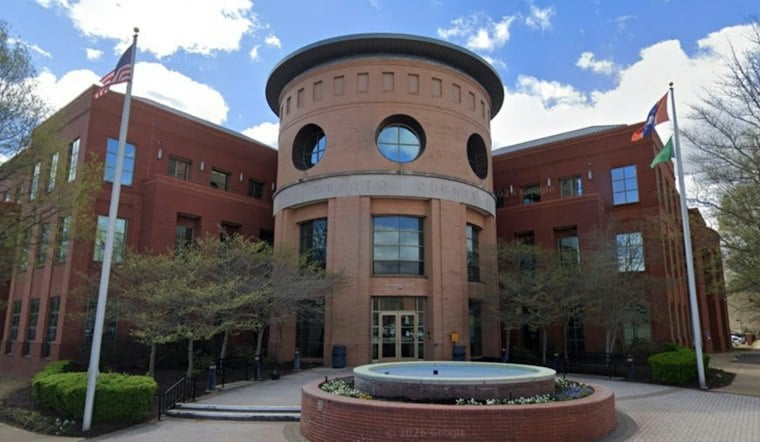
DeSoto County supervisors have directed their attorney to draft an ordinance banning kratom sales across unincorporated parts of the county, but the measure as proposed would not reach stores inside Southaven, Olive Branch, Horn Lake, Hernando or Walls. The board took no final vote during its October 19 meeting, instead asking for draft language to review before any ordinance is adopted.
According to DeSoto County News, the board asked attorney Adam Emerson to draft the ordinance, which the board of supervisors governs only county land outside city limits. Supervisor Robert Foster placed the kratom discussion on the October 19 agenda and said he supports the proposed ban, though he told the outlet he wants to review the draft language before casting a final vote. No date has been set for that vote, and the draft is expected to return to the board once Emerson finishes writing it.
A Ban That Stops at the City Line
Because the board of supervisors only has authority over unincorporated county land, the ordinance would not apply inside Southaven, Olive Branch, Horn Lake, Hernando or Walls. Those five municipalities would each need to pass their own local bans to restrict kratom sales within city limits, and short of that, the Mississippi state government would need to act for any ban to reach stores inside those boundaries, per the same report.
Hernando has already moved on its own: the city became the first municipality in DeSoto County to prohibit kratom sales within its borders in October 2025, according to Rehab Seekers. That local history underscores how a county-level ordinance would still leave gaps unless the rest of DeSoto County's cities follow suit.
Pressure Building From Oxford Deaths
The push comes amid mounting alarm following the deaths of two University of Mississippi students in Oxford in September 2026. Federal prosecutors have charged a store clerk and his son with selling suspected kratom derivatives tied to those deaths, the Associated Press reported. Oxford itself already has a city ban on kratom sales in place.
The mayors of Southaven and Olive Branch called on state leaders earlier in October to ban kratom statewide, according to DeSoto County News. That call echoes a broader wave of political pressure: Lieutenant Governor Delbert Hosemann publicly urged a comprehensive statewide kratom ban on October 8, citing the Oxford deaths and risks of addiction and respiratory depression, as reported by Magnolia Tribune. Mississippi State Health Officer Dr. Daniel Edney has also testified before lawmakers in favor of a complete statewide ban, pointing to public health risks from synthetic extracts and inaccurate retail labeling, per the same outlet.
State Law Still Allows Local Opt-Outs
Mississippi's current regulatory framework stems from House Bill 1077, which Governor Tate Reeves signed in April 2025. The law, effective July 1, 2025, set a minimum purchase age of 21, capped 7-hydroxymitragynine levels at 1% of total alkaloids and 0.5 milligrams per container, and imposed a 25% excise tax, while explicitly preserving the right of cities and counties to enact their own full sales bans, according to the Mississippi Department of Revenue. A statewide effort to reclassify kratom as a Schedule III controlled substance, House Bill 1750, died in committee in February 2026, according to LegiScan — leaving local governments to act on their own in the meantime.
DeSoto County is hardly alone in considering that path. More than 30 Mississippi municipalities and counties, including Tupelo, Lowndes County, Oxford and Lafayette County, have already passed local kratom bans or restrictions as of 2026, per WCBI. Hoodline previously reported on Tupelo's enforcement timeline in its piece on the long-delayed kratom ban.
Regional Bans Tighten the Noose
DeSoto County sits on Mississippi's border with Tennessee, which enacted a complete statewide ban on kratom possession, sale and manufacture effective July 1, 2026, under what is known as Matthew Davenport's Law, according to Restoration Recovery. Possession is now a Class A misdemeanor there. Both states bordering DeSoto County, Tennessee and Arkansas, are now among ten U.S. states that treat kratom as a controlled or prohibited substance, the same source reports.
At the federal level, the Drug Enforcement Administration filed notice in July 2026 of its intent to temporarily place concentrated and synthetic 7-OH compounds into Schedule I of the Controlled Substances Act, while leaving unadulterated plant-material kratom leaf unscheduled, according to Kingdom Kratom. That distinction mirrors the concern driving local Mississippi officials, who have focused their alarm on concentrated or synthetic kratom products rather than the raw leaf itself.
What Kratom Is and Where It's Sold
Kratom comes from the leaves of Mitragyna speciosa, a tree native to Southeast Asia, and is typically sold as powders, capsules, drinks and tablets. In DeSoto County and elsewhere, it is commonly found in gas stations, vape shops and smoke shops. Concentrated or synthetic versions of the product have drawn growing concern from health officials and law enforcement, a worry that has only intensified following the Oxford student deaths.
The DeSoto County Board of Supervisors meets at the DeSoto County Administration Building in Hernando, Mississippi, and its meetings are open to the public. Residents who want to weigh in before any final vote can contact their district supervisor directly. DeSoto County News has said it will report further on the ordinance's language and the eventual vote once those details become available.





