

























































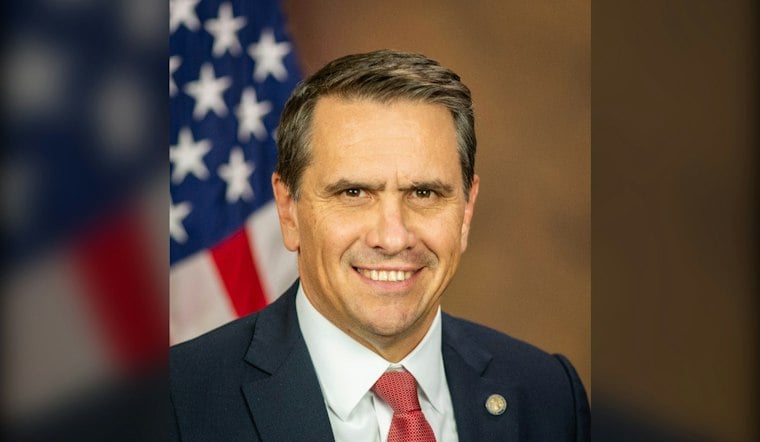
The Justice Department is asking a federal court in Florida to block Attorney General Todd Blanche from sitting for a deposition in a lawsuit filed by women who say the FBI botched its investigation into Jeffrey Epstein. Government attorneys filed a nine-page motion on Monday asking the U.S. District Court for the Southern District of Florida to quash a subpoena compelling Blanche's testimony, arguing that deposing a sitting cabinet official is almost always improper.
The motion, reported by Law&Crime, lands in a case with a long and painful backstory. A group of women alleging they were abused by Epstein, who died in federal custody while facing sex trafficking charges, filed a complaint against the federal government in September 2024 under the Federal Tort Claims Act, accusing federal agencies of mishandling or failing to properly investigate their abuse claims. U.S. District Judge David S. Leibowitz granted the parties a 90-day window to exchange limited facts and documents, including information about how the FBI handles tips involving child sexual abuse.
Government attorneys reportedly met with the plaintiffs' counsel on October 20 and again on October 26 in an attempt to resolve the dispute without court intervention, according to the Tampa Free Press. The plaintiffs refused to withdraw the subpoena and have opposed the government's request to block the deposition, setting up a fight that a presiding federal judge will now have to resolve.
Women Subpoenaed Blanche for Documents and Testimony
The women identifying as Epstein victims subpoenaed Blanche on October 9, seeking both documents related to Epstein and his testimony, with a deposition scheduled for Wednesday. Per the same account, the plaintiffs say Blanche's testimony is necessary as part of their ongoing civil litigation against the government over how the FBI handled the original Epstein investigation.
Justice Department lawyers countered that deposing the nation's top law enforcement official is legally improper and could disrupt federal operations. The motion warned that subpoenaing Blanche could threaten the separation of powers, chill agency decision-making, discourage public service, and create the potential for abuse or harassment. The filing went further, calling the prospect of deposing a sitting attorney general in the case an extraordinary order without precedent in modern history.
DOJ Leans on the Apex Deposition Doctrine
Central to the government's argument is the apex deposition doctrine, a legal principle that shields high-ranking officials from routine depositions unless they possess unique, firsthand knowledge that cannot be obtained any other way. The Justice Department maintained there is no evidence that Blanche has any unique personal knowledge of the information being sought, and argued that written discovery or testimony from lower-level officials could supply the same answers.
Government lawyers contended that the plaintiffs bypassed standard discovery steps and failed to show the information could not be obtained by other means, saying a cabinet official's deposition is permissible only after all alternatives are exhausted. The attorneys argued that plaintiffs could first pursue written questions, tailored document productions, or depositions of lower-level personnel and designated agency representatives before ever reaching Blanche himself. The motion, submitted by assistant U.S. attorneys Kelsi R. Romero and Steven R. Petri on behalf of U.S. Attorney Jason A. Reding Quiñones, asks the court to quash the subpoena outright.
The doctrine the DOJ is invoking is far from settled law nationally. According to the American Bar Association, courts differ substantially in how they apply the apex doctrine, with some developing burden-shifting schemes while others require proponents of the doctrine to establish good cause. The doctrine was originally designed to shield high-level corporate executives from depositions, and the ABA notes that five states had recently adopted it while seven others had rejected it outright. In Washington state, the state Supreme Court rejected the doctrine entirely in Stratford v. Umpqua Bank, concluding it conflicted with the state's broad civil discovery rules.
Part of a Broader Pattern of Epstein Records Fights
This is not the only recent instance of the administration clashing with a Florida federal court over Epstein-related material. A federal judge separately rejected a Trump administration request to unseal grand jury transcripts from Epstein investigations conducted in 2005 and 2007, according to The Times of Israel. U.S. District Judge Robin Rosenberg said those decades-old grand jury records did not meet any of the extraordinary exceptions under federal law that could make them public.
No ruling has been issued yet on whether Blanche's deposition will proceed as scheduled. With the plaintiffs standing firm on their subpoena and the Justice Department pressing for a protective order, the matter now rests with the court overseeing the Florida lawsuit.





