

























































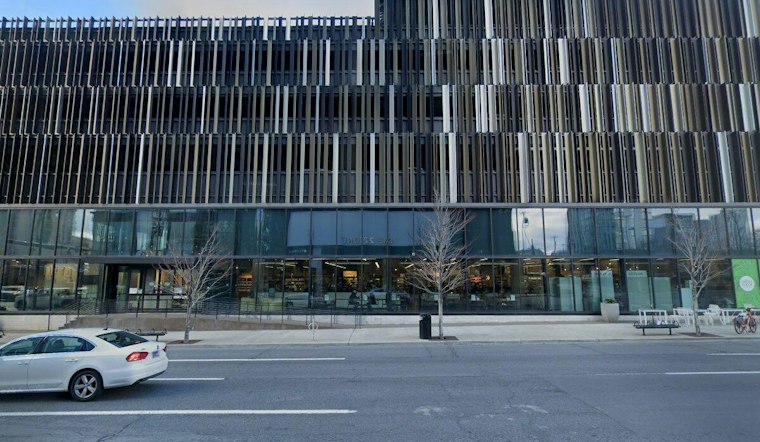
Downtown Nashville residents fed up with revving engines, blasting speakers and bucket drumming got a rare seat at the table Wednesday, as councilmember Jacob Kupin brought together Metro police, transportation officials and the mayor's Office of Nightlife to hash out what can actually be done about the noise. The area is home to more than 24,000 residents alongside the workers and visitors who flood its streets nightly, and many of those residents say they're done losing sleep over it.
The forum, held Wednesday with Metro police, the Nashville Department of Transportation and the Mayor's Office of Nightlife, drew residents and motorcyclists into the same room to talk through how to share downtown's streets, according to WZTV. Residents described noise complaints stretching from Church Street to Broadway, pointing to revving engines, loud mufflers, food truck speakers, entertainment vehicles and bucket drumming as the main culprits. Janet Kurtz, who said she and her husband have lived downtown for 20 years and value its urban-neighborhood energy, said longtime residents welcome visitors but still want to sleep and enjoy peaceful waking hours. Another resident described slingshot groups playing music at maximum volume and motorcycles gathering before traveling along Broadway.
Church Street Becomes a Flashpoint
Church Street has a concentration of residential buildings, which helps explain why it's become a focal point for complaints. Metro police have started targeted enforcement there, and Lt. Paul Stein, who leads the Central Precinct's entertainment district unit, said he's issued more than 118 Metro citations over roughly three and a half years — many to the same individuals over and over again. Police are working toward a more consistent presence on Church Street while still balancing other downtown demands, and Rickey Bearden said officers are discussing positioning patrol cars along the street for exactly that kind of steadier visibility, predicting residents would notice a difference in police work.
Separately, officers from the Central and Midtown Hills precincts conducted 71 traffic stops and issued more than 40 traffic citations during a recent initiative along Broadway over two weekends. Residents at the forum also proposed speed bumps as a way to discourage racing on downtown streets.
A $50 Fine That Officials Call Toothless
City officials identified a $50 limit on Metro ordinance-violation fines as a real obstacle to discouraging repeat offenders. Kupin put it bluntly: the fine amounts to the cost of doing business and makes enforcement difficult. He said he's discussed stronger city enforcement tools with state lawmakers, though no new fine structure has been announced. The Office of Nightlife noted that certain violations involving beer permit holders can instead be addressed through the Beer Board, which can impose higher penalties in those specific cases, and said it coordinates with police and night inspectors to respond to complaints submitted through hubNashville.
Noise Cameras Under Consideration, Not Yet Approved
Kupin is exploring microphone-equipped cameras designed to distinguish vehicle noise from other sounds and connect it to a specific vehicle, and said he's spoken with a vendor about the technology. He was careful to note the cameras remain under consideration and that they alone would not resolve the problem. Some council members raised concerns about surveillance technology during the discussion.
Automated noise enforcement isn't new elsewhere. As Fox News reports, these systems pair sensitive microphones with license-plate cameras to flag sound above a legal threshold — typically 75 to 95 decibels depending on the city — and automatically generate tickets. New York City has run its program since 2021, issuing more than 1,600 violations and collecting nearly $2 million in fines, with penalties starting at $800 and climbing to $2,500 for repeat violations. In Newport, Rhode Island, a Mustang GT was clocked at 85 decibels, just two over the limit, and hit with a $250 fine. Providence approved $180,000 in 2026 to add more cameras, Connecticut passed statewide legislation, and six California cities are running a five-year pilot with fines up to $1,105.
Chicago offers a cautionary note on the limits of enforcement. Residents there have described nightly motorcycle and modified-car noise loud enough to drown out a television indoors, often starting between 9 and 10 p.m. and running until 2 or 3 a.m. even on weekdays, according to WTTW. One Chicago alderperson noted that video and audio scanners can detect the activity, but cautioned that police chasing down offending riders could turn deadly.
Bucket Drummers, Bikers and the Search for Alternatives
Not every noise source calls for a citation, officials acknowledged. Police said many bucket drummers downtown are juveniles, and Bearden said he wants alternatives that address residents' concerns without unnecessarily pulling young people into the criminal justice system. Motorcyclists at the forum raised their own need for a legitimate place to gather, and some riders said they'd welcome a less disruptive spot than city streets. Kupin said he's meeting with people in biker groups to explore alternative gathering places, warning that simply dispersing groups without an alternative risks just pushing the complaints onto other businesses or neighborhoods.
Kupin is also in talks with the Speedway about a possible role in that solution, though he was clear no arrangement has been finalized. He said downtown's planning needs to account for its growth as a residential neighborhood, framing the goal as giving everyone room to enjoy downtown while letting residents sleep and feel safe. That growth has already generated friction beyond late-night street noise — Kupin told NewsChannel 5 that the pace of development has prompted constituents to call him about jackhammering in the middle of the night, and that legislation was passed to somewhat restrict 24-hour concrete pouring and construction noise in the Gulch.





