

























































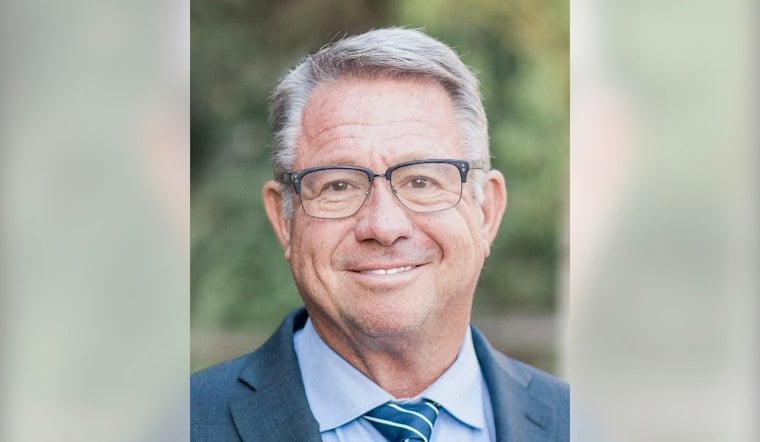
El Cajon voters head to the polls Nov. 3 with a stark choice for mayor: 64-year-old incumbent Bill Wells, a conservative who has spent more than 12 years steering the city, or 42-year-old Alexander Kraft, a socialist labor organizer who wants to tear up the city's immigration-enforcement resolution on day one. The two disagree on nearly everything from policing to homelessness to the fate of a half-empty mall, even as El Cajon's historically Republican-leaning electorate weighs a race that is technically nonpartisan.
Wells, a career mental health professional, is campaigning on his record as the city's top elected official, according to The San Diego Union-Tribune. Kraft, a clerical employee for the County of San Diego and a member of the Peace and Freedom Party, is running on his labor-organizing career and social justice advocacy. The Union-Tribune notes El Cajon has a weak-mayor form of government that shares governing power equally among council members, meaning the mayor presides over meetings, votes on agenda items and can introduce motions but does not unilaterally set policy, as KPBS explains in its race breakdown.
Immigration Resolution Becomes Flashpoint
The sharpest divide centers on El Cajon's relationship with federal immigration authorities. In 2025, the El Cajon City Council voted 3-2 to pass a resolution affirming its commitment to comply with federal law enforcement, a measure that passed on the third attempt after two earlier failures, per Times of San Diego. Wells also spearheaded El Cajon's lawsuit against California Attorney General Rob Bonta over state sanctuary-law restrictions, per the Union-Tribune's reporting.
Kraft says repealing that immigration resolution would be his first priority if elected, replacing it with a policy directing police to protect everyone in the community regardless of status. He acknowledged, per the same reporting, that he could not guarantee the repeal would actually pass given the council's composition. Kraft spoke about the stakes at a Voice of San Diego Politifest forum, where Wells was notably absent; the Union-Tribune reports Wells withdrew from what had been scheduled as a debate.
License Plate Readers and a State Lawsuit
El Cajon operates roughly 82 automated license plate readers through Flock Safety, and Attorney General Rob Bonta sued the city in October 2025 over sharing that data with out-of-state agencies, according to the Union-Tribune. Kraft opposes the city's use of the cameras outright, amid a state lawsuit over its data-sharing practices. Wells has dismissed the state's concerns as, in his words, “a bit delusional.”
The dispute fits into a broader statewide pattern. More than 200 California police and sheriff's agencies have adopted the technology over the past decade, and state law under SB 34 requires agencies to adopt usage and privacy policies, restrict access to authorized purposes and conduct regular audits, as detailed by KQED. Other California cities have responded differently: Richmond's police chief shut down the city's system entirely after a configuration error, Santa Cruz temporarily limited outside access while reviewing its Flock agreement, and Oakland's council instead voted 7-1 to expand its contract with new compliance safeguards, KQED reported.
Homelessness Splits Along Treatment vs. Housing-First Lines
Wells supports focusing homeless services on mandated mental-health and addiction treatment, transitional housing and family reunification. That philosophy led El Cajon's leaders to decline $5.3 million in state grant funding for encampment cleanup and housing, because the money required prioritizing housing placement without mandating treatment, the Union-Tribune reported. El Cajon was not alone: Encinitas also turned down roughly $4 million in similar funding over concerns about the grant conditions.
Kraft takes the opposite view, describing housing-first as the most effective approach to getting people off the street and keeping them off. Speaking at the Politifest forum, he said that without affordable housing or job prospects, people simply return to the same corner. El Cajon's unsheltered homeless count rose from 283 people to more than 340 between the prior year and January 2025, even as nearby Escondido's unsheltered population fell from over 400 to 307 in the same stretch, according to the Union-Tribune's earlier reporting on the trend. Several council members have separately expressed openness to spending $1 million or more on additional encampment sweeps.
Parkway Plaza's Uncertain Future
Both candidates agree that Parkway Plaza, an indoor shopping center once among El Cajon's largest revenue sources, urgently needs revitalization — though they disagree sharply on how. Wells says the mall could become a major economic engine again and is seeking another term partly to see its revitalization through, telling the Union-Tribune he has already worked on the project for a couple of years and expects progress within a four-year term. He has floated using eminent domain to take control of the property because of ownership-structure complications, and city officials have met frequently with Parkway Plaza's ownership in closed session.
Kraft wants any city-acquired mall kept under public control through municipal land trusts rather than resold to private developers, proposing the site instead host affordable social housing and commercial space. He opposes selling the mall back to private equity developers. The Union-Tribune identifies Parkway Plaza as an 8-acre shopping center; concrete plans for its future remain unresolved, per KPBS.
Budget Fights Over Police Spending and Taxes
Wells touts El Cajon's fiscal health, citing $63 million in reserves, even as city leaders have warned that slowing revenue could force future cuts to vital services. He has said he may support a future tax increase. El Cajon currently spends more than half of its general fund budget on police and public safety, and Kraft argues the city should reevaluate that spending for potential savings, while also suggesting the city hire more officers to reduce overtime costs. Kraft has additionally proposed a tax on out-of-state developers who own more than 50 residential units in El Cajon. Neighboring Santee's city council separately sent a 1-cent tax measure to its own November ballot.
Endorsements and Campaign Finances
Wells has picked up endorsements from the San Diego County Republican Party and the San Diego Police Officers Association. Kraft's campaign has drawn support from the Working Families Party, San Diego Democratic Socialists, the Green Party, and the San Diego & Imperial Counties Labor Council alongside SEIU 221. As of the latest reporting, Wells had $37,050 in campaign funds on hand, while Kraft's campaign reported an ending cash balance of $12,289.
The job itself pays modestly: El Cajon's mayor earns a salary of $3,380 per month. But the stakes extend beyond the paycheck in a city KPBS notes has one of the nation's largest concentrations of Chaldeans and many Middle Eastern refugees, a demographic reality that looms over the immigration debate at the center of this race. Voters will settle the contest on Nov. 3.





