

























































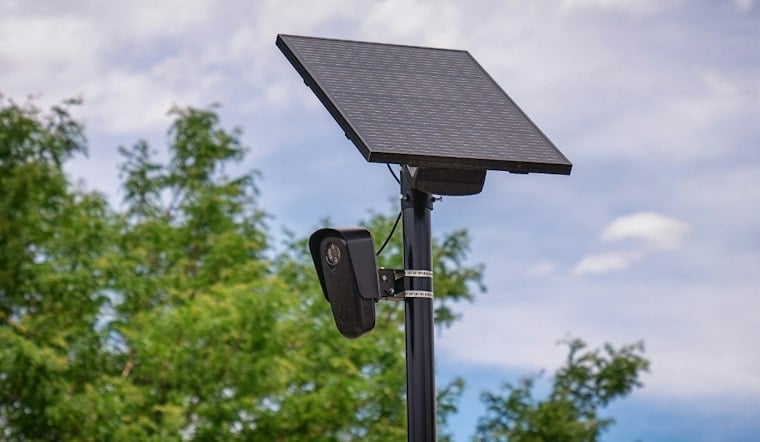
El Paso County Sheriff Joseph Roybal announced that his office will discontinue its use of Flock Safety license plate cameras effective immediately, ending a program he once championed as a life-saving tool for catching violent offenders. The reversal comes after multiple Flock cameras in unincorporated parts of the county were physically vandalized and cut down in recent months, including in the Security-Widefield area.
According to a statement from the El Paso County Sheriff's Office on Facebook, the agency will send Flock Safety a formal notice of non-renewal and has asked the company to retrieve its camera equipment. Roybal said he has concerns about the future of the Flock program and expects legislative changes in Colorado that could reshape how law enforcement uses the technology. He called discontinuing the cameras the right decision for El Paso County and its residents.
The vandalism preceding Roybal's decision was significant enough to draw active investigation from the Sheriff's Office, as reported by KRDO. Several fixed cameras in unincorporated parts of the county, including near Security-Widefield, were cut down before the sheriff pulled the plug on the program entirely.
A Rapid Reversal From Praise to Pullback
Roybal's decision marks a sharp turnaround from just a year earlier. In September 2025, the sheriff publicly praised Flock Safety as a “vital investment” after an automated alert helped deputies and Fountain police officers locate and arrest an attempted murder suspect in a local Walmart parking lot, according to the El Paso County Sheriff's Office.
As of June 2025, the Sheriff's Office operated four fixed Flock cameras and retained captured license plate data for 30 days, per figures compiled by the Electronic Frontier Foundation's Atlas of Surveillance. Under Colorado Revised Statutes § 24-72-113, passive government surveillance recordings must generally be destroyed within three years unless flagged as evidence in an active criminal investigation, a limit documented by the Colorado Division of Criminal Justice.
Legislative Fight Over Data Access Looms Large
Roybal's stated expectation of legislative change tracks with a fight that played out at the Capitol earlier this year. Senate Bill 26-070, sponsored by Sen. Judy Amabile and Sen. Lynda Zamora Wilson, would have required warrants before police could search historical license plate databases older than 72 hours, but the bipartisan measure was abandoned in April following pushback from law enforcement, as detailed by The Colorado Sun.
Distrust in the underlying technology deepened after reporting last year exposed a previously undisclosed pilot program that let U.S. Border Patrol tap into local police license plate networks in Colorado — access that contradicted earlier public denials from company leadership, according to 9NEWS. That revelation has since fed into a broader federal reckoning: U.S. Senator Josh Hawley sent Flock Safety a letter on August 26, 2026, and expanded his inquiry to other vendors on September 3, asking about data sharing and audit records, per research from Maher & Maher Law.
El Paso County Joins a Statewide Exodus
El Paso County's exit follows Salida's 2026 decision to end its use of Flock cameras. Denver's response to Flock cameras is another part of the debate over license plate reader technology.
Closer to home, community organizers in Colorado Springs launched a petition drive this month seeking roughly 25,000 signatures to qualify an ordinance for the April 2027 municipal ballot that would ban Flock-style cameras from city use, according to the Colorado Springs Police Department. That local effort sits alongside Salida's earlier decision to end its use of Flock cameras.
What Comes Next for Investigations
The Sheriff's Office says it remains committed to public safety and holding criminals accountable. Roybal said the agency can locate and apprehend criminals without relying on Flock cameras going forward.
Left unaddressed in the announcement is whether El Paso County will pursue an alternative vendor or whether neighboring municipal agencies such as the Colorado Springs Police Department and Fountain Police Department will feel the effects of the county's withdrawal from the network.



