

























































A Bay Area startup that sells direct-to-consumer breast ultrasound screenings is opening its second location in Walnut Creek on October 15, bringing a $349 cash-pay scan that promises physician-read results within 48 hours and requires no doctor referral. The clinic lands at 1844 San Miguel Drive near Broadway Plaza, and its debut arrives during Breast Cancer Awareness Month.
The company, Eve Wellness, was founded in San Francisco in October 2022 and has since screened more than 4,000 patients, according to PR Newswire. Among patients who shared follow-up results, the company reported 41 cancer diagnoses, including 16 in patients under age 40. Eve founder Brendan Foley said the goal is to make advanced breast screening easier for women to access, and the Walnut Creek office will offer the same model as its San Francisco location: direct access to physician-read 3D automated ultrasound with FDA-approved AI image analysis, with appointments already available.
The expansion taps into a broader shift in how dense breast tissue is treated as a screening concern. Since September 10, 2024, the FDA has required every mammography facility in the country to notify patients in writing whether their breast tissue is dense, since density can mask tumors and raise cancer risk, a mandate that has driven more patients toward supplemental imaging options. Roughly 40% to 50% of women over 40 have dense breast tissue, which the FDA says can lower mammography sensitivity by 36% to 50% by hiding small tumors that otherwise appear white on a standard mammogram.
Why Dense Tissue Is Getting a Second Look
The American College of Radiology's updated Appropriateness Criteria state that supplemental screening with whole-breast ultrasound or MRI is appropriate for women with dense breast tissue or elevated risk factors when mammography alone may fall short. The push for earlier screening has also widened who qualifies: on April 30, 2024, the U.S. Preventive Services Task Force lowered its recommended starting age for biennial mammograms from 50 to 40 for average-risk women, citing rising cancer incidence among younger patients.
A September 2026 study led by researchers at the University of California, San Francisco added a biological dimension to the density question, finding that physical stiffness in dense breast tissue attracts immune cells called macrophages that release chemicals capable of mutating cell DNA, establishing a direct link between tissue density and cancer formation, as previously reported in Hoodline's coverage of dense tissue cancer risk. For the roughly 321,910 women the American Cancer Society expects to be diagnosed with invasive breast cancer nationwide in 2026, and the estimated 42,140 who are expected to die from it, the stakes behind earlier detection remain steep.
One Patient's Early Diagnosis
Anisha Malik, one of Eve Wellness's first patients and someone with a family history of breast cancer, was diagnosed with stage-one cancer at age 37. She said Eve's ultrasound helped fast-track her care, according to the company's announcement.
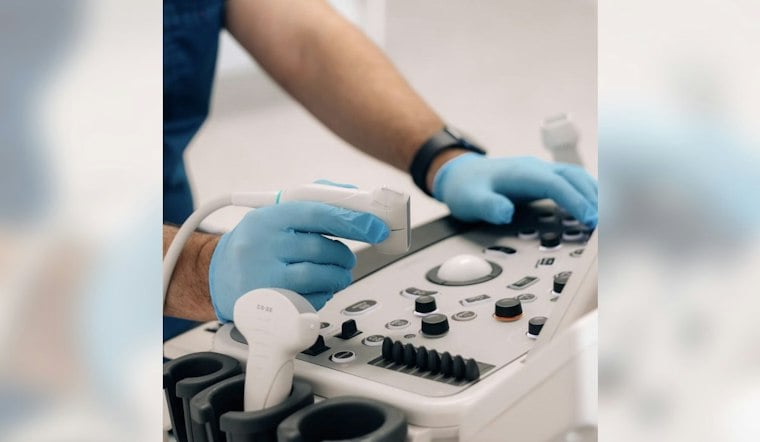
Eve's clinics run on GE HealthCare's Invenia ABUS, which the company describes as the first FDA-approved ultrasound system built specifically for supplemental screening in women with dense breast tissue. GE HealthCare expanded that hardware lineup in August 2026 with the launch of its Invenia ABUS Prime system, which adds cSound AI tools for faster scanning and automated nipple detection, alongside 510(k) clearance for its ABUS StreamVue enterprise viewer.
Layered on top of that hardware is QView Medical's QVCAD, an FDA-approved deep-learning system for breast ultrasound cancer detection that QView and Eve Wellness formalized into a strategic partnership last October. The software first won FDA premarket approval in late 2016 as the first AI system cleared for concurrent radiologist reading during automated 3D breast ultrasound exams, with clinical reader studies at the time showing a 33% reduction in reading time, according to AuntMinnie.
Radiologist Ian Grady said Eve's AI software has improved progressively over time, and he reported that he has not found a breast cancer in about three years that the AI was unable to detect. QView executive Bob Wang said pairing advanced imaging with AI-powered insights can help clinicians detect potential concerns earlier. Notably, Bob Foley, who helped guide QVCAD through the FDA's regulatory process over more than a decade of clinical work, is the father of Eve Wellness founder Brendan Foley.
What Happens After a Scan
Eve Wellness is careful to frame its service as a screening tool rather than a diagnostic one. The company's scans flag areas that may require further evaluation, but outside medical providers complete any diagnostic imaging and biopsies that follow, and those outside providers make the final diagnosis.
That handoff matters because Eve operates on a cash-pay model: patients pay $349 out of pocket, though the clinic accepts HSA and FSA payments. Direct-to-consumer imaging clinics like Eve generally do not submit claims directly to commercial health plans, per GEHA Benefit Plan, which means patients often need to seek reimbursement separately rather than relying on standard insurance billing.
That friction sits alongside a policy shift moving in the opposite direction. Updated federal Health Resources and Services Administration guidelines taking effect for applicable health plan years after December 30, 2025, require non-grandfathered health plans to cover, without patient cost-sharing, additional imaging or testing required to complete the initial mammography screening process, according to BAIS Insurance. For now, Eve Wellness's bet is that enough Bay Area patients will pay out of pocket for faster, referral-free access.





