

























































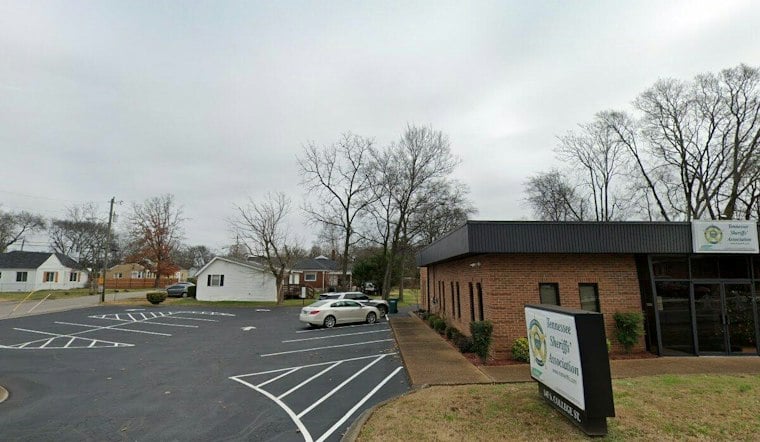
Jeff Bledsoe, the former executive director of the Tennessee Sheriffs' Association, has filed a federal lawsuit accusing the organization's leadership of retaliating against him after he reported ethics violations by board members, including falsified training records and inappropriate conduct during a virtual meeting. Bledsoe claims he was fired in October 2025 while on medical leave with COVID-19, just seven months after members had unanimously voted to extend his contract with a raise.
The lawsuit, Bledsoe v. Tennessee Sheriffs' Association, Inc., et al., was filed on October 9 in the U.S. District Court for the Middle District of Tennessee under case number 3:26-cv-01445, according to PacerMonitor. The case, assigned to Judge William L. Campbell, Jr., names the association itself along with two sitting sheriffs as individual defendants: Anderson County Sheriff Russell Barker and Robertson County Sheriff Mike Van Dyke. Bledsoe is represented by attorney Jimmie Strong of the Nashville firm The Advisory, PLLC, and the complaint asserts claims under 42 U.S.C. Section 1983, the federal statute that allows civil rights suits against officials acting under color of state law.
As reported by WKRN News 2, Bledsoe's complaint alleges that sheriffs on the association's board falsified attendance records at state-mandated officer training sessions, accepted undisclosed gifts from vendors, and displayed sexually explicit content during a virtual board meeting. Bledsoe says he responded by firing the office manager responsible for the latter incident, a move the lawsuit frames as the spark for what followed.
Allegations of a Secret Campaign to Push Him Out
According to the complaint relayed by the same station, board members then held secret meetings to manufacture grievances against Bledsoe and amended the association's constitution to alter its termination rules. The lawsuit alleges he was ultimately fired in October 2025 while on medical leave battling COVID-19, and that the board did not follow the required procedure for his removal.
The timing is central to Bledsoe's case. He was originally selected as TSA executive director in June 2020 from a field of four candidates, and association members voted unanimously in March 2025 to extend his term and give him a raise — just seven months before the executive board moved to remove him, per the station's report. Bledsoe is seeking compensatory and punitive damages, including lost wages, along with associated court fees. The allegations in the complaint remain unproven claims that have not been tested in court.
A Veteran Lawman With Decades on the Job
Before leading the statewide association, Bledsoe spent 33 years in law enforcement, including three terms as Dickson County Sheriff until July 2020, and was named Tennessee Sheriff of the Year by his peers in 2018, according to the Justice Action Network. That long record in county law enforcement is part of what made his unanimous contract extension in early 2025, followed so soon after by his ouster, stand out to those familiar with the association's inner workings.
The two sheriffs named individually in the suit are Russell Barker and Mike Van Dyke. Hoodline previously reported on Barker's home turf in a piece on the Anderson County Sheriff's Office honoring its deputies.
An Organization With Statewide Statutory Duties
Founded in 1971 and headquartered in Lebanon, Tennessee, the Tennessee Sheriffs' Association is a 501(c)(3) non-profit educational organization representing sheriffs across all 95 Tennessee counties and overseeing officer training initiatives statewide. Its work includes representing sheriffs across the state and overseeing officer training initiatives.
The association's role in overseeing attendance at state-mandated officer training sessions is part of what gives Bledsoe's allegations added weight — falsified records in that system could ripple into peace officer certification standards statewide. As of October 2026, Charity Navigator rates the organization 3 out of 4 stars as a tax-exempt educational entity, a reflection of its governance and financial accountability standing even as the lawsuit plays out.
Neither the Tennessee Sheriffs' Association nor the individually named sheriffs have publicly responded to the allegations. Key questions remain about how the defense will address claims that the board altered its own constitution to bypass normal dismissal procedures while Bledsoe was out sick — a detail that sits at the heart of the federal complaint but has yet to be tested in court.





