

























































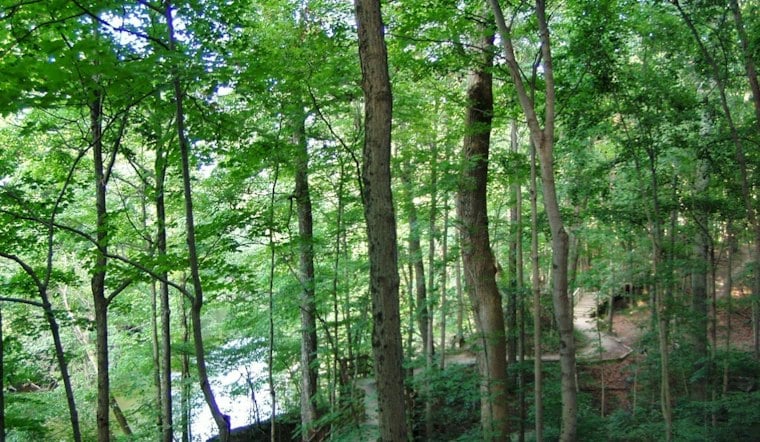
A homeless encampment along Fall Creek Trail near the Monon has grown fast enough that trash and belongings are now spilling onto the path itself, and Indianapolis officials say they're working on a plan to clean it up — but they can't say when that will happen. City workers have been out assessing the site, and the message from the Office of Public Health and Safety is blunt: nothing gets cleared until the people living there have somewhere else to go.
According to WTHR, trail users say they first started noticing the encampment more than a year ago, and that it has expanded quickly since then. The outlet reports that encampment belongings and trash have spilled onto the trail itself, and that visibility of the camp has likely increased simply because the surrounding trees have thinned out. Jesus Aquiano told the station that flooding in the area brings even more trash into the corridor, while Fritz Herdrich described the site bluntly as an environmental disaster.
No Timeline Yet, But a Meeting Is Set
The Office of Public Health and Safety says it is aware of the encampment and plans to clean it, but as of now there is no timeline for when that cleanup will happen, the station's report notes. A city worker told the outlet that items cannot be removed until the people living at the site are helped to find new places to live. The same report indicates the office will meet early next week to work out cleanup plans. Herdrich said he hopes the city can find homes for the people currently living without housing along the trail.
That approach — housing first, cleanup second — mirrors how Indianapolis has handled other encampments through Streets to Home Indy, a public-private partnership led by the Coalition for Homelessness Intervention and Prevention that launched in the city in July 2025. The initiative moves people out of encampments and into housing over a four- to six-week process, and only after residents are placed does the City of Indianapolis clean, clear and restore the site, per the coalition.
Seven Camps Closed, Hundreds Housed Citywide
Since its first year, Streets to Home Indy has closed seven encampments across the city, according to the initiative. By July 2026, the program had helped find housing for roughly 220 people, and 95% of those placed remained housed as of that point, the coalition reports. Separate reporting has put the total housed as of late August 2026 at slightly different figures — 231 people per WISH-TV, and more than 230 according to The Indianapolis Star via USA TODAY Network — underscoring that exact counts have shifted as the program has continued.
The Indianapolis Star reported in March 2026 that the program had closed three camps and housed 114 people in its first six months of operation, while later accounts describe outreach workers spending an average of 27 days from first contact with a resident to move-in day. The program has typically managed to close most camps within four to six weeks, the same reporting notes. A similar timeline played out in 2025, when the city said the Leonard Street homeless camp would close within four to six weeks after a pilot effort had already housed 10 people from an earlier encampment, per WISH-TV.
Homelessness Count Shows Mixed Signals Citywide
The scale of need behind these efforts shows up in the city's annual count. The January 2026 point-in-time count, conducted by the Coalition for Homelessness Intervention and Prevention, recorded 1,821 residents experiencing homelessness, with 272 of them unsheltered — about 15% of the total. That unsheltered figure actually represents an 18% drop from 2025, when 331 residents were counted living outside, according to WFYI.
Not every trend moved in the same direction, though. The count also showed a rise in unaccompanied young adults ages 18 to 24, up to 114 in 2026 from 85 the year before, WFYI reported. The same count found Black residents made up 56% of the homeless population, compared with roughly 27% of Marion County's overall population. More than 2,000 people enter homelessness in Indianapolis every year, according to CHIP's data cited by WFYI — a churn that helps explain why encampments like the one along Fall Creek Trail keep reappearing even as the city works to close others down.
Streets to Home Indy's next phase, beginning in 2026, is meant to expand rehousing capacity and improve shelter-to-housing transitions, with a later phase planned for 2027 through 2028 aimed at preventing roughly 2,500 people annually from falling into homelessness in the first place, per the coalition. For now, though, the fate of the Fall Creek Trail site rests on the same question driving the broader program: finding people a place to go before anything along the trail gets cleared away.





