

























































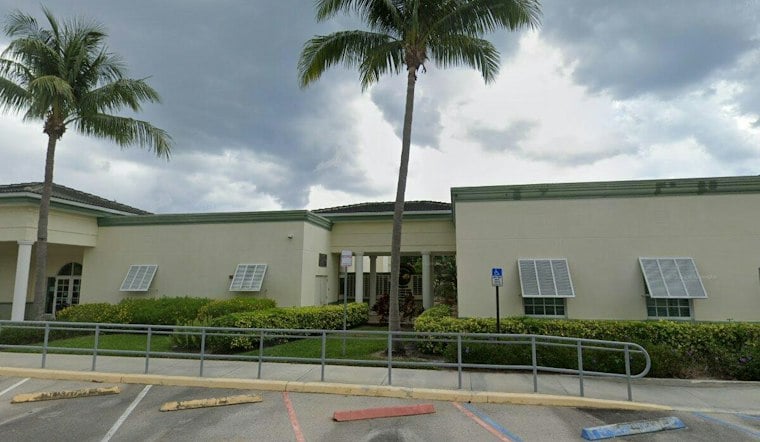
Florida Atlantic University has landed $30 million in state funding to build a sprawling new Health Professions Clinical Training and Research Facility on its Boca Raton campus, marking the first state dollars secured for the project. The planned 150,000-square-foot building is designed to pull together medical, nursing and social work training under one roof, with FAU estimating completion by early 2030 if funding and project development stay on track.
The funding represents the project's opening piece of a much larger puzzle. According to Florida Atlantic University, the facility will bring together students, faculty and researchers from its Charles E. Schmidt College of Medicine, Christine E. Lynn College of Nursing, and College of Social Work and Criminal Justice. FAU says health professions education often happens in separate silos by discipline, and this building is meant to break that pattern by creating one interprofessional space where future physicians, nurses and social workers train side by side.
A Response to Florida's Workforce Gap
The stakes behind the project are steep. FAU's facilities capital improvement plan cites an estimated current shortage of 60,000 nurses in Florida, with a shortage of 17,000 doctors anticipated, according to the university's facilities capital improvement plan. The same planning document projects that once built, the facility could support the annual graduation of more than 300 nurses, 104 medical doctors and 150 social workers — numbers FAU is counting on to help close that gap.
Those workforce concerns echo broader statewide projections. The Florida Center for Nursing has modeled health-workforce supply and demand from 2022 through 2037, covering physicians, advanced practice providers, registered and licensed practical nurses, allied-health professionals and nursing assistants, per the Florida Center for Nursing. The center's projections rely on workforce modeling data gathered by GlobalData, the organization notes.
University Leaders Emphasize Collaboration
FAU Provost and Executive Vice President for Academic Affairs Ken Dawson-Scully framed the facility as a shift away from training doctors, nurses and social workers in isolation. He said the project will give students and faculty from multiple disciplines new opportunities for collaboration and discovery, and that it will prepare students to work across clinical professions to improve health and patient care, per the university's announcement.
FAU describes the building as blending experiential learning, patient engagement, clinical education and research, per the capital improvement plan. The university also says it will incorporate research infrastructure supporting FAU's standing as a Carnegie-designated R1 research institution, with plans to connect research discoveries directly to clinical practice and patient care. Students from engineering, business and humanities programs are also expected to have chances to contribute to the interdisciplinary environment once it opens.
Lawmakers and University Leadership React
FAU President Adam Hasner thanked Gov. Ron DeSantis for his support and credited Senate Minority Leader Lori Berman and state Representative Peggy Gossett-Seidman, who represents Highland Beach, for leading the funding advocacy. Hasner said the $30 million represents an important commitment to both Florida Atlantic and the state, and that the facility will enhance training for future doctors, nurses and social workers while fostering cross-disciplinary research and clinical collaboration.
Hasner has a personal history with the university's health programs, having championed a multiyear effort to secure funding and approvals for FAU's independent medical school, which the university established in 2010. He said the new facility will help Florida Atlantic meet the state's growing healthcare needs, and FAU notes that expanded enrollment and training capacity could ultimately translate into more health professionals for Florida's workforce — many of whom, the university says, tend to stay in the region after graduation to build their careers.
Funding Still Has a Long Way to Go
The $30 million is far from the full price tag. FAU's capital improvement plan lists the facility's total project cost at $107,895,000, meaning the university will need to secure significantly more funding before construction can be finished. FAU says it can now begin planning the project following this round of state support, and that it plans to pursue additional state funding and philanthropic support while engaging community, business and civic leaders to advance the effort. The university also points to construction jobs in Florida as an added benefit once building gets underway.
This isn't the first time Tallahassee has backed a major FAU health initiative. During the 2023 legislative session, lawmakers approved $30 million in fixed-capital-outlay funds and $10 million toward operating costs to establish an FAU College of Dentistry, while the university's College of Medicine received $5 million and its College of Nursing received $4.26 million that same year, according to FAU's legislative budget recap. In total, FAU was slated to receive $70 million in new state funding that year, including roughly $25.2 million in performance-based funding, an increase of $5 million over the prior fiscal year.
Separately, FAU was reported to be in line for another $30 million in state funding for construction of a new College of Dentistry, pending final approval by Gov. DeSantis, with the total cost of establishing that college put at $123.3 million, according to The Capitolist. That report also cited a $30 million philanthropic donation supporting the dentistry department, and noted that more than 5 million Florida residents live in areas with limited or no access to a dentist, with 63 of the state's 67 counties facing a dental shortage.





