

























































A new survey of more than 1,000 women across five Florida counties has found that many are unaware breast cancer diagnoses are climbing among younger patients, with awareness especially thin among women in their 30s. The finding has prompted doctors and at least one local survivor to urge women not to wait on their bodies to catch up to the statistics.
The survey was conducted by the TopLine MD Alliance among women in Palm Beach, Broward, Miami-Dade, Duval and Hillsborough counties and was provided to WPTV, which reported on the findings. According to the survey, as reported by NBC Miami, close to 52% of respondents overall said they were very aware that breast cancer diagnoses are rising among younger women. That left a substantial share of women either partially informed or largely in the dark.
Thirty-two percent of respondents described themselves as only somewhat aware of the increase, according to a release from TopLine MD Alliance. Another 17% reported limited awareness altogether, including 11% who said they were not very aware and 6% who said they were not at all aware, per the same release.
Awareness Drops Sharply Among Women in Their 30s
The gap widened considerably among the youngest group surveyed. Among women ages 30 to 39, awareness was less than 43%, according to WPTV's account of the TopLine MD Alliance survey, pointing to a clear awareness gap in that decade of life. The survey also found that more than one in four women had delayed or skipped a recommended screening altogether, the outlet reported.
Doctors quoted in the coverage stressed that routine mammograms generally begin at age 40 for women at average risk, though personal or family history can warrant earlier screening, the station noted. But the message to younger women wasn't simply to wait for that age threshold. One physician said any new breast symptom should prompt a visit to a provider regardless of age: “I fully encourage any women who has a new symptom, a new sign, any difference, any change in their breast, bring it to a healthcare provider.”
A Palm Beach County Survivor's Story
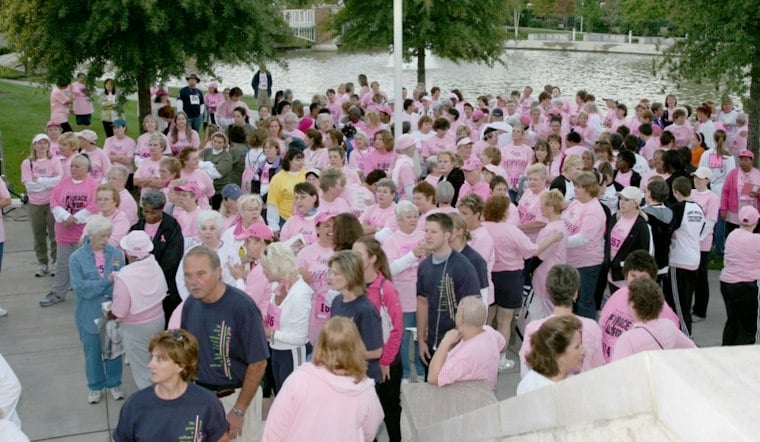
Jamie Howe was diagnosed with ductal carcinoma in situ, a non-invasive stage zero breast cancer, in 2023 — just three months shy of her 43rd birthday. She recalled being told that cancer was found in her right breast, and she has since become the 2026 event chair of the Susan G. Komen More Than Pink Walk in Palm Beach County.
Howe's mother is a three-time cancer survivor, but Howe said genetics alone are not a predictor of breast cancer, pushing back on the assumption that family history is the only reason to stay vigilant. She said she wants to tell her story so other women don't feel alone, and she advised women to be vigilant, perform self-breast exams and undergo surveillance rather than assume they're too young to be affected.
What the Broader Data Shows
The Florida findings echo a pattern researchers have tracked nationally for years. Breast cancer incidence among women under 50 has been rising by 1.4% annually, roughly double the 0.7% annual increase seen in older women, according to CBS News. The American Cancer Society similarly reported that U.S. breast cancer incidence rose 1% annually from 2012 through 2021, with the steepest climb — 1.4% per year — among women younger than 50.
A Columbia University analysis of breast cancer incidence among women ages 25 to 39 found that from 2001 to 2020, rates in women under 40 increased by more than 0.50% per year in 21 states, according to Columbia Public Health. That same research found the Western United States had the highest rate of increase over that period, while the South was the only region without an increase. Early-onset incidence during those years ranged from 28.6 cases per 100,000 people in Wyoming to 41 cases per 100,000 in Connecticut, the researchers found.
Despite the rising incidence among younger patients, overall breast cancer mortality in the United States has fallen sharply. The American Cancer Society reported that mortality rates dropped 44% from 1989 through 2024, even as the organization projects 321,910 new invasive breast cancer diagnoses nationwide in 2026, according to CBS News. A separate American Cancer Society survey of roughly 33,000 U.S. women found that awareness of breast cancer risk factors is generally high, but that significant gaps remain between knowing the risks and taking action to reduce them.
Taken together, the Florida survey and the national data point to the same conclusion doctors and survivors like Howe are emphasizing: awareness alone isn't protection, and acting on changes in the body — not waiting for a birthday or a routine screening date — remains the message providers want younger women to hear.





