

























































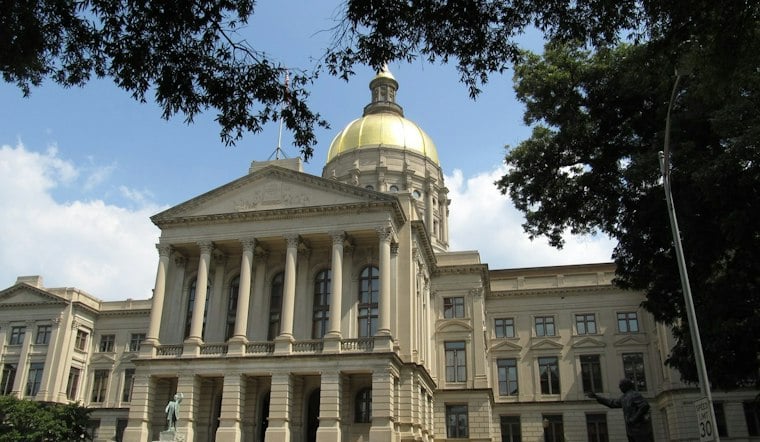
Georgia voters will decide next month whether to create a dedicated, non-lapsing state fund to overhaul a 911 system that, in many counties, has changed little since it was established in 1968. Constitutional Amendment 3 appears on the November 3 general election ballot alongside two other statewide questions, and its outcome could determine whether rural call centers finally catch up to the digital capabilities already running in wealthier, more populous counties.
The measure, according to WABE, which credited the Georgia Recorder for providing the story, would establish a designated fund that lawmakers could use to earmark state money for modernizing and standardizing Georgia's 911 system statewide. The amendment itself does not allocate any state or local money to the fund — that step would require separate enabling legislation next year if voters say yes. The ballot measure originated from House Resolution 1243, sponsored by state Representative Chuck Martin, an Alpharetta Republican, and it passed the state House 162-0 on March 4 and the state Senate 49-0 on March 31, according to Ballotpedia.
Why Lawmakers Say the Fund Is Needed
Martin told WABE the amendment is the first step toward sustainable funding for a statewide 911 system, though he cautioned that funds will not be deposited or distributed if cities, counties and 911 directors cannot agree on the best approach. If voters approve the measure, the Georgia General Assembly would still need to pass legislation changing the local 911 fee into a state fee, with input from city and county governments and 911 directors shaping how money gets allocated across the state, per the same report.
The resolution grew out of a House Study Committee on Funding for Next Generation 9-1-1, created by passage of HR 429 during the 2025 legislative session, with members appointed on May 14. The committee, chaired by Martin, held public hearings in Roswell and Warner Robins to compare dispatch funding models used in neighboring states like Alabama and North Carolina, according to the Georgia General Assembly. The committee examined operational differences between legacy copper 911 centers and newer IP-based networks as it built the case for a constitutional fix.
A System Built for Landlines, Not Smartphones
Georgia's 911 infrastructure has struggled to keep pace with how people actually call for help. The Georgia Emergency Communications Authority has reported that more than 80% of 911 calls now come from wireless devices, yet WABE notes the underlying system has changed little since it was established in 1968 — an era built around landline phones tied to fixed street addresses. Next Generation 911, or NG911, replaces those analog copper lines with secure Internet Protocol networks, letting public safety answering points receive texts, photos, videos and more precise caller-location data, according to Peach Pundit.
Thomas Cisco, Forsyth County's emergency management director and president of the Georgia 911 Directors Association, told WABE that Georgia has 156 public safety entry points with wildly varying technology — some counties already running updated systems, many others still relying on older infrastructure. He said NG911 would help ensure the same level of service exists in every county, from the smallest to the largest. Clint Mueller, deputy director of the Association County Commissioners of Georgia, told the outlet that only 17 of Georgia's 159 counties are currently NG911-compliant, a gap that Peach Pundit's reporting also frames as a stark urban-rural divide, with a statewide approach potentially benefiting rural counties in particular.
No New Taxes, But No Guarantees Either
Georgians already pay a $1.50 monthly fee on cell phone bills meant to fund local 911 systems, and approval of Amendment 3 would not raise that fee or create any new tax, according to The Citizen. Instead, the amendment simply builds the constitutional mechanism needed for future enabling legislation to decide how revenue gets structured and distributed. Its non-lapsing design means unused money would roll over to the next fiscal year rather than reverting to the general treasury, preventing lawmakers from diverting the funds elsewhere — though the designated fund would remain empty entirely unless that follow-up legislation passes.
Amendment 3 has drawn broad institutional backing, including endorsements from the Georgia Municipal Association and the Georgia Emergency Communications Authority, along with bipartisan support from figures like Senate Minority Leader Harold Jones.
Opposition Raises Surveillance Concerns
Not everyone is on board. Progressive advocacy group Galvanize Georgia voiced opposition to the measure earlier this month. WABE reported that Galvanize Georgia specifically warned the funds could end up purchasing automated license plate readers such as Flock cameras.
Kayla Green, spokesperson for House Speaker Jon Burns of Newington, told WABE that funds would not be used for automatic license plate readers, since state law defines the specific technology covered under Georgia's 911 system and proposed amendment funds may only go toward upgrading emergency communication systems that strengthen direct contact between Georgians and first responders.
What Still Isn't Fixed
Even a fully funded NG911 rollout wouldn't solve every public-safety communication gap. Building communication specialists note that while NG911 modernizes call intake and dispatch geolocation on the front end, facility owners must separately maintain Emergency Radio Communication Enhancement Systems so first responders keep two-way radio signals inside stairwells and basements, according to Global Network LLC
. Network upgrades at the dispatch level, in other words, don't automatically resolve radio dead zones once crews arrive on scene.
For now, the question in front of Georgia voters is narrower: whether to create the fund at all. If Amendment 3 passes, the real fight over how the money gets divided — and whether cities, counties and 911 directors can agree on a formula — will play out in next year's legislative session.



