

























































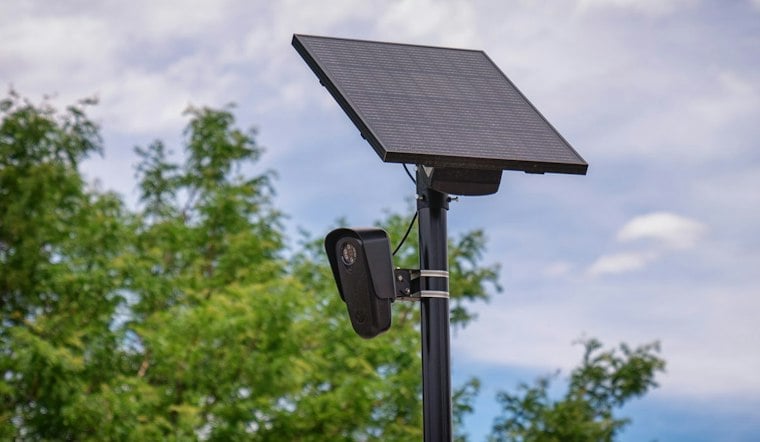
Glendale police are standing firmly behind their network of 58 automated license plate readers scattered across city roads, even as a growing list of Valley cities walks away from the same technology over fears about privacy and misuse. The department says it has no plans to end the program, which runs under a contract with Flock Safety through September 2027.
Glendale has used automated license plate readers for more than 20 years, according to ABC15 Arizona, and police say the tool has helped solve crimes in minutes rather than days. Glendale Police Commander Scott Waite pointed to a recent homicide as proof of the system's worth, telling the station that Flock technology helped officers identify a suspect's vehicle within nine minutes and put units on its trail.
How Glendale Says It Limits Misuse
Police officials laid out several safeguards meant to address the kind of misuse that has fueled backlash elsewhere. Searches of the Flock system require a report number and supervisor approval, access is limited to 20% of the force, and scan data is deleted after 30 days, the department told ABC15. Glendale police also say they review just 0.01% of plates scanned each month and share data only through active investigations.
Waite was blunt about what happens to anyone who strays from that policy. Employees caught using Flock outside criminal law enforcement, he said, will no longer work for the department. That line was drawn amid a wave of scrutiny nationally over officers tapping plate-reader systems for personal reasons rather than active cases.
Valley Cities Are Going the Other Direction
Glendale's stance puts it at odds with a growing number of neighboring communities. Tempe announced in late August that it had turned off its Flock system and canceled its contract, while Surprise notified the company it would do the same and remove its equipment, according to KTAR. Cave Creek terminated its contract effective immediately, citing both privacy concerns and the theft of a camera, and Chandler opted not to renew its deal after an internal audit flagged possible employee misuse and the city cut off police access to the system.
By September 8, at least 11 Arizona communities had terminated their Flock contracts, per KJZZ. That count doesn't match every tally circulating about Flock's footprint nationally — the Flock Contract Tracker from Who Approved This counted 1,044 contracts across 47 states and Washington, D.C. as of late September, with 243 canceled, expired or rejected, while a separate Institute for Justice database tallied 247 jurisdictions nationwide that had scrapped ALPR use as of early October, as reported by The Marshall Project.
Different Cities, Different Rules
Not every city is cutting ties outright. Queen Creek instead passed an ordinance regulating ALPR use that includes annual public audits and makes knowing misuse of Flock data a class 1 misdemeanor, the same KJZZ report noted, while Police Chief Randy Brice there said the town's system stores data for 30 days. That stands in contrast to Flock Safety's own announcement that its default retention period would shrink from 30 days to seven, with most of the changes becoming mandatory for law-enforcement customers on January 1, 2027, according to The Next Web.
Scottsdale, meanwhile, has taken a middle path, running 85 license plate readers of its own, retaining data for roughly six months and spending about $280,000 a year on the program, KJZZ reported. Phoenix, Tucson and Mesa are continuing to use Flock cameras as well, according to Arizona Family, which also reported that Apache Junction is sticking with its cameras despite a former officer's misuse of the system to track his wife. Payson and Cottonwood recently ended their own Flock programs, with officials there framing the decision as an effort to restore public trust, KJZZ reported.
A Statewide Review Is Underway
The patchwork of local decisions is now drawing state-level attention. Arizona Attorney General Kris Mayes launched a statewide review of surveillance-tool use on August 27, according to KTAR, with the review set to examine how the cameras have been used, their impact on residents' privacy and any potential constitutional issues before a report goes to the legislature and governor's office, per Arizona Family.
The debate isn't confined to Arizona. The Marshall Project reported that a study comparing 216 police agencies that adopted Flock with those that did not found an 11% decline in vehicle theft and a 16% increase in theft-clearance rates after installation — a data point police departments like Glendale's point to when defending the technology's results. Flock Safety itself operates more than 120,000 cameras across 49 states and serves 6,000 law-enforcement agencies nationwide, The Next Web reported.
Residents Split on Where the Balance Lies
Not everyone has settled firmly on one side. Lenore Griffith Bishop, who lives in Cave Creek, told ABC15 she sees merit on both sides of the Flock camera debate, saying community cameras can help follow crime even as she remains uncertain about which policy approach is best for her town. The ACLU of Arizona has raised significant privacy concerns about the cameras more broadly, per the same ABC15 report.
For now, Glendale's Citizens Transportation Oversight Commission had been scheduled to hear a police department presentation on the program on October 1, but that meeting was canceled for lack of quorum, according to ABC15. The Flock camera program, Glendale police maintain, continues to deliver results, and the department says it has no intention of following Tempe, Surprise, Cave Creek or Chandler out the door.





