

























































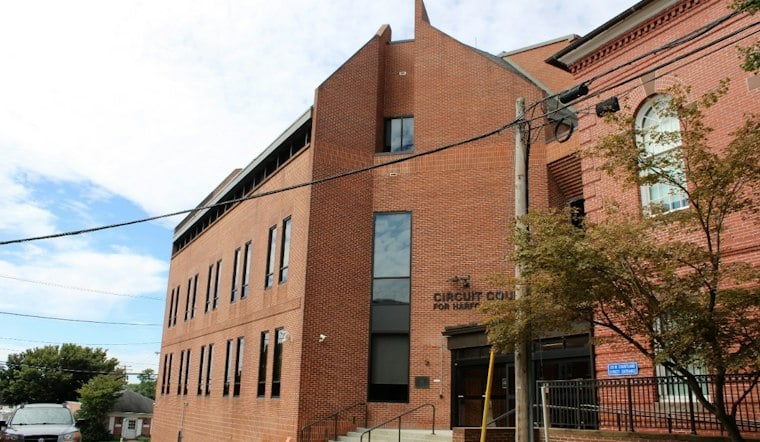
A Harford County judge has ruled that the local school board broke the law when it pulled the graphic novel “Flamer” from middle and high school libraries, upholding a state order that put the book back on shelves. The ruling, handed down in Bel Air, Maryland, found that the board's June 2025 removal of the Mike Curato novel violated both Maryland's Freedom to Read Act and the First Amendment.
Harford County Circuit Court Judge Yolanda L. Curtin's decision backs up a November 2025 ruling from the Maryland State Board of Education, which had already reversed Harford County's decision to remove the book from middle and high school libraries. The state board's opinion stated plainly, “we reverse the decision of the local board,” and went further, calling the local board's move “arbitrary and unreasonable.” As WBAL-TV reports, the judge's ruling allows “Flamer” to remain on school shelves going forward.
“Flamer” follows a boy navigating friendships, bullying, sexuality and self-discovery, according to the book's description. Curato has said the graphic novel draws on his own experience being bullied as a kid for being gay, a detail reported by The Baltimore Banner. Some parents raised concerns that the book contains graphic language and vulgarity, objections that set off more than a year of review before the case reached a courtroom.
How the Fight Over 'Flamer' Unfolded
The dispute traces back to November 2024, when a parent formally requested that Harford school officials remove “Flamer” from school libraries, the Banner's reporting shows. A nine-member HCPS reconsideration subcommittee took up the challenge and, in March 2025, unanimously voted to keep the book in high school libraries while voting 8-1 to keep it available in grades 6 through 8. That subcommittee found no explicit nudity in the book and determined its profanity was contextually appropriate.
Despite that recommendation, the Harford County Board of Education voted 5-3, with one abstention, on June 26, 2025, to pull “Flamer” from every HCPS library. The board then appealed after the state board overturned that decision in November, setting up the circuit court review that just concluded in Bel Air.
State Board Orders Changes to Review Process
Beyond restoring the book, the Maryland State Board of Education directed Harford County to revisit its evaluation procedures so that community members get notice and a chance to participate in future appeals over school-library materials. The order reflects requirements under Maryland's Freedom to Read Act, a state law that establishes policy for school-library programs and requires local districts to create procedures for reviewing objections to materials, according to the Maryland General Assembly. That same law bars schools from removing materials based solely on an author's background or views, or on partisan, ideological or religious disapproval.
Before the circuit court ruling, Harford County's own school board attorney, Gregory Szoka, had cast doubt on the board's chances, telling the Banner, “I think the chances of succeeding on the appeal are less than 20%.” Under state guidance, a challenged book must remain available to students while it is under review, a standard cited by the Southern Maryland Chronicle.
Part of a Bigger Fight Over Library Books
The Harford County case lands amid a surge in challenges to school library materials nationwide. PEN America counted 11,982 instances of books banned in U.S. public schools during the 2025-26 school year, covering 7,370 unique titles, per the Southern Maryland Chronicle's reporting. Maryland, by contrast, recorded just one ban statewide during that same school year, a gap the outlet attributes to the state's Freedom to Read Act protections.
That law followed years of rising pressure on local librarians. Maryland libraries saw a 133% increase in formal challenges to their collections since 2019, according to a report from WBAL-TV, and 53% of surveyed librarians said they were afraid to purchase certain books even when they believed students would benefit from them. The “Flamer” case now stands as one of the clearest tests yet of whether those state protections hold up when a local board pushes back.


