

























































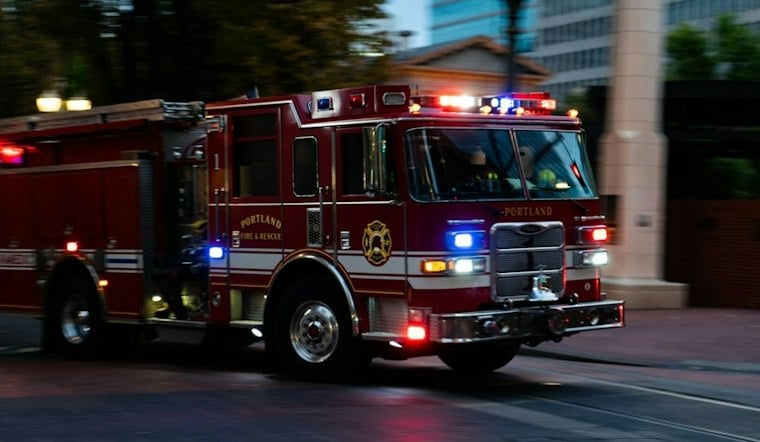
A two-vehicle head-on collision transported five people to the hospital Thursday, with two of them entering the state's trauma system based on the mechanism of injury.
Portland Fire & Rescue described the crash in a post on X, writing that three of the five patients suffered minor injuries while two others were classified as serious cases and entered into the Oregon Trauma System based on the mechanism of injury, according to Portland Fire & Rescue
That classification matters even when a patient does not appear badly hurt at the roadside. Under Oregon Health Authority rules updated in 2024, emergency crews can route patients into the trauma system based on how the crash physically happened rather than the injuries visible in the moment, including vehicle intrusion exceeding 12 inches at the occupant's seating position, complete or partial ejection from the vehicle, or a need for extrication, according to the Oregon Health Authority. The rules exist to catch internal injuries that might not be obvious until it's too late.
Where Serious Crash Patients End Up
Oregon has only two Level I trauma centers equipped for round-the-clock care of severe adult multi-system trauma, and both are in Portland: OHSU Hospital and Legacy Emanuel Medical Center, per the state health authority. Those facilities are required to keep trauma surgeons, anesthesiologists and life-support equipment immediately available at all times, the agency notes.
The stakes of that kind of triage are real. A North American cohort study of 3,656 EMS-transported adult trauma patients across 10 U.S. and Canadian sites and 51 Level I and II hospitals—including urban, suburban, rural and frontier areas—found an overall in-hospital mortality rate of 22.0%, with nearly two-thirds of those deaths occurring the same day as the crash, according to research published in PMC. The study found no significant association between EMS intervals and mortality in its cohort.
Legal Thresholds For Driver Fault
Whether anyone will face charges in Thursday's crash remains unclear, as Portland Fire & Rescue's statement addressed only the medical response. Oregon law treats careless driving as a Class A traffic violation when it contributes to a collision, per Oregon statute as cited by legal resource Public.Law.
A Pattern Of Serious Portland-Area Crashes
Thursday's collision follows a string of severe crashes in the region. Just two days earlier, a 20-year-old Portland driver in a Ford Transit van crossed into oncoming traffic on Highway 26 near Government Camp, causing a fatal head-on crash that killed a 55-year-old Bend motorist; the Portland driver was arrested on manslaughter and DUII charges, according to Columbia Community Connection. In April, an offset head-on crash at SE Foster Road and SE 73rd Avenue sent two drivers to the hospital after a driver crossed into turning traffic, drawing a two-minute response from Portland Fire & Rescue Station 11, as reported by East PDX News.
Portland Fire & Rescue is Oregon's largest fire and emergency medical services provider, running 31 stations, 29 engine companies and 10 ladder truck companies across a 160-square-mile service area. The department responded to 89,422 emergency incidents during fiscal year 2024–2025 for more than 615,000 residents, per the agency's own performance data.
City And National Trends Point Downward
Despite the recent string of severe crashes, Portland's overall traffic fatality numbers have been falling. The Portland Bureau of Transportation's Vision Zero report counted 39 traffic deaths, 38% below the previous four-year average and the lowest annual total since 2018, according to the Portland Bureau of Transportation. Nationally, the trend lines the same way: federal projections released in April 2026 showed traffic deaths dropping 6.7% in 2025 to an estimated 36,640, the second-lowest national fatality rate ever recorded at 1.10 deaths per 100 million vehicle miles traveled, per the National Highway Traffic Safety Administration.
No further details on the patients' conditions or the crash's exact cause had been released as of Thursday evening.




