

























































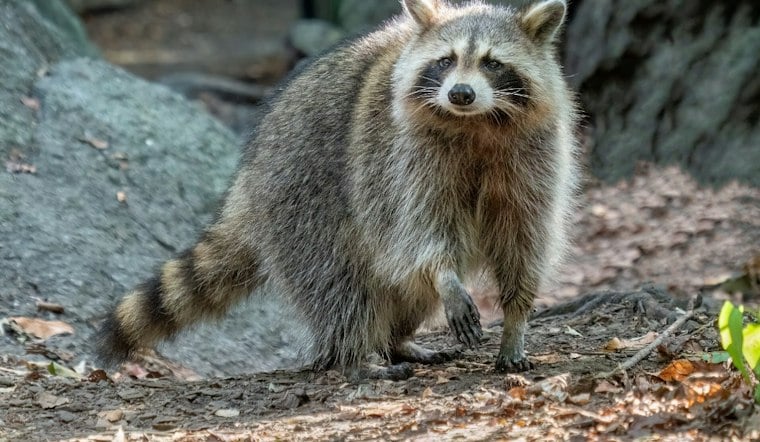
Low-flying helicopters are scheduled to begin dropping more than 500,000 fish-smelling vaccine packets across Northwest Georgia around October 7, part of an annual federal push to keep rabies out of raccoons and other wildlife before the virus can spread further west. The helicopters will target urban and suburban areas first; fixed-wing airplanes are expected to begin rural coverage around October 20.
According to CBS News, the USDA plans to blanket more than 7,000 square kilometers spanning Bartow, Catoosa, Chattooga, Dade, Floyd, Fannin, Gilmer, Gordon, Murray, Pickens, Rabun, Towns, Union, Walker and Whitfield counties with baits containing the RABORAL V-RG oral rabies vaccine. The Walker County government has said helicopter drops will begin around Wednesday, while airplane runs are expected to start closer to October 20. As FOX 5 Atlanta reports, the helicopters are specifically assigned to fly over denser municipalities including Dalton, LaFayette, Rome, Calhoun, Fort Oglethorpe, Chickamauga and Tunnel Hill for two to three days, while fixed-wing planes spend roughly a week covering the surrounding rural zones.
A Regional Hub Feeding a Multi-State Barrier
The Northwest Georgia drops are not an isolated event. They're staged out of a project hub in Dalton that's coordinating distribution of 648,000 oral rabies vaccine baits across contiguous parts of Georgia, Alabama, North Carolina and Tennessee this fall, according to the West Virginia Department of Agriculture. The broader goal, per CBS News, is to stop the westward spread of rabies and eventually eliminate terrestrial rabies from the United States altogether.
That ambition isn't without precedent. USDA APHIS notes that its National Rabies Management Program already wiped out the canine rabies variant from the U.S. in 2008 through targeted oral vaccination baiting in Texas, and the agency's current effort is aimed at the raccoon, gray fox and coyote variants still circulating in wild populations. The agency operates multiple regional airport hubs across eastern states to maintain what amounts to a continuous immunization barrier along the Appalachian Mountains, preventing the raccoon rabies variant from migrating into uninfected Midwest populations.
Why Raccoons Are the Primary Target
The focus on raccoons isn't arbitrary. A retrospective public health study covering 2010 through 2021 found that wild animals accounted for 93.7% of all confirmed positive rabies cases in Georgia, with raccoons making up 68.9% of positive laboratory submissions, as reported previously by Hoodline. The USDA is also field-testing an unlicensed candidate vaccine called ONRAB, packaged in sweet-coated liquid blister packs, distributing about 2.8 million doses across six states in 2026 to evaluate its effectiveness and immune effects in wildlife.
Officials say rabies remains a significant human health and safety threat, and the agency is working with the Centers for Disease Control and Prevention, the Georgia Department of Public Health, and other local and federal partners on the campaign. That coordination matters amid increased rabies exposures nationwide.
The Cost of Doing Nothing
That surge carries a real price tag. The same CDC advisory states that a standard course of human rabies post-exposure prophylaxis in the United States costs between $11,000 and $14,000 per person, a treatment that requires immediate wound care, human rabies immune globulin, and a multi-dose vaccine series. USDA APHIS estimates roughly 55,000 Americans undergo that treatment each year, contributing to national rabies detection, prevention and control expenses that exceed $500 million annually.
Georgia law adds another layer of urgency for pet owners. State health regulations require all owned dogs, cats and ferrets to maintain current rabies vaccinations from a licensed veterinarian, and when an owner cannot prove a pet's vaccination is current after a human bite incident, the law may require at least a 10-day quarantine or even euthanasia for brain tissue examination, according to District 4 Public Health.
What Residents Should Do If They Find a Bait
The vaccine baits are coated in fishmeal crumbles designed to attract raccoons and other wildlife, and each one includes a toll-free information number. CBS News reports that the public should not touch or move the packets; anyone who finds one in an open area may carefully toss it deeper into the woods using gloves or a paper towel. Anyone who makes direct contact with the vaccine inside a bait should wash their hands immediately and contact their local health department.
The baits are not considered harmful to pets, though CBS News notes animals that eat several of them may experience mild stomach upset. Residents across the 15 affected counties should expect to see low-flying airplanes or helicopters overhead during the operation. In its coverage of a 2024 Tennessee campaign, Hoodline reported that USDA APHIS navigators aboard aircraft controlled and paused bait distribution equipment to prevent packets from landing on roadways, housing structures or open bodies of water, as detailed in its earlier coverage of a similar Tennessee campaign.



