

























































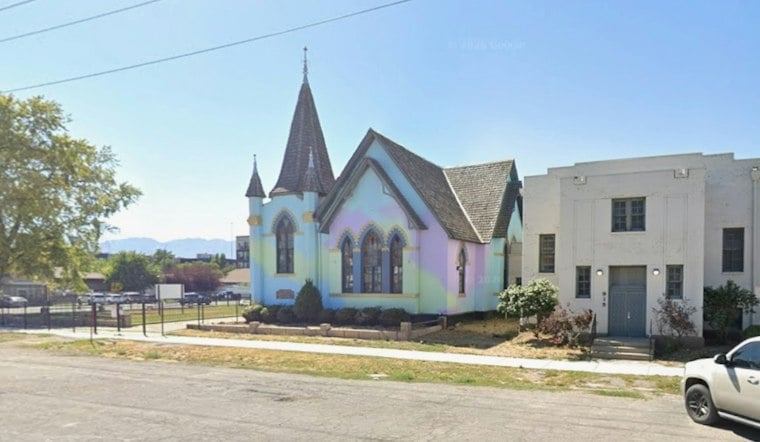
Salt Lake City's Poplar Grove neighborhood gets its turn in the spotlight Saturday, October 17, as Preservation Utah brings its annual Historic Homes Tour to the city's west side for the first time. The self-guided walk starts at 10 a.m. at tour headquarters, Art Castle, 915 W. 100 S., and spans a neighborhood long defined by working-class, agricultural and industrial roots.
Preservation Utah, which describes itself as the only statewide nonprofit dedicated to historic preservation in Utah, has staged versions of this tour across Salt Lake Valley neighborhoods for a little over 50 years, according to the Salt Lake Tribune. This marks the third consecutive year the organization has brought its historic home tours to the city's west side, per Preservation Utah, though 2026 is Poplar Grove's debut on the circuit. Attendees must pick up a brochure and wristband at headquarters before setting out, and the nonprofit notes that none of the homes on the route are wheelchair accessible, with most featuring stairs.
Most of Poplar Grove's homes date to between the 1930s and 1960s, a mix the tour's organizers describe as Victorian cottages, Craftsman bungalows, California ranch homes and other practical houses built for working families, according to the same Preservation Utah listing. The Salt Lake Tribune reports the lineup includes four otherwise inaccessible private homes and three key landmarks, offering a rare look inside houses not normally open to the public.
A Carnegie-Era Library Still Serving the Neighborhood
Among the stops is the Chapman Branch of the Salt Lake City Public Library, an 8,900-square-foot building with two levels that opened in 1918 and has remained, in the library's own words, an important part of city services to Westside residents ever since. The Salt Lake Tribune's reporting notes the Chapman Branch is the only Salt Lake City library branch built with money donated by Andrew Carnegie, the Gilded Age steel baron whose philanthropy funded libraries across the country. A 2002 basement remodel improved the children's area and expanded collection and service space for adults, the library's history page states, and City Weekly has reported that the branch's offerings have grown well beyond book lending to include free Wi-Fi, printing, scanning, faxing and device charging stations, keeping it relevant for a modern Poplar Grove.
Fisher Mansion's Carriage House Opens Its Doors
The tour also stops at the Fisher Mansion, completed in 1893 as the home of Albert Fisher, a prominent Salt Lake City brewer, according to KSL.com. Visitors will see the mansion's renovated carriage house, per the Salt Lake Tribune's account, while the main mansion building itself is reportedly undergoing a multiyear renovation. KSL.com reports the carriage house was recently renovated and that Salt Lake City is exploring similar work for the historic home itself.
Tour headquarters, Art Castle, is itself part of the day's draw. The Salt Lake Tribune describes the building as a 1900 Latter-day Saint meetinghouse converted into a recording studio and culture hub, rounding out a roster of stops the paper summarizes as spanning Victorian cottages, midcentury bungalows, a Carnegie library and a former meetinghouse turned recording studio.
Neighborhood Voices on What the Tour Means
McKay Muhlestein, Preservation Utah's interim executive director, told the Salt Lake Tribune the tour aims to show historic homes where people actually live, not just museum pieces behind velvet ropes, and that the broader goal is to highlight historic assets across all sides of town. Daniel Tu'utau, chair of the Poplar Grove Community Council, told the paper that people should recognize each other's humanity and avoid reducing the city to categories, adding that neighborhoods have unique qualities that make them special and valuable.
Tickets for Saturday's tour run $30 at the door, with online registration available for $20, according to the Salt Lake Tribune's reporting. Preservation Utah's own ticketing page lists a $15 rate for its members and Poplar Grove residents. The Tribune also reports that volunteer docents will welcome visitors and share information at buildings along the route. The Salt Lake Tribune, which first reported on this year's westward expansion of the tour, is free to access without a subscription.





