

























































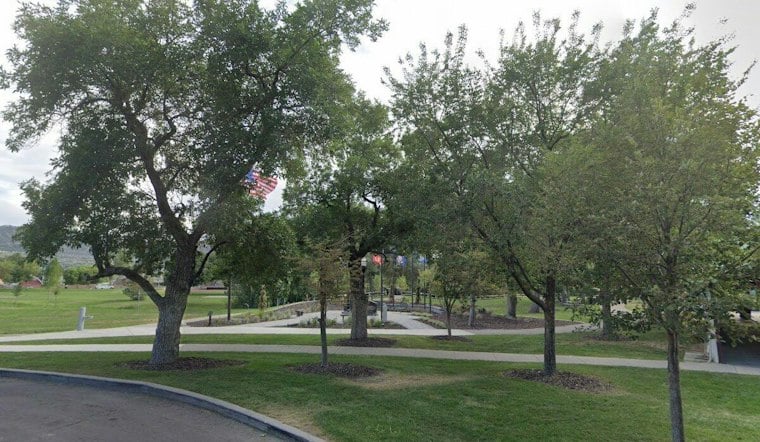
Sandy City Council is considering whether to contribute $157,000 toward a study of a possible Highland Drive extension through Dimple Dell. The proposed money would come through the city’s budget carryover process and unexpected revenue, and Draper would also need to contribute its share before the study could proceed.
The study would examine options for traffic in the area, including taking no action, according to KUTV. Sandy City Council Communications Director Matthew Perry described it as a way to gather information for future decisions, not a commitment to build a road.
Resident Deb Hafner, who has lived in Sandy since 2013 and rides horses in Dimple Dell, told KUTV that traffic has become terrible but said she does not believe solutions need to come at the expense of public space. She has suggested more traffic signals and safer crossings, and proposed using the unspent money for a separate traffic study.
Questions About Funding and the Corridor
Hafner has also asked whether Sandy would have to repay federal funds tied to the corridor and, if so, how much and when. She has asked whether the corridor land could be sold or opened to development if the road is not built, and suggested safeguards such as conservation easements or a land trust. The city has not answered those questions.
Dimple Dell’s Land History
Nearly all of Dimple Dell Regional Park’s 630 acres was acquired between 1963 and 1972, according to Salt Lake County planning appendices. That acquisition history provides context for the parkland at issue but does not establish what protections or public-access rules apply to the corridor today.
In the same KUTV report, Hafner said she doubts the road will ultimately be built and questioned whether Sandy could afford construction. She worries that a recommendation in favor of the extension could pressure the city to find construction funding later, potentially through higher taxes. She also wants to know what would happen to the corridor’s property, rights of way and easements if the study recommends against the road.
Council Member Kris Nicholl, who proposed the study funding, said in a Facebook comment that she is not advocating for the road itself. Nicholl said the study could determine whether extending Highland Drive is actually necessary, and if it is not, help identify other uses for the corridor.
What the Study Could Examine
Perry said the study would examine problems and opportunities in the area. If it proceeds, Sandy Public Works Director Ryan Kump and city staff would work with counterparts in Draper, the Wasatch Front Regional Council and the Utah Department of Transportation.
The idea of a Highland Drive crossing through Dimple Dell is not new. A 2020 city brief obtained from Sandy City says the road was first planned as a regional arterial by the Wasatch Front Regional Council back in 1967, and the agency approved $4.36 million in Surface Transportation Plan funding in 2016 for an environmental impact statement covering the corridor. That same brief said Sandy and Draper had agreed to split a required 6.7% match, with $146,000 requested per city as a fiscal year 2022 capital budget item, and that the environmental impact statement would definitively settle whether the full corridor needs to be built or whether the preserved right-of-way should be put to other uses. Construction, under either scenario, could not begin before 2030, the brief said.
The debate stretches back even further. A 1998 account from the Deseret News described a local task force studying a four-lane, limited-access highway across the park as part of a planned 2000 East/Highland Drive extension that would have eventually connected to I-15 at the Bangerter Highway interchange in Draper. At the time, Sandy city spokesman Rick Davis said construction was likely at least a decade away and a low priority for the state transportation department. More recently, in 2024, Sandy resident Craig Allridge urged Draper's council to join a regional environmental impact statement for Highland Drive, citing what his materials described as $4.3 million in available federal funding and a local match of roughly $157,000 for Draper's share, according to Citizen Portal.
What Happens Next
Sandy's council could direct staff Tuesday to add the study funding to revised carryover resolutions, with a public hearing and possible vote on the amended package scheduled for Nov. 17. Perry said public comment time is set aside at council meetings and encouraged residents with concerns to submit them to [email protected]. The Tuesday meeting was listed as beginning at 5:15 p.m., with public comment available to anyone who wants to weigh in before the council acts.





