

























































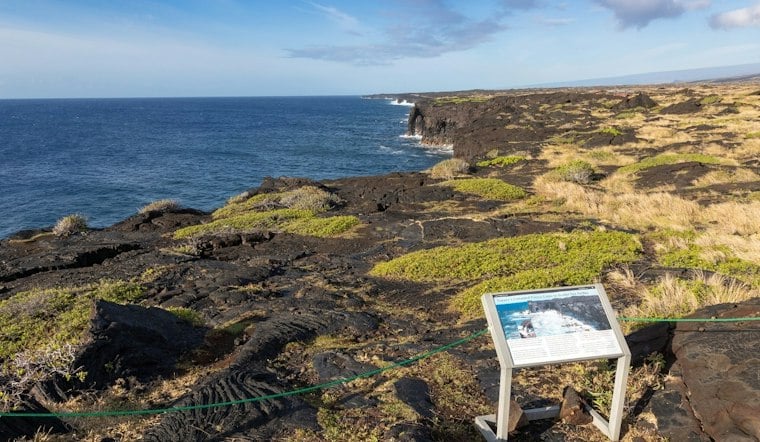
The Hōlei Sea Arch, a 90-foot basalt landmark that drew visitors to the end of Chain of Craters Road for decades, is gone. Hawaiʻi Volcanoes National Park confirmed the formation had collapsed by Sunday night, September 27, having last been observed standing on September 23.
The exact timing of the collapse is unknown because the coastal area was closed to visitors at the time, according to Big Island Video News. The closure came as Hurricane Nolo passed south and southwest of Hawaiʻi Island over the weekend, prompting temporary park shutdowns and widespread high surf advisories, as reported by Hawaii Public Radio. Officials noted the storm's timing but did not explicitly confirm that its waves were the single direct trigger of the collapse. KITV reported the arch collapsed into the Pacific Ocean during Hurricane Nolo, citing a photo of the landmark taken in the park back in 2022.
The National Hurricane Center reported winds of 70 mph on October 2 and forecast possible later strengthening. It also reported that the storm dumped up to 20 inches of rainfall and generated dangerous surf along the Big Island's southern coasts. That kind of wave action hitting an already compromised cliff face offers a sense of the forces bearing down on the Kaʻū coastline that weekend.
A Landmark Already Living on Borrowed Time
Park officials had long treated the arch as a structure on the clock. In January 2020, expanding cracks and coastal cliff instability forced the National Park Service to close the original overlook, reopening a safer viewing area farther from the cliff edge that March, per the agency's own records. Later in 2020, a south swell during Tropical Storm Darby broke away a large chunk of basalt from the arch's lower leg, and rangers warned at the time that the weakened structure could give way without notice, according to a report from the same account.
The damage traces back even further. Coastal cliffs near the arch suffered earthquake damage during Kīlauea's 2018 eruption and summit collapse, Hawaii Public Radio notes. That damage, combined with years of wave erosion, left the formation increasingly fragile long before Nolo's swells arrived.
How Wave Action Carved — and Finally Took — the Arch
The arch was a volcanic formation shaped by wave erosion, according to Surfer. The Hōlei arch was subject to ongoing erosion and instability.
The arch sat at the terminus of Chain of Craters Road, a 19-mile scenic highway that runs from Kīlauea's summit toward the coast, per World Atlas. Sections of the road have repeatedly been buried by lava over the decades, forcing reroutes. The landmark stood near the Hōlei Pali escarpment.
Cliff Edge Remains Unstable, Officials Warn
With the arch gone, park officials issued an urgent safety advisory warning that the sheer 90-foot cliff edge where it once stood remains structurally unstable. The advisory came after officials saw social media posts showing people illegally trespassing into closed zones to get a closer look, according to Big Island Now. Vertical drops and heavy wave action along the Kaʻū coast pose severe falling and drowning risks for both visitors and the rescue personnel who might have to respond.
For now, the loss of the Hōlei Sea Arch stands as a stark reminder that Hawaiʻi's coastline is never finished changing. A formation that stood for more than five centuries disappeared in the span of a few stormy days, and the cliffs it leaves behind are still settling into whatever comes next.




