

























































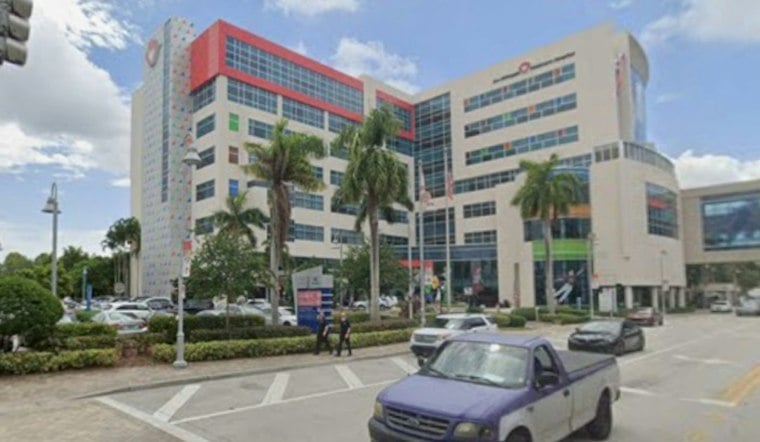
A teenager with Down syndrome has received Joe DiMaggio Children's Hospital's first implant of an Inspire hypoglossal nerve stimulation device. The implant is intended for severe obstructive sleep apnea that has not responded to other treatments. The hospital says it is the only center in South Florida offering the therapy to pediatric patients with Down syndrome and obstructive sleep apnea.
The procedure was performed by Dr. Eamon McLaughlin, who treats adults within Memorial Healthcare System, with assistance from Joe DiMaggio Children's Hospital specialists, according to a release carried by PR Newswire. The pediatric team included Dr. Aaron Willis, the hospital's director of sleep medicine; Dr. Galia Napchan, associate medical director of pediatric pulmonary; and Dr. Thomas Schrepfer, a pediatric otolaryngologist.
The implant stimulates the hypoglossal nerve to help keep the airway open during sleep. It is placed near the collarbone, and the procedure is typically performed on an outpatient basis, according to the American Academy of Sleep Medicine. The hospital says patients or caregivers use a remote control to switch the device on before bedtime.
Why Sleep Apnea Hits So Hard in Kids With Down Syndrome
The hospital's release says nearly 60 percent of babies born with Down syndrome develop obstructive sleep apnea. Estimates cited elsewhere vary: a pulmonologist told Respiratory Therapy that the share is between 50 and 80 percent, while a Mass General Brigham clinical publication puts it at about 80 percent of children with Down syndrome, compared with 5 percent of the general pediatric population.
Untreated obstructive sleep apnea can affect a child's learning, attention, behavior and quality of life, the hospital says. Tonsil and adenoid removal is often the first treatment, but sleep apnea can persist afterward; some children also have difficulty tolerating continuous positive airway pressure (CPAP). The hospital says Inspire is FDA-approved for select adolescents with Down syndrome and severe sleep apnea who have not been effectively treated by tonsil and adenoid surgery and cannot tolerate CPAP. FDA labeling sets additional limits on which adolescents are covered.
FDA limits for adolescent eligibility
FDA labeling specifies that the pediatric indication covers patients ages 13 to 18 with Down syndrome and an apnea-hypopnea index greater than 10 and less than 50, according to the U.S. Food and Drug Administration. The labeling also requires that eligible patients have no complete concentric collapse at the soft palate, according to the FDA.
What the Data Shows So Far
The hospital's release reports that roughly two-thirds of participants in a pivotal study of adolescents with Down syndrome achieved at least a 60 percent reduction in apnea severity after implantation. It also says caregivers reported 50 percent less daily tiredness and improvements in alertness and energy with consistent use. In a separate multicenter trial, 42 patients with Down syndrome ages 10 to 22 who had persistent, severe sleep apnea after adenotonsillectomy were followed for a year. Mass General Brigham reports that 73.2 percent had their apnea-hypopnea index move from severe to moderate, with an average decrease of more than 50 percent across participants. The publication credits the trial, led by Christopher J. Hartnick and Brian Skotko, with establishing the therapy's efficacy and safety in children with Down syndrome.
Eligibility for Inspire still requires a comprehensive evaluation, the hospital notes. Joe DiMaggio Children's Hospital isn't the only facility expanding access to the therapy — Children's Hospital Los Angeles has offered the same hypoglossal nerve stimulation device to adolescents with Down syndrome who can't tolerate CPAP, with physicians Debra Don and Sally Ward delivering the treatment to eligible teens since July 2025, according to Respiratory Therapy. Mass Eye and Ear, meanwhile, opened its own Hypoglossal Nerve Stimulator Program in 2019 and had implanted more than 300 stimulators within three years, Mass General Brigham reports.
A Milestone for the Hospital's Sleep Program
The Joe DiMaggio Sleep Center is marking its 12th year of accreditation by the American Academy of Sleep Medicine. The hospital describes the accreditation as recognition of the center's standing in South Florida. Dr. Willis said in the hospital's statement that another treatment option can bring renewed hope to families whose children with Down syndrome struggle with sleep apnea. Joe DiMaggio Children's Hospital operates under Memorial Healthcare System, which is based in South Florida and says it has delivered safe, positive outcomes for more than 70 years.





