

























































A Homestead nonprofit that has spent three decades helping struggling families is now trying to solve their biggest problem itself: housing. Touching Miami with Love is planning a five-story development with 100 affordable housing units on unused land behind its existing building, a project meant to keep the working families it already serves from being priced out of their own neighborhood.
The nonprofit has served Overtown and West Homestead since 1995, according to Touching Miami with Love, and provides free after-school and summer camp programs, job training and family services. As reported by NBC 6 South Florida, the organization says it has secured funding for the project, which is expected to break ground in 2027. The outlet puts the cost at $53 million.
CEO Trina Harris said residents and staff have struggled with housing costs, and that some residents have moved away entirely, per the same NBC 6 report. Harris began exploring how the nonprofit could become an affordable housing developer after a survey of the families it serves identified housing as a top concern roughly five years before the NBC 6 article published, and she said she received training to become a developer herself. The Greater Miami Housing Funders Collaborative, the station's report notes, works to connect community organizations and aspiring developers like Harris with financing, training and support to help them navigate development and financing.
A Site Years in the Making
The project is planned for a 100-unit apartment complex adjacent to the nonprofit's 4-acre West Homestead campus, according to Touching Miami with Love's housing initiative page, which lists planned amenities including a communal space, gym, playground and green space. The nonprofit is partnering with DBC Procida on the development, the same source notes, and DBC Procida is also working with Miami-Dade County on a separate plan for 250 mixed-income residences for the Homestead Gardens public housing community.
Project cost estimates have shifted over time. An earlier description of the proposed Homestead development, published by the South Florida Business Journal in August 2023 and preserved in a PDF hosted by glavovicstudio.com, estimated the project would cost $23 million, while the current NBC 6 report puts the figure at $53 million. The dossier does not clarify whether the two estimates refer to the same project scope, and the earlier coverage also described a construction start in 2025, well ahead of the 2027 groundbreaking now cited by NBC 6.
Separately, the city of Homestead approved an apartment building with 100 affordable housing units on 4.2 acres at 1350 Southwest 4th Street in March, according to the South Dade News Leader, with the stated goal of housing working people such as teachers and public- or service-sector employees.
Why the Need Is So Acute
Miami-Dade County faces a gap of 90,181 affordable and available rental units for households earning below 80% of the area median income, according to Miami Homes for All, a gap projected to grow to nearly 116,000 units by 2030 unless more affordable units are built. Half of all households countywide are considered cost-burdened, meaning they pay more than 30% of income toward housing, and 90% of Miami-Dade renters earning below $50,000 fall into that category. The same analysis found that 14 of the 21 local occupations expected to add at least 1,000 workers by 2030 have median hourly wages of $19 or less.
Touching Miami with Love says the strain is already visible inside its own operations. Over the past two years, 60% of its families have either reported struggling with rent or experienced displacement, and the nonprofit says it has lost key staff members because of the high cost of living in the communities it serves, according to its housing initiative page. Harris said families and staff were overjoyed when shown what is coming, and she hopes the project will inspire other nonprofits to address similar needs in their own communities, per NBC 6's report.
Other Projects Racing to Keep Up
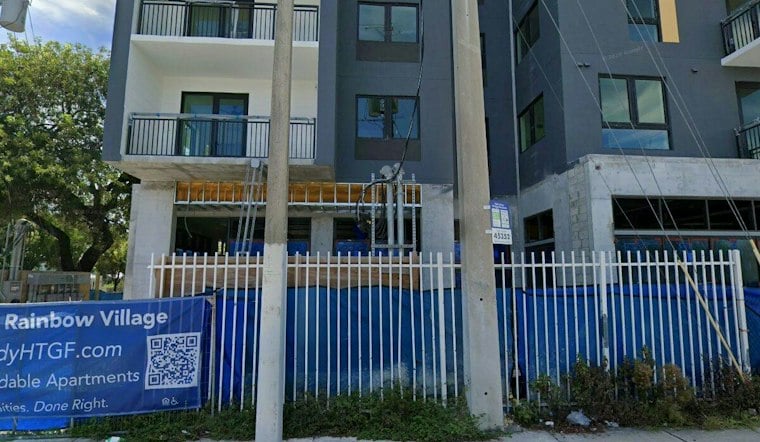
The Homestead plan joins a handful of other Miami-Dade efforts aimed at the same shortfall. The Rainbow Village/Rhapsody Apartments, a 310-unit development at 2000 NW 3rd Avenue in Miami, is backed by more than $6 million in loans and a $500,000 grant from Miami-Dade County and is intended for residents earning between 30% and 80% of area median income, according to WLRN, with completion also expected in 2027.
In Allapattah, the Dulce Vida development will include 230 mixed-income rental units and an 8,500-square-foot public library, reserving 92 units for households earning up to 60% of area median income, 78 units for those at 100% and 60 units for households up to 120%, WLRN reported separately. Construction there is expected to take 18 to 24 months, with the building projected to open in 2028. Florida overall has just 24 affordable rental units for every 100 extremely low-income renters, the outlet noted.
Elsewhere in South Florida, the Tunnel to Towers Foundation has proposed purchasing and renovating the La Quinta Inn in Coral Springs to convert the hotel into apartments for veterans, according to CBS News Miami. The proposed studio and one-bedroom units would rent for between $1,000 and $1,200 a month with utilities included, and veterans would need an honorable discharge and a background check to qualify.
At the state level, a 2026 bill summary from the Florida Senate addresses the Live Local Act's permitting preemptions and would require local governments to authorize certain affordable housing developments under specified conditions, according to the Florida Senate. For a nonprofit like Touching Miami with Love, already deep into training, financing and site planning, that legislative backdrop sits alongside a more immediate goal: turning the empty land behind its own doors into homes for the families it has spent 30 years trying to keep in the neighborhood.





