

























































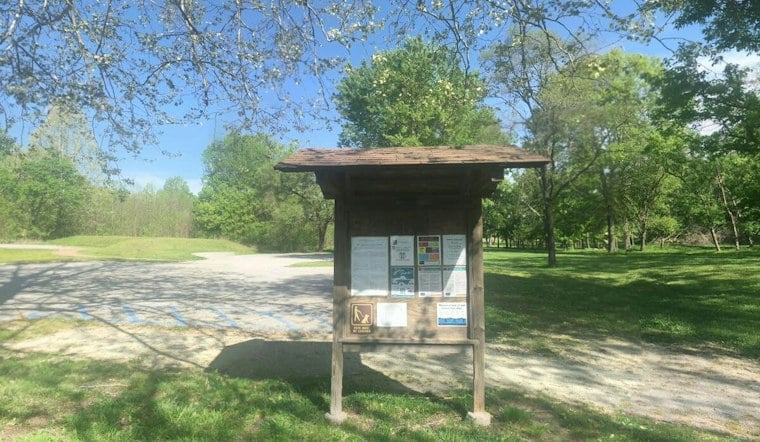
A St. Louis County town so contaminated with dioxin that the federal government bought out every home and business in it has spent the last quarter-century as a place where people go to hike, bike and paddle instead. Times Beach, founded in 1925 as a summer resort along the Meramec River, was wiped off the map after a toxic-waste scandal and a catastrophic flood. Today it survives as Route 66 State Park, a stretch of trails, picnic grounds and river access built directly on top of its own disaster.
A Resort Town Built Along the Mother Road
Times Beach started as a getaway spot in 1925, and according to KMOV, Route 66 arrived a year later, bringing visitors and helping the community grow into a full-fledged town. For decades it was a modest riverside community along the Mother Road, the kind of place families passed through on their way somewhere else, or stopped to stay a while. Nothing about its early history hinted at the environmental catastrophe to come.
That catastrophe began quietly, between 1972 and 1976, when waste hauler Russell Bliss sprayed the town's roads with a mixture of waste oil to keep dust down, oil that was later found to contain dioxin-contaminated waste, as detailed by Fox 2 Now. Dioxin is a highly toxic chemical compound, and its presence in the soil of an inhabited town set the stage for a crisis that wouldn't surface until years later.
Flood and Evacuation
The breaking point came in December 1982, when flooding swept through Times Beach. On December 23 of that year, the EPA advised residents not to return home, warning that soil contamination contained dioxin levels above what the agency considered safe, per the same Fox 2 Now account. It was the beginning of the end for the town as a living community.
By February 1983, the EPA had declared Times Beach a Superfund site and announced a federal buyout of its homes and businesses. The fallout was swift and total: by 1985, more than 2,200 residents had been evacuated and the city had disincorporated, effectively erasing it from the map. Federal records cited by the agency show Times Beach was formally added to the National Priorities List in 1983, with cleanup work beginning in 1990.
A 14-Year, $110 Million Cleanup
Undoing the damage took far longer than the evacuation itself. The cleanup of Times Beach and surrounding sites took 14 years and cost $110 million, according to St. Louis Public Radio. The scale of the toxic removal was staggering: STLPR reported that more than 265,374 tons of dioxin-contaminated soil from 25 different sites across eastern Missouri were destroyed through high-temperature incineration. A separate federal account gives a different tally, putting the total at 265,354 tons of dioxin-contaminated materials from 27 eastern Missouri sites, including 37,234 tons that came from Times Beach itself. The dioxin removal plan called for a transportable incinerator to be placed at the site to provide thermal destruction of the contaminated materials, according to the EPA's own record of decision.
Once the incineration work was finished, the federal government transferred ownership of the cleaned-up land to Missouri, the same STLPR report notes. The state wasted little time deciding what to do with it.
From Contaminated Ground to State Park
Missouri designated the former Times Beach site as a new state park on July 2, 1997. Two years of further preparation followed before Route 66 State Park officially opened on September 11, 1999. The acreage of that new park is described differently across accounts: Fox 2 Now reports the park spans 419 acres, while STLPR puts the figure at 400 acres.
The EPA formally removed Times Beach from its Superfund list on September 25, 2001, closing the book on the federal cleanup designation nearly two decades after the evacuation began. Years later, in November 2012, the agency said soil samples taken from the park showed no significant health risks for visitors or workers, Fox 2 Now reported. A separate federal profile notes that the EPA had completed a reassessment that year specifically to check whether any residual dioxin contamination remained above a recently revised safety threshold.
What Remains Today
Much of the original roadway still runs through the park today, alongside picnic areas, biking and hiking trails, and access to the Meramec River, KMOV reported. According to Missouri State Parks, the park now features level walking, bicycling and equestrian trails, and a historical display area includes exhibits detailing the former town of Times Beach and its environmental history. Once the cleanup was complete, the land was turned over to the Missouri Department of Natural Resources' Division of State Parks, state officials note, and the ground once declared too toxic for habitation is now, in their words, once again used for recreation.
What was once a cautionary tale about dioxin contamination and the human cost of an evacuated town is now a landscape of trails and river access for the hikers, bikers and nature-seekers who visit Route 66 State Park, as KMOV's report frames it. The town itself is gone, disincorporated since 1985, but its name and its history remain preserved in the park built over its remains.





