

























































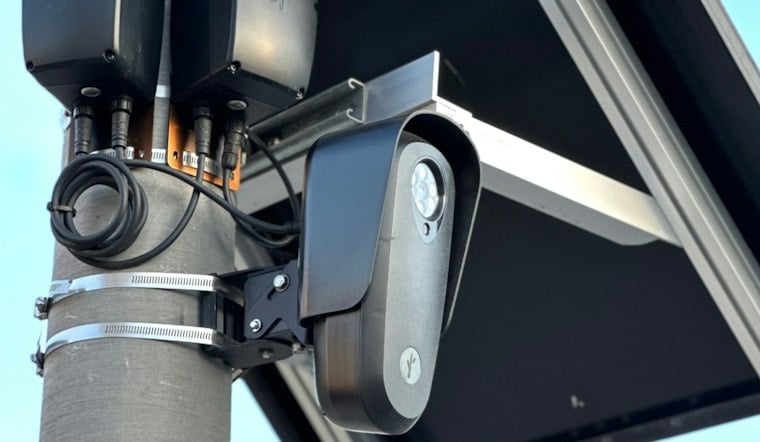
Student groups at Indiana University Bloomington are demanding that campus police cancel their contracts with Flock Safety, the license-plate reading camera company, arguing the technology invites the kind of abuse that has landed police officers across the state in criminal court. IUPD has declined to say how many Flock cameras it operates, though public records show the department purchased at least five of them between February 2023 and May 2025.
The push is being led by IU's Young Democratic Socialists of America chapter, which launched a petition called Get the Flock Off Campus! on social media on October 4, according to the Indiana Daily Student. The petition had drawn 80 online signatures and 223 in-person signatures as of the report, per IU YDSA member Diego Barron, and the group's meeting attendance has swelled from around 20 students last semester to between 60 and 80. Members voted 29 to two at an October 8 meeting to formally establish what they're calling the De-Flock campaign.
Independent tracking site DeFlock counts six Flock cameras on the Bloomington campus itself: five are near IU Health Bloomington Hospital, and the other is along 17th Street near a Memorial Stadium lot, the student paper reported. IU YDSA plans to table by that 17th Street camera during tailgates ahead of Saturday's football game against Ohio State, part of a broader effort the group says is meant to educate the campus and Bloomington community about potential Flock misuse, particularly against minority groups.
University Policy Allows Broad Use of Surveillance Tools
IU's video and surveillance policy, dated October 2023, permits the use of any device or system to investigate or prevent crime on campus. IUPD spokesperson Julia Nowak said the department uses investigative tools like Flock to support public safety, and maintained that access to license plate reading technology is limited to authorized personnel for investigative purposes only. IUPD says it adheres to the data stewardship standards required under Indiana and federal law, and that it only accesses plate-reader server data for an active incident or investigation. Department general orders allow camera data to be stored by the vendor or in a secure location for no longer than 30 days, unless it's preserved by written request.
Student skepticism of those assurances has been fueled by a wave of criminal cases against Indiana police officers accused of using Flock databases to track people in their personal lives. Five Indianapolis Metropolitan Police Department officers were criminally charged on September 23 with official misconduct and fraud over allegations that they used the department's Flock database to track ex-partners, spouses, and personal acquaintances, according to WFYI. Days earlier, Hoodline reported that an IMPD officer was suspended and faces firing after hundreds of illicit plate searches.
A Kokomo Case Fuels Statewide Oversight Concerns
The pattern extended into central Indiana just days before the IU campaign went public. Kokomo Police Officer Jeffery Bornes Jr. was charged on October 6, with an arrest warrant filed that day, with Level 6 felony official misconduct and misdemeanor fraud after a departmentwide audit alleged he ran 18 unauthorized Flock camera queries on his then-spouse's vehicle under false pretexts, Hoodline previously reported in its coverage of the Bornes case. Under Indiana Code § 35-50-2-7, a Level 6 felony conviction for official misconduct carries a fixed prison sentence ranging from six months to two and a half years, along with potential fines up to $10,000.
Beyond individual misuse cases, students have pointed to broader data on how license plate reader technology is applied. Louisville Metro Police Department issued 177 criminal citations last year involving the technology, and Black residents accounted for half of those citations despite making up almost a quarter of Louisville's population, per Louisville Public Media reporting cited in the student paper's account. IU YDSA has described opposition to Flock as a bipartisan issue, a framing echoed when the College Democrats at IU held a discussion on the topic on September 17, with around 15 members participating in an ethical dilemma game centered on surveillance tradeoffs.
Student Government Weighs In With Formal Resolution
Isaac Chapman-Whitehead, president of IU College Democrats and an IU Student Government congress representative, said the group opposes Flock's use on campus and that any candidate seeking its support needs to be ready to address the issue. “If they're not talking about Flock, then that's just shortsighted,” Chapman-Whitehead said, per the Indiana Daily Student's reporting.
IUSG congress passed a joint resolution on September 28 opposing campus Flock cameras and asking the administration not to renew its contracts, with Alexa Avellaneda-Yonamine among those signing on. The resolution was authored by Austin Perny, who said the rapid expansion of surveillance technology like Flock threatens public privacy. “We don't just wake up one day and saying, ‘hey, I would love, you know, big brother to have a camera in my house.’ Like, no, no one's going to say that, right?” Perny said. The resolution calls on IUPD and university administration to publicly notify the community of future surveillance contracts and to fully disclose the capabilities of its Flock cameras, though IUSG itself operates only in an advisory role with no formal say in university policy.
IU's Stance Diverges From Its Local Government Neighbors
The student campaign lands at a moment when IU finds itself increasingly isolated among local governments on the surveillance question. The City of Bloomington announced in April 2026 that it would not renew its own Flock contract, a decision that followed a protest the previous January; Mayor Kerry Thomson's administration had let the contract lapse on March 5 following a multi-month review, according to the city's own announcement. The Monroe County Board of Commissioners followed in July 2026, voting 2-0 to cancel its contract a year early and pay a $3,000 hardware removal fee to dismantle six cameras run by the Monroe County Sheriff's Office, with support from Sheriff Ruben Marté, as reported by Indiana Public Radio. A separate Hoodline report on the City of Monroe said its city council ended its contract and switched off 23 cameras in its piece on Monroe County's Flock shutdown.
Bloomington's decision not to renew its Flock contract and Monroe County's vote to cancel its contract are contrasts student organizers have raised as they push the university to follow their lead. Austin Perny said he's seeking similar transparency and action from IUPD and IU administration.
State and Federal Lawmakers Eye Broader Guardrails
The Bloomington debate is unfolding alongside statewide and national efforts to rein in license plate reader technology. Indiana law bars homeowners associations from installing automated license plate readers. State Rep. Jim Pressel was drafting a bill for the 2027 session that would require routine department audits and annual state-police oversight, Hoodline reported.
At the federal level, bipartisan legislation called the No FLOCK Act was introduced on September 15, proposing to withhold 10% of federal highway funding from states that fail to restrict automated license plate reader usage to five specific approved law enforcement purposes, Hoodline reported in its coverage of the federal bill. Flock Safety itself has responded to the national backlash, reducing its recommended default data retention window from 30 days to seven days and introducing automated audit tools meant to flag suspicious search patterns, amid more than 50 agencies or communities that had canceled, suspended, rejected, or deactivated contracts or cameras in 2026.





