

























































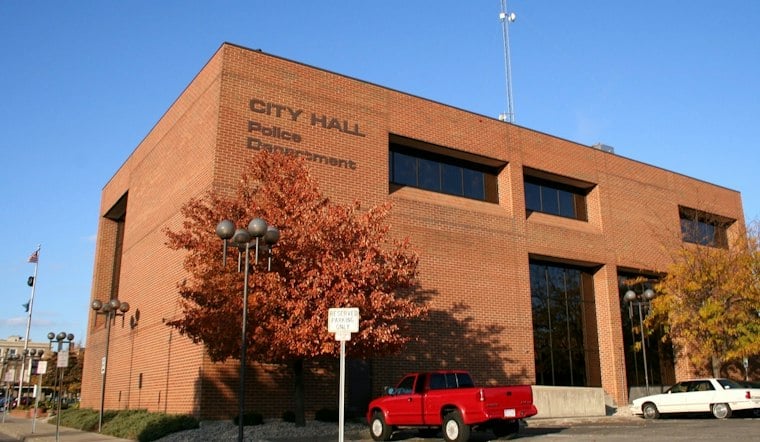
A Kokomo police officer is facing criminal charges after an internal audit of more than 9,000 license plate reader searches turned up 18 queries investigators say he ran on his own then-spouse’s car under a false pretext. Officer Jeffery Alan Bornes Jr., 40, was charged with one count of official misconduct, a Level 6 felony, and two counts of fraud, both Class A misdemeanors, following an investigation ordered by Kokomo Police Chief Douglas Stout.
Audit Flags Repeated Searches of One Vehicle
Howard County Prosecuting Attorney Mark McCann announced the charges after prosecutors allege Bornes used his police department account to search the Flock Safety automated license plate reader system 18 times between February 19 and February 28, 2026, targeting a vehicle registered to his then-spouse, according to the Kokomo Tribune. Each time, prosecutors allege Bornes entered “welfare check” as his justification for the query, a reason investigators determined was false and unrelated to any active investigation, per the same outlet’s reporting.
The false entries surfaced only because Chief Stout had ordered a proactive audit of every license plate recognition inquiry conducted departmentwide between January 1, 2025, and September 7, 2026, according to a statement released by the Kokomo Police Department on Facebook. Stout requested the review on September 8, and the department says it ultimately verified more than 9,000 searches, finding that all but 18 were directly tied to ongoing criminal investigations.
Flock System Built to Require a Reason for Every Search
The Kokomo Police Department utilizes automated license plate readers supplied by Flock Safety, which capture vehicle plates, times, and locations while requiring officers to enter a justification for every query, the article notes. That design is meant to create a digital paper trail for every search an officer runs, which is precisely what allowed the department’s audit team to flag Bornes’s entries as inconsistent with any case file.
Once the department’s review flagged the 18 queries, Stout directed the Professional Standards Unit to open an internal investigation, and the department also opened a criminal investigation, according to the Kokomo Police Department statement. The case was then submitted to the Howard County Prosecutor’s Office for review, which filed charges with an arrest warrant on October 6.
What Bornes Is Facing in Court
Bornes was charged with one count of official misconduct under Indiana Code 35-44.1-1-1(1), along with two separate fraud counts under Indiana Code 35-43-5-4(a)(1)(a) and 35-43-5-4(a)(3), per the Kokomo Police Department’s release. Under Indiana Code Section 35-50-2-7, a Level 6 felony conviction carries a fixed prison sentence between six months and 2.5 years, with an advisory sentence of one year, and a fine of up to $10,000, according to FindLaw. Each Class A misdemeanor, meanwhile, carries a maximum sentence of up to one year in jail and a fine of up to $5,000 under Indiana Code Section 35-50-3-2, according to Justia Law.
The timing of the charges also matters procedurally. Under Indiana law, the statute of limitations for prosecuting Class A misdemeanor offenses is two years from the date of the alleged act, according to Banks & Brower, and the charges against Bornes were filed roughly eight months after the alleged February searches. A conviction for official misconduct also makes a person ineligible for a particular felony-to-misdemeanor conversion under Indiana Code Section 35-38-9, per Keffer Hirschauer LLP’s analysis of the statute.
Department Updating Policy and Adding Recurring Audits
In its statement, the Kokomo Police Department said it is updating its license plate recognition policy, which has been in place since 2019, to include recurring audits of searches going forward. Those audits will follow standards set by the Commission on Accreditation for Law Enforcement Agencies, whose Standard 41.3.9 requires accredited departments to establish formal written policies for automated license plate reader technology, including mandatory audit trails logging usernames, query dates, and specific criminal case justifications, according to a Richmond Police Department General Order referencing the same standard.
Chief Stout said the incident was identified through a proactive internal audit, and the department said in its statement that it is committed to maintaining an environment that empowers employees to act courageously and ethically when they observe misconduct. The department said it would not be providing additional information at this time, and it noted that everyone involved in the case is presumed innocent unless and until proven guilty in a court of law.
Part of a Wider National Pattern
Kokomo’s case echoes similar license plate reader misuse investigations that have surfaced elsewhere in the country, including an August case in Colleton County, South Carolina, where an internal audit flagged an officer for making thousands of unauthorized searches targeting personal associates, as Hoodline previously reported. Flock Safety itself introduced an Audit Assistance tool in April that uses continuous monitoring algorithms to automatically flag irregular or abnormal search patterns for police agency administrators, reflecting a broader industry push toward automated oversight as voluntary adoption of such tools has grown across law enforcement agencies nationwide.



