

























































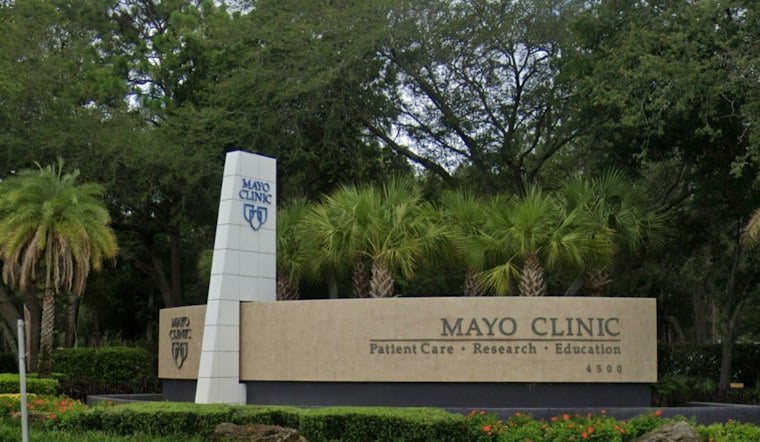
A Jacksonville nurse gave her sister more than emotional support this year — she gave up one of her own kidneys. Moneeco “Nicole” Collins donated the organ to her sister at Mayo Clinic in Florida after learning years earlier that an autoimmune condition affecting her sister's kidneys and lungs could eventually mean kidney failure.
A Sister's Offer, Met With Worry
Collins knew the diagnosis meant a transplant might someday be necessary. Testing to check compatibility began in February 2026, and by the time results came back, the two were confirmed as a match, according to News4JAX.
The transplant surgery took place in May 2026 at Mayo Clinic's Jacksonville campus, a facility that has grown substantially since launching its transplant program in 1998. The center expanded beyond its original liver program to begin kidney transplants in 2000, and in October 2025 it marked its 10,000th total organ transplant, according to Mayo Clinic News Network.
A Hub for Living Donation
The Jacksonville hospital performed 227 kidney transplants in 2025, including 84 from living donors like Collins, according to Mayo Clinic. That volume is part of a larger system-wide effort: Mayo Clinic performed a system-record 2,065 solid organ transplants across its Florida, Arizona, and Minnesota campuses in 2025, making it the highest-volume adult transplant health system in the country.
The need for donors in North Florida remains substantial. LifeQuest Organ Recovery Services, the federally designated organ procurement organization covering 36 northern Florida counties, reported in 2026 that more than 5,000 state residents are currently awaiting transplants. Hoodline previously covered a Jacksonville coach's organ gift coordinated through that same regional network.
Collins's Call to Minority Communities
In the wake of her own donation, Collins is urging more people — especially those in minority communities — to ask about organ donation from a minority perspective, per News4JAX's reporting. People remain on the national transplant waiting list, and roughly 12 die each day while waiting, according to donatelife.net.
Minority organ donors are especially needed, the outlet reports, because some racial and ethnic minority groups are disproportionately affected by conditions that can lead to organ failure.
The disparity Collins is speaking to shows up clearly in national data. U.S. Renal Data System reports indicate that White dialysis patients remain approximately four times as likely as Black dialysis patients to receive a living donor kidney transplant, even as living donation continues to deliver better long-term outcomes than transplants from deceased donors. Scientific Registry of Transplant Recipients data cited in Hoodline's prior coverage of a Phoenix living-donor story shows five-year graft survival rates for living-donor kidney transplants reach 89.9% among recipients aged 18 to 34, compared to 82.5% for deceased-donor transplants.
Policy Shifts and Family Legacy
Some of the systemic barriers behind that gap have drawn regulatory attention in recent years. A mandatory policy change by the Organ Procurement and Transplantation Network eliminated race-based kidney function testing formulas that had overestimated Black patients' kidney function, leading to more than 14,000 Black transplant candidates receiving restored waitlist time credit through early 2024, according to PBS.
For Collins's family, the kidney donation is part of a broader pattern. Her son has signed up to become a bone marrow donor, and News4JAX reports the family now sees itself as building a growing legacy of saving lives — one that started with one sister refusing to wait for her sibling's health to worsen before stepping forward.




