

























































Betzabeth Sotelo wanted to give her 25-year-old brother a kidney. When testing showed she was not a compatible direct donor-recipient match, she didn't walk away — she donated her kidney to a stranger instead, and a different living donor's kidney went to her brother through a paired exchange program.
Sotelo was teaching abroad when she learned her brother needed another kidney transplant, according to AZ Family. He had received his first transplant at 18, but that transplant ultimately failed, the outlet reports. Sotelo flew home to Phoenix to get tested as a potential donor, believing she wasn't at risk from donating, only to discover she and her brother weren't compatible.
That's where the paired donation program came in. Rather than a dead end, the incompatibility opened up a wider pool of potential donors for her brother — Sotelo gave her kidney to someone she'd never met, and her brother received a compatible kidney from a different living donor elsewhere in the exchange network. The station's report notes the swap enabled a quicker outcome for her brother than he might otherwise have had.
A Smoother Recovery the Second Time Around
Sotelo decided to donate because she loved her brother and was healthy enough to do so, per the same account. Her brother's recovery from this second transplant has been much smoother than after his first, and both siblings are recovering well. The kidney recipient who received Sotelo's donated organ is also doing very well, she said.
Sotelo said she felt grateful — to herself, to life, and to the clinic — for the donation's broader impact beyond her own family. Health advocates cited in the report urged that more people should consider becoming organ donors, a message Sotelo has taken up herself, now urging people, particularly those in minority communities, to learn about living donation and paired exchange. She said many people, especially minorities, don't know these options exist.
Why Paired Exchanges Matter for Minority Communities
That outreach lands on real disparities. Hispanic and Latino Americans face twice the incidence rate of kidney failure compared to non-Hispanic white Americans, driven largely by higher rates of diabetes, hypertension, and social determinants of health, according to the HHS Office of Minority Health. Yet living donor kidney transplant rates among white Americans with end-stage renal disease remain roughly twice as high as among Hispanic Americans and four times higher than among Black Americans, per the U.S. Renal Data System.
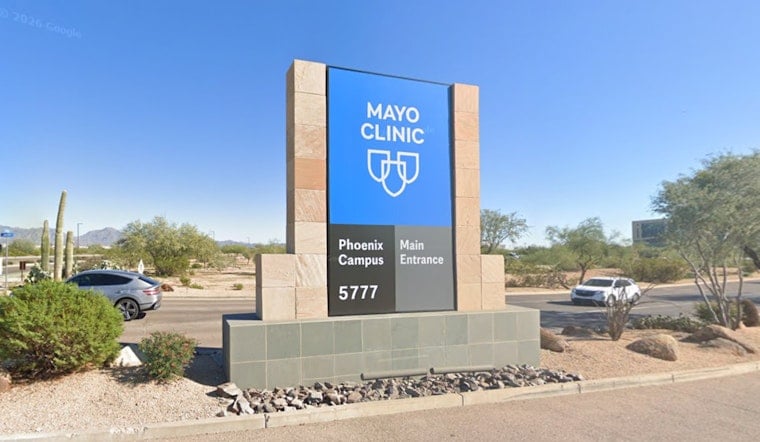
Paired exchange programs like the one that helped Sotelo's brother exist precisely to close gaps like these, by matching incompatible donor-recipient pairs with other pairs facing the same problem. Mayo Clinic operates a multi-site paired kidney exchange network pooling living donors and recipients across its campuses in Scottsdale, Jacksonville, and Rochester, Minnesota, according to Mayo Clinic. Nationally, the National Kidney Registry facilitated 1,744 living donor kidney transplants in 2024 — a 21% year-over-year increase, accounting for 27% of all living donor kidney transplants in the country, as Hoodline previously reported.
Arizona's Waitlist and Legislative Track Record
The need in Arizona is substantial. The National Kidney Foundation of Arizona reported that 1,588 Arizonans on transplant waiting lists desperately need a kidney, and that 2,200 Arizonans are currently on organ transplant waiting lists overall, according to the foundation's figures cited by AZ Family. Statewide data from 2024 shows 171 living donor kidney transplants were performed in Arizona out of 763 total kidney transplants — about 32% of all kidney transplants in the state came from living donors, Hoodline has reported.
Living kidney donation typically leads to faster recovery times and significantly better long-term medical outcomes for recipients, according to the National Kidney Foundation and Mayo Clinic of Arizona. That's borne out in national data: five-year graft survival for living-donor kidney transplants reaches 89.9% among recipients aged 18 to 34, compared to 82.5% for deceased-donor kidney transplants, according to OPTN/SRTR data.
Even so, Arizona's legislative protections for living donors remain middling. The American Kidney Fund's 2026 Living Donor Protection Report Card gave Arizona a “C” grade, noting the state provides public employee leave and anti-discrimination protections under Arizona Revised Statutes § 41-706 and Senate Bill 1100, but lacks tax deductions or private employer leave mandates for living donors, per the American Kidney Fund. Ten states currently receive that same “C” grade nationwide.
More than 91,000 people are on the U.S. kidney transplant waitlist, representing nearly 87% of all candidates waiting for any organ transplant nationwide, with an average of 12 candidates dying each day while waiting, according to organdonor.gov. Against that backdrop, Sotelo's decision to donate to a stranger so her brother could receive a kidney from someone else stands as a small but concrete example of how paired exchange is reshaping who gets a second chance — and how fast.





